Open Source as a Competitive Weapon: Strategy, Community and Business Insight
Business StrategyOpen Source as a Competitive Weapon: Strategy, Community and Business Insight
Table of Contents
- Open Source as a Competitive Weapon: Strategy, Community and Business Insight
- Introduction: The Rise of Open Source as a Board‑Level Asset
- Chapter 1: Strategic Frameworks and Cross‑Disciplinary Foundations
- Chapter 2: Building and Governing High‑Impact Communities
- Sample CONTRIBUTING.md
- Sample dashboard configuration - Continuous iteration based on data
- Sample RACI escalation snippet - Maintaining a positive community culture
- Sample integration module definition
- Example GitLab CI job for licence scanning - Defensive publishing and patent strategies
- Sample tracking of AWS open source contributions - Balancing competition and collaboration - Analysing ecosystem influence
- Sample KPI configuration for community dashboard - Dashboard design patterns - Customisation examples
- Strategic Context
- Open Source Opportunity
- Evidence
- Proposed Actions
- Expected Outcomes - Stakeholder engagement strategies - Measuring and celebrating wins
- Sample announcement in team channel
Introduction: The Rise of Open Source as a Board‑Level Asset
From Hobby to Strategy
The evolution of open source in enterprise
Open source began as a passion project among academics and enthusiasts, rooted in the belief that software should be freely shared, studied and improved collaboratively. Early communities formed around bulletin boards and email lists, driven by curiosity rather than commercial gain. Code releases lacked formal support structures, and projects were maintained informally by individuals volunteering their spare time.
Over time, pioneering enterprises recognised the potential to reduce costs and accelerate development cycles by leveraging these community‑driven innovations. The rise of the LAMP stack in the early 2000s demonstrated how open source components could underpin mission‑critical infrastructure. Organisations began to experiment with internal deployments, assigning dedicated staff to evaluate stability, performance and security.
As these pilots matured, the narrative shifted from mere cost‑saving to value creation. Open source projects became conduits for external expertise, tapping into global contributor networks to enhance features and fix bugs at unprecedented speed. Enterprises invested in upstream contributions, recognising that participating actively in communities yielded reputational and technical dividends.
This phase ushered in formal governance and compliance practices. Procurement teams established open source policies, legal departments built licence review processes, and dedicated support contracts emerged from specialist vendors. Programmes such as inner‑sourcing extended open source principles to internal teams, fostering cross‑department collaboration and re‑usable code libraries.
- Cost optimisation through reuse of battle‑tested components
- Accelerated innovation via community contributions
- Mitigation of vendor lock‑in and proprietary risk
- Access to a broader talent pool and skills ecosystem
- Enhanced security through transparent code review
Boardrooms began to view open source not as a technical curiosity but as a strategic lever for digital transformation. It aligns with broader imperatives such as interoperability, sovereign capability and rapid response to evolving threats. By embedding open source into enterprise strategy, organisations unlock agility and resilience at scale.
What was once a cottage industry has become mission‑critical says a senior government official
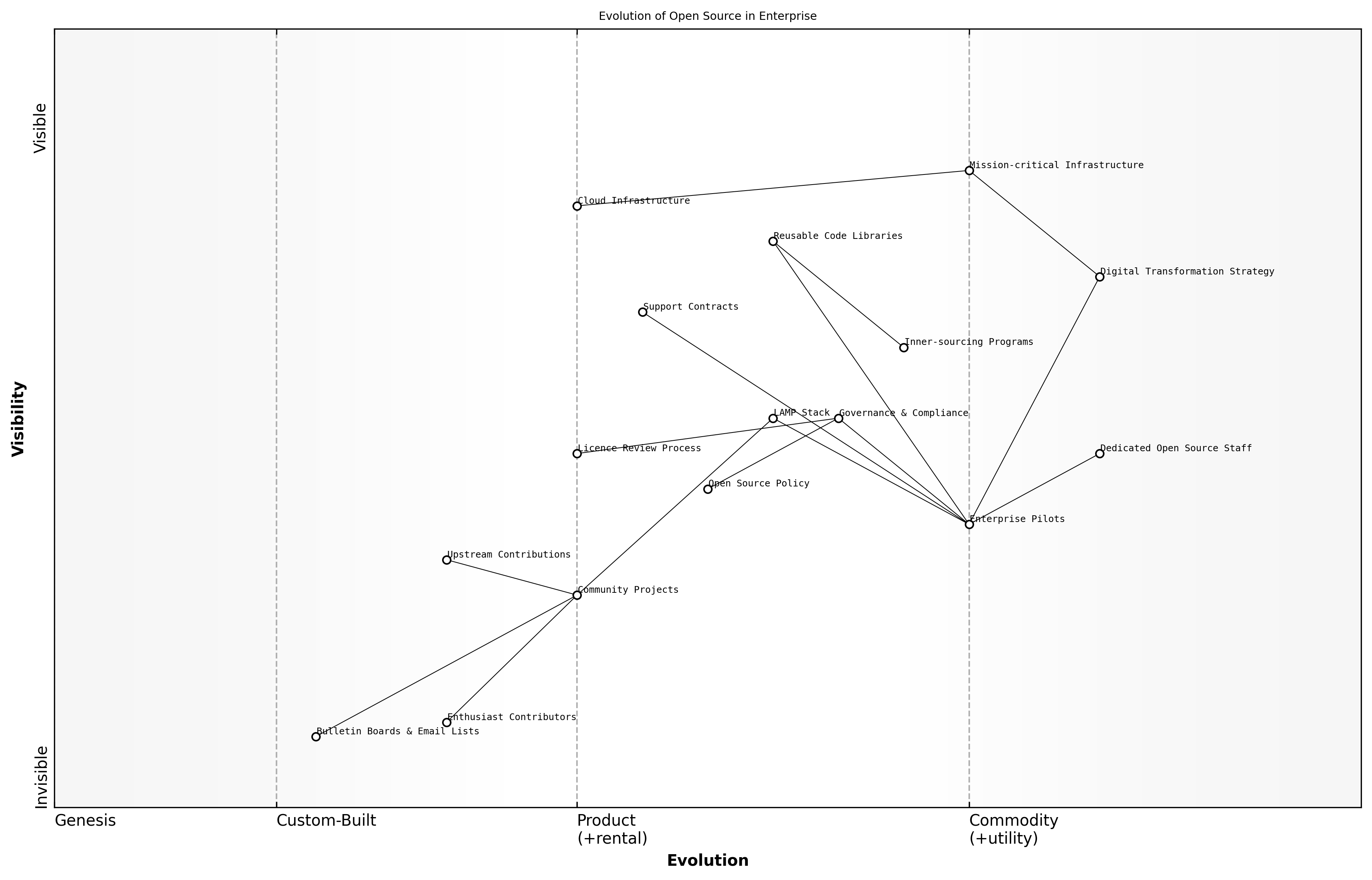
This journey from hobby to strategy sets the stage for the frameworks and governance models that follow. Understanding this evolution is crucial for leaders seeking to harness open source as a sustained competitive weapon.
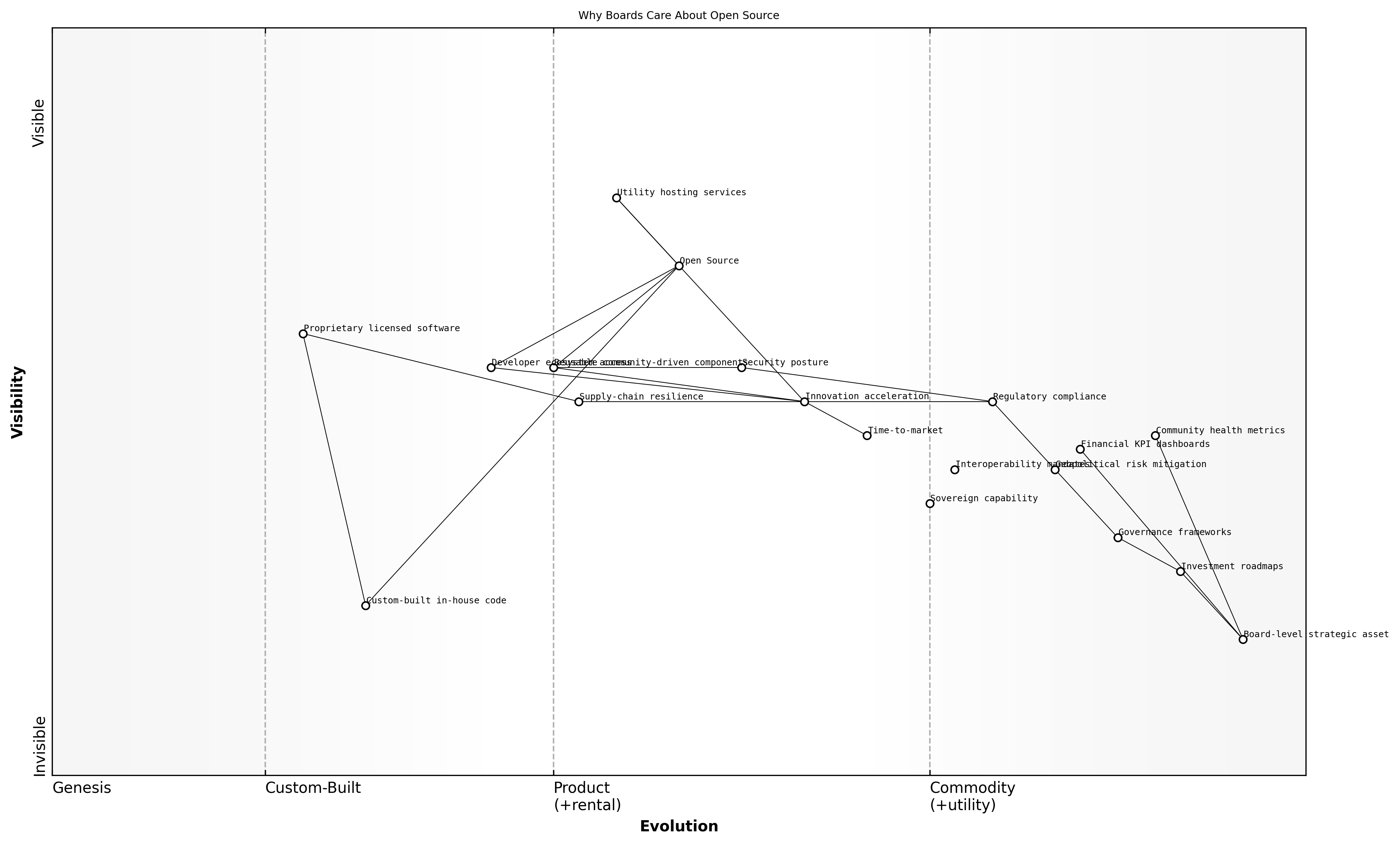
Why boards now care about open source
Board‑level executives are increasingly attuned to open source as a strategic asset rather than a niche technical concern. As organisations navigate rapid digital transformation, the transparent, collaborative nature of open source offers unique advantages that resonate with highest‑level imperatives.
Beyond cost savings, boards recognise open source as a lever for accelerating innovation, de‑risking supplier relationships, and fostering greater organisational agility. The shift from pilot projects to enterprise‑wide adoption has elevated open source to a boardroom priority.
- Strategic agility through reusable, community‑driven components
- Cost optimisation via avoidance of proprietary licence fees
- Enhanced security posture with transparent, peer‑reviewed code
- Supply‑chain resilience and reduced vendor lock‑in risk
- Access to global talent and a vibrant developer ecosystem
- Accelerated time‑to‑market by leveraging upstream innovations
- Alignment with sovereign capability and interoperability mandates
These drivers align tightly with board‑level concerns such as regulatory compliance, geopolitical risk, and sustainable digital strategy. By embedding open source within governance frameworks and investment roadmaps, organisations mitigate long‑term risks and unlock new avenues for competitive differentiation.
Open source is no longer an IT project but a strategic imperative, says a senior government official
Measuring the impact of open source initiatives requires new metrics that speak to executive audiences. Boards now expect dashboards that track community health alongside financial KPIs, ensuring transparency in both technical progress and business value.
Defining open source as a competitive weapon
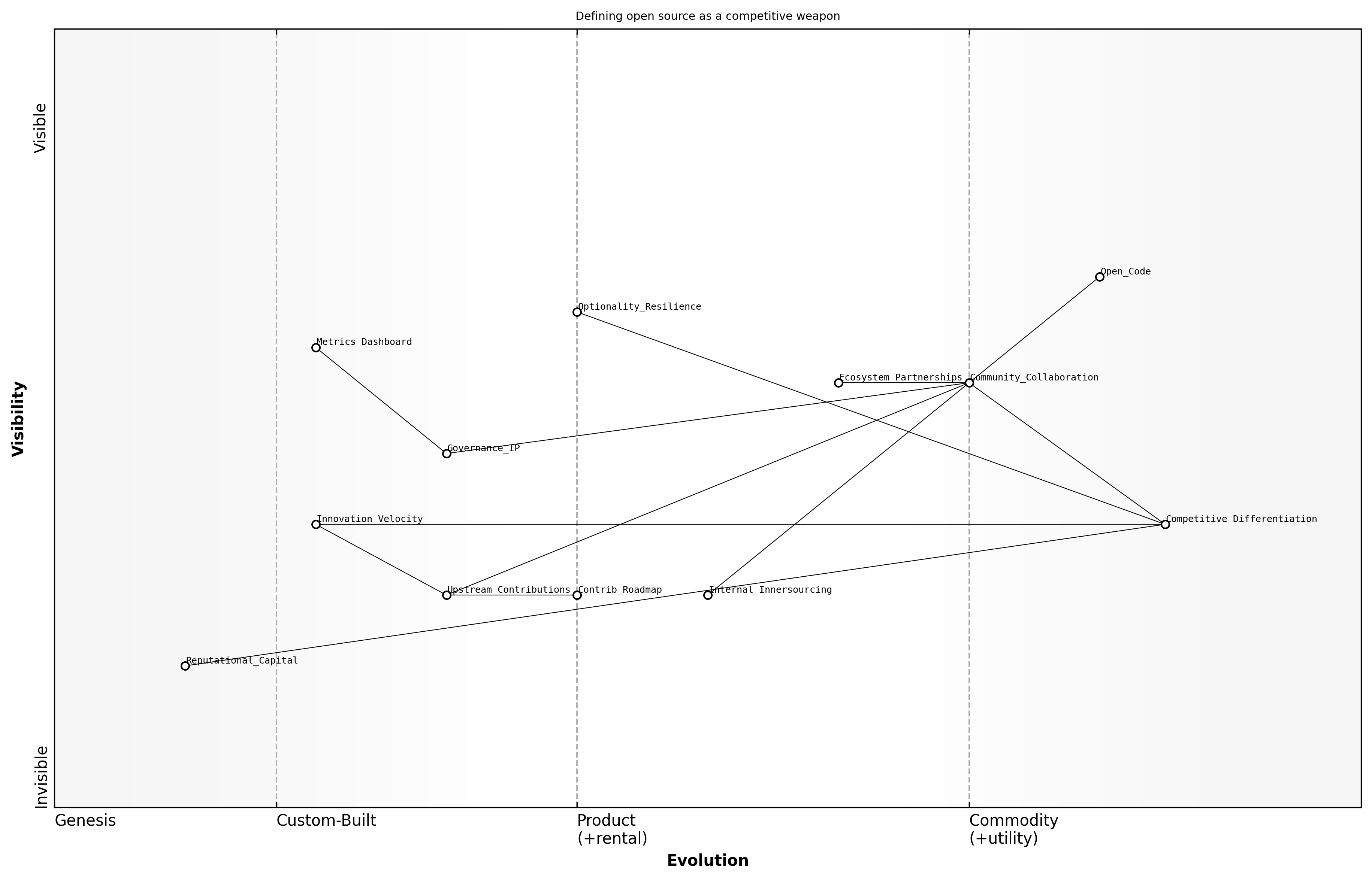
Having traced the journey from hobbyist origins to board‑level strategy, we now define open source as a competitive weapon: a deliberate approach in which organisations harness transparency, community collaboration and shared innovation to shape markets, accelerate delivery and exert strategic influence in digital ecosystems.
- Strategic differentiation through customisable, open technologies that competitors cannot easily replicate
- Ecosystem leverage by galvanising global communities to co‑create features, fix defects and influence roadmaps
- Optionality and resilience via avoidance of single‑vendor lock‑in and the freedom to fork or self‑host
- Innovation velocity driven by upstream contributions and continuous peer‑review feedback loops
- Reputational capital earned by visible leadership and stewardship of critical open projects
This concept aligns with core principles of open source as a public good and commons management. By treating open code as an asset to be orchestrated rather than a cost to be controlled, organisations unlock network effects, drive supply‑side scale and foster competitive advantage. They move beyond consumption towards active ecosystem leadership.
Open source becomes a competitive weapon when organisations shift from mere usage to orchestrating and shaping the ecosystem, says a leading expert in the field
- Establish an inner‑sourcing programme to mirror external community practices within the enterprise
- Define a contributory roadmap that directs internal investments towards high‑impact upstream projects
- Implement governance and IP policies that balance openness with security and compliance
- Develop metrics dashboards that blend community health indicators with business KPIs
- Cultivate ecosystem partnerships and alliance structures to defend against competitive encroachment
By operationalising open source as a competitive weapon, boards can steer sustainable digital transformation, balancing strategic risk with long‑term value creation and ensuring that open innovation remains a continual source of differentiation.
Key Themes and Structure of This Book
Overview of strategic frameworks
Strategic frameworks provide a common language for boards and leadership teams to understand the unique dynamics of open source. They guide decision‑making by revealing where to invest, how to differentiate and when to collaborate or compete.
- Wardley Mapping: visualising the open source landscape, value chain stages and evolution trajectories
- Porter’s Five Forces meets Lean Startup: analysing competitive pressure and adopting iterative experimentation
- Cross‑disciplinary lenses: integrating economic public‑goods theory, organisational sociology, network science and behavioural psychology
Wardley Mapping offers a visual representation of an organisation’s components—from genesis to commodity—and their user needs. By plotting open source projects within this map, leaders can identify strategic plays such as commoditisation, customisation and ecosystem orchestration. This framework helps prioritise investments in upstream contributions or in‑house development based on movement along the evolution axis.
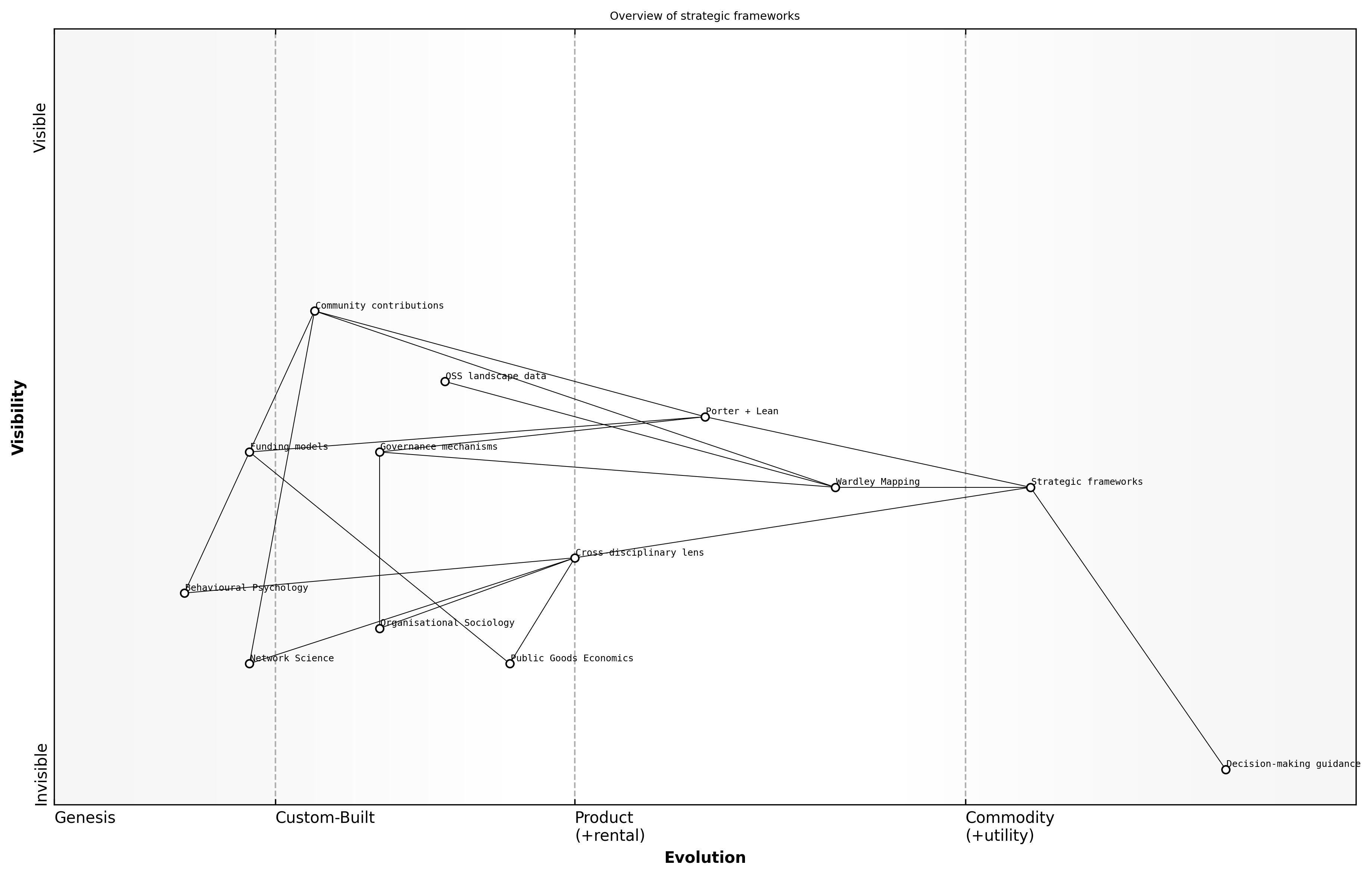
Combining Porter’s Five Forces with Lean Startup principles creates a powerful hybrid. The Five Forces model highlights supplier power, barrier to entry, and competitive rivalry within open source communities, while Lean Startup emphasises rapid hypothesis testing, minimal viable engagements and validated learning. Together they inform when to launch new open source initiatives, how to structure governance and how to iterate features based on community feedback.
Cross‑disciplinary lenses enrich these strategic perspectives. Public‑goods economics reveals how shared infrastructure can be sustained and funded. Organisational sociology uncovers governance tensions and decision‑making norms. Network science maps contributor relationships and dependency graphs. Behavioural psychology guides incentive design and motivation strategies to attract and retain talent.
Strategic frameworks allow us to see patterns and make deliberate plays based on community velocity and ecosystem positioning says a leading expert in the field
Community governance and health
Community governance and health represent the heartbeat of any open source initiative, bridging strategic objectives with the on‑the‑ground contributor experience. A well‑governed community ensures transparency, fosters trust and aligns diverse stakeholders towards common goals. For boards and executives, these dynamics translate directly into risk mitigation, innovation velocity and reputational capital.
- Transparent decision pathways and clear governance charters
- Defined roles and responsibilities for maintainers, contributors and users
- Robust processes for issue triage, pull request review and conflict resolution
- Metrics that balance technical progress with community vitality
- Regular feedback loops between leadership and contributors
Selecting an appropriate governance model—whether benevolent dictator, foundation‑led or hybrid—establishes the structural foundation for healthy community engagement. Governance frameworks must evolve alongside the project lifecycle, enabling scalability without compromising agility. Effective governance also ensures alignment with enterprise policies around compliance, security and intellectual property management.
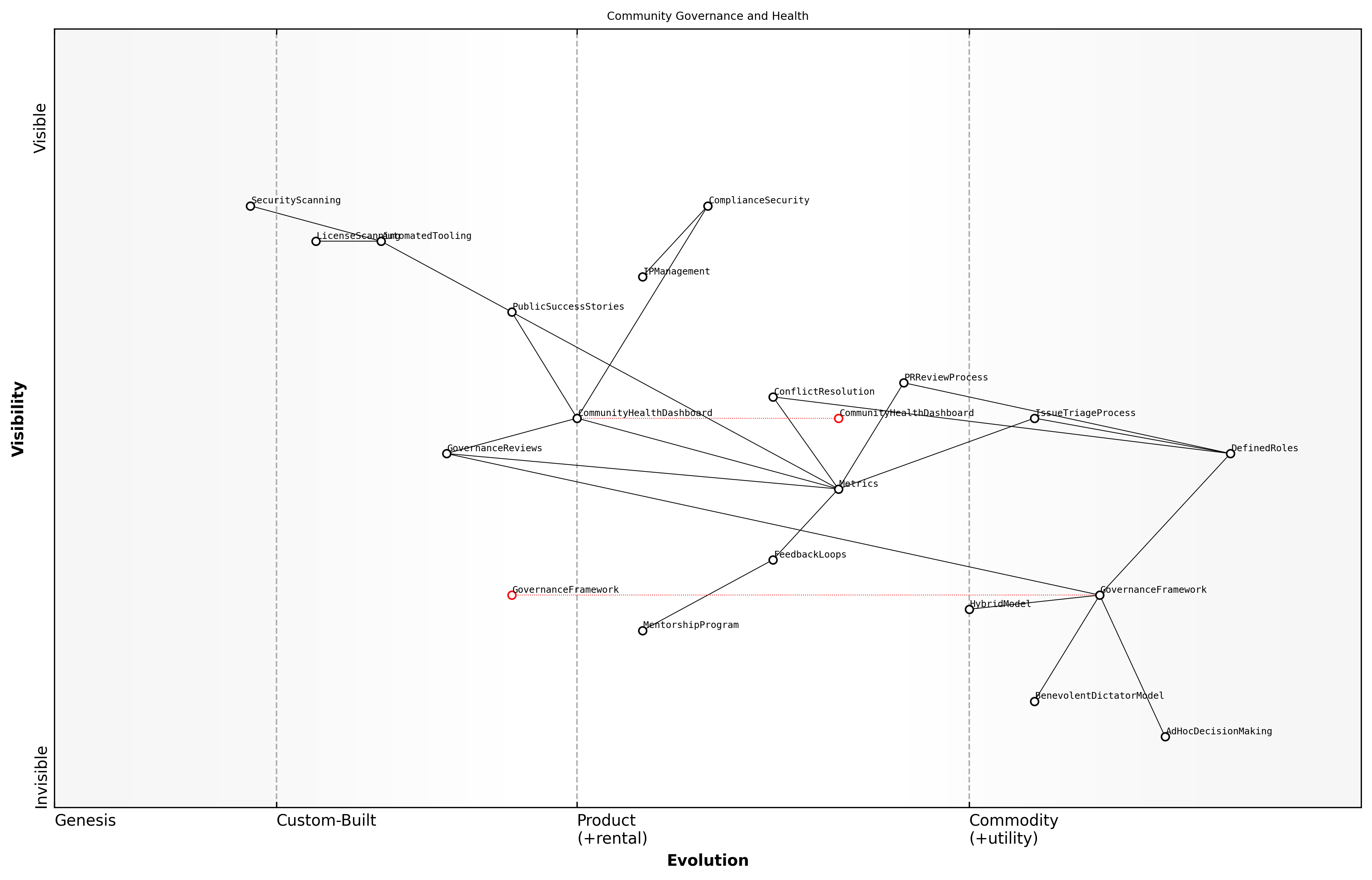
Building a community health dashboard converts abstract metrics into actionable insights for both technologists and boardroom audiences. Dashboards should present a balanced scorecard, combining quantitative indicators—such as contributor growth, issue resolution times and retention rates—with qualitative signals like sentiment analysis and community feedback summaries. This enables continuous iteration and strategic investment decisions.
Monitoring community health ensures strategic alignment with enterprise goals says a senior government official
- Define and track leading and lagging community indicators
- Establish regular governance reviews and retrospectives
- Leverage automated tooling for licence compliance and security scanning
- Foster mentorship programmes to onboard new contributors
- Celebrate milestones and publicise success stories to sustain motivation
Business models and IP considerations
Business models and IP considerations represent the bridge between open source strategy and sustainable value capture. In the context of digital transformation, organisations must design revenue mechanisms that complement community dynamics and implement legal frameworks that preserve trust, minimise risk and align with board‑level objectives.
- Open core offerings that differentiate proprietary extensions from community editions
- Dual licensing strategies balancing copyleft and commercial licences
- SaaS and hosted platform plays with tiered feature access
- Support, training and integration services as recurring revenue streams
- Subscription and maintenance models for predictable cash flow
- Ecosystem levies and partner programmes to capture network value
Each business model must align with IP management practices to safeguard compliance and maintain community trust. This involves mapping licence obligations, implementing contributor licence agreements (CLAs) or developer certificate of origin (DCO) processes, and defining patent strategies that deter adversarial filings without stifling innovation.
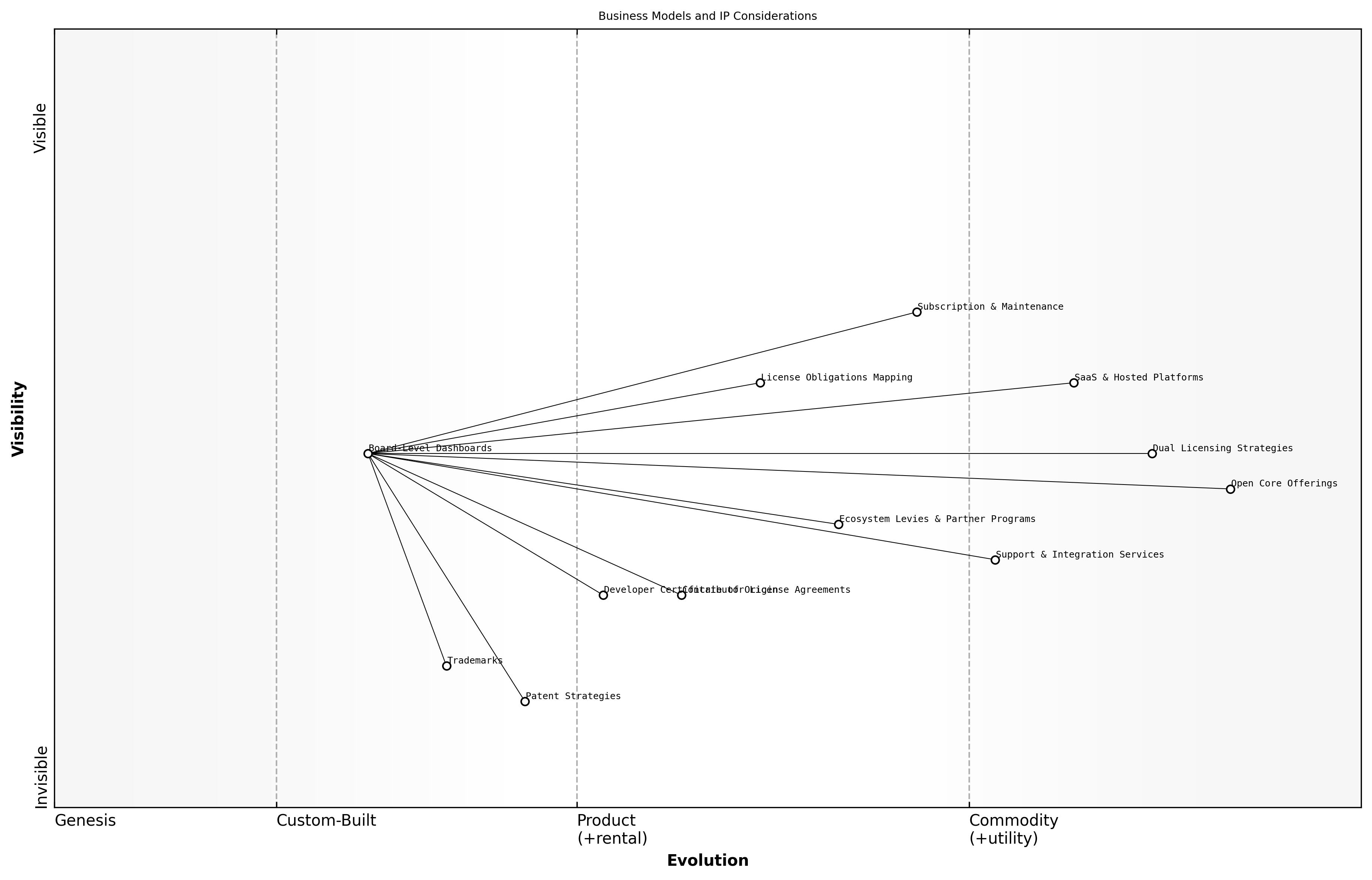
At the board level, dashboards should surface both financial and legal metrics. By integrating business performance indicators with IP risk indicators, leadership teams gain visibility into the health of their open source programme as both a revenue engine and a protected asset.
- Revenue by model (open core vs SaaS vs services)
- Licence compliance incidents and remediation time
- Patent filings and defensive publishing counts
- Contribution ROI (upstream pull requests vs internal investment)
- Community engagement index aligned to commercial uptake
A senior government official highlights the need for legal rigour to balance openness with protection and ensure open source delivers strategic value
By combining tailored business models with robust IP frameworks, organisations transform open source from a cost‑saving tactic into a sustained competitive weapon. This synergy drives revenue, mitigates legal exposure and strengthens market influence.
Cross‑disciplinary insights and toolkits
In order to wield open source as a competitive weapon, boards and leadership teams must draw on a diverse set of academic and practical disciplines. Cross‑disciplinary insights bridge high‑level strategy and operational execution, ensuring that governance, community dynamics and commercial models are informed by robust theory and evidence. Toolkits then translate these insights into actionable artefacts that drive consistency and repeatability across initiatives.
- Economic public‑goods theory and commons management for understanding incentives and resource allocation
- Organisational sociology to map power dynamics, roles and informal networks within communities
- Network science to visualise ecosystem topology, identify key hubs and assess resilience
- Behavioural psychology for designing contribution pathways, recognition systems and feedback loops that motivate participants
While theory shapes our understanding of how communities form and evolve, toolkits offer ready‑to‑use templates and methodologies. These artefacts enable executives and programme leads to operationalise cross‑disciplinary concepts quickly, reducing the time from insight to impact and ensuring that strategic intent is embedded in day‑to‑day practices.
- Wardley Mapping Canvas with custom layers for community maturity and ecosystem influence
- Community Health Dashboard template combining sociological indicators and network metrics
- Open Source ROI Calculator that incorporates public‑goods spillover effects and licence‑related cost avoidance
- Governance Assessment Toolkit featuring decision matrices and legal compliance checklists
- Behavioural Design Checklist for onboarding flows, mentorship programmes and contributor recognition
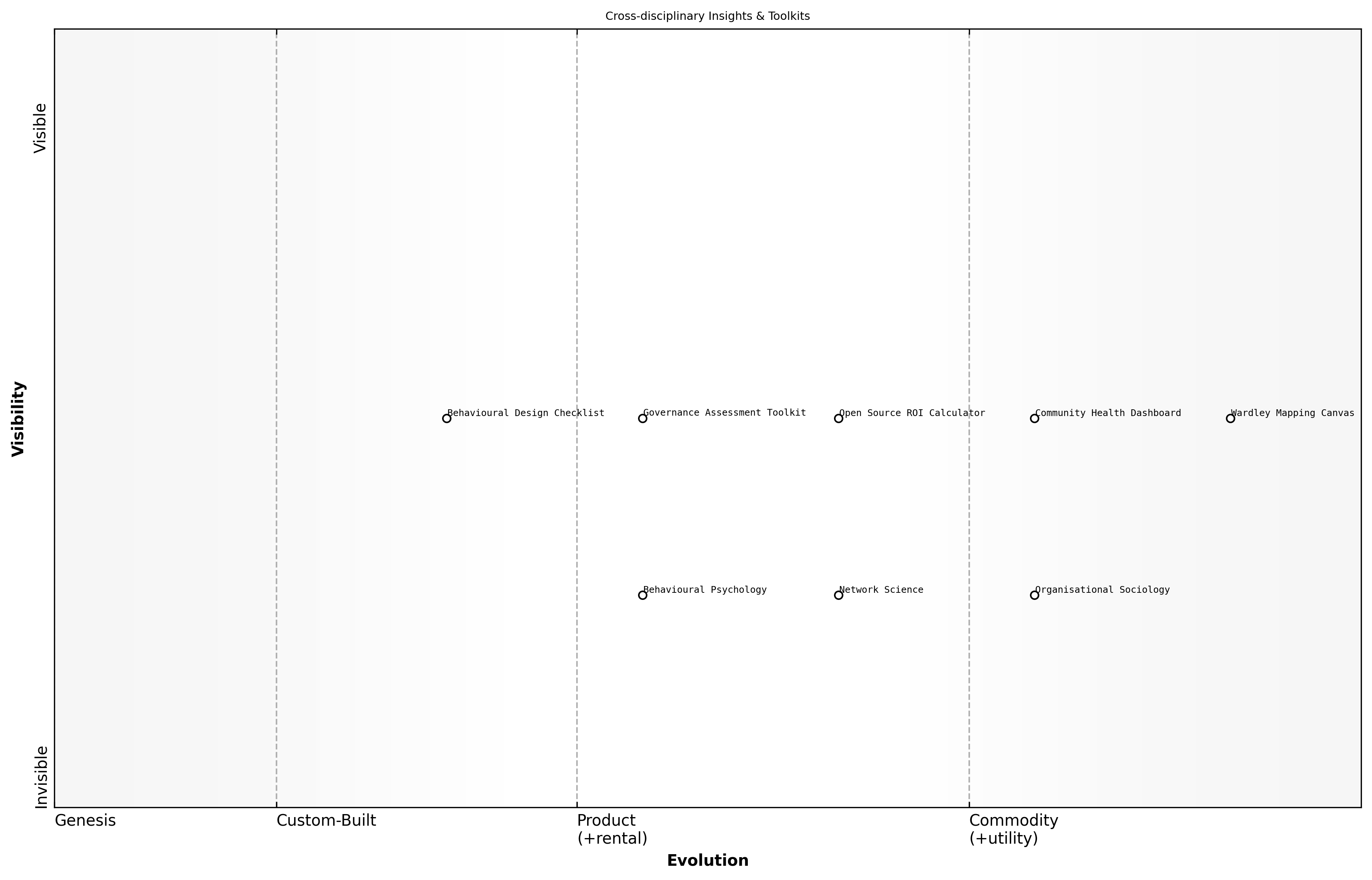
A senior government official remarks that combining academic rigour with practical templates transforms open source from an abstract strategy into a replicable and measurable asset
How to use the case studies and workshops
The case studies and workshop guides in this book are designed to bridge theory and practice, enabling executives and open source programme leads to internalise strategic frameworks and apply them to real‑world scenarios. By combining narrative analysis with hands‑on exercises, readers gain both contextual understanding and actionable insights.
Each case study follows a structured format: context and challenge, strategic framework application, outcomes and lessons learned. Workshops then translate these lessons into interactive exercises, reinforcing key principles such as ecosystem mapping, community health assessment and licence strategy design.
- Review the case background and identify the critical decision points where open source acted as a competitive lever
- Map the project’s evolution on a Wardley canvas to visualise component maturity and strategic plays
- Analyse community governance and health metrics to understand contributor dynamics and risk factors
- Evaluate business model choices and IP strategies, drawing on the comparative examples provided
- Facilitate a workshop session using the provided templates to adapt insights to your organisation’s context
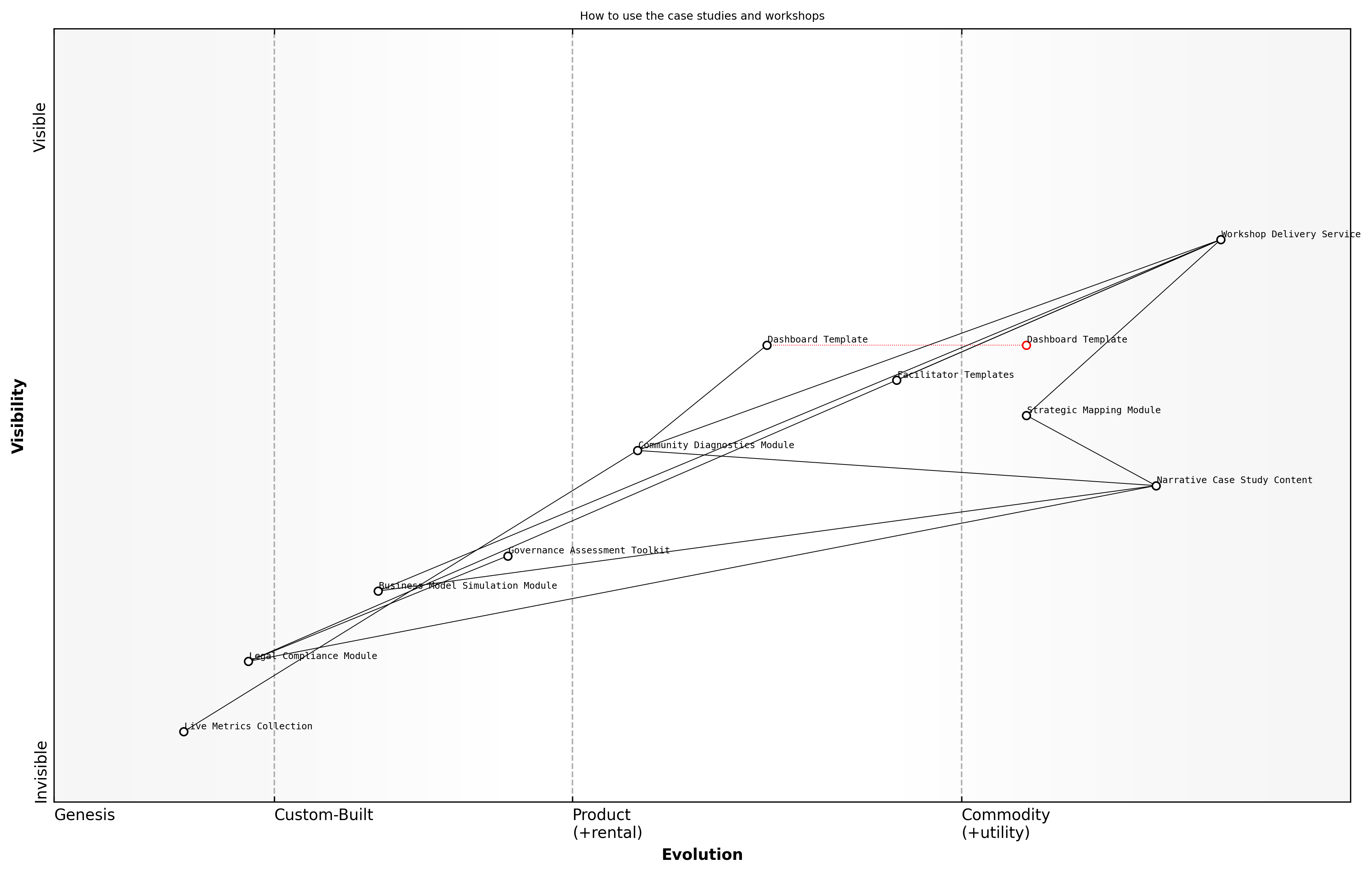
Workshops are organised around modular toolkits that correspond to core themes: strategic mapping, community diagnostics, commercial modelling and legal compliance. Facilitators can mix and match exercises to suit time constraints and team composition, ensuring alignment with board‑level priorities and operational realities.
- Strategic Mapping Exercise: use the Wardley Mapping canvas to plot your organisation’s open source portfolio
- Community Health Drill‑Down: populate the dashboard template with live metrics from an active project
- Business Model Simulation: run a role‑play to negotiate open core and dual licensing scenarios
- Compliance Walkthrough: apply the governance assessment toolkit to a sample codebase and identify gaps
Tailoring the workshop modules to your organisation’s maturity level ensures that strategic insights translate into pragmatic roadmaps, says a leading expert in the field
To maximise impact, we recommend running a multi‑day workshop that sequentially addresses mapping, community health and monetisation, punctuated by guided reflections on each case study. This approach nurtures cross‑functional alignment and embeds open source principles deeply into strategic decision‑making.
Chapter 1: Strategic Frameworks and Cross‑Disciplinary Foundations
Wardley Mapping for Open Source Advantage
Core concepts of Wardley Mapping
Wardley Mapping offers a dynamic visualisation of an organisation’s landscape, enabling leaders to identify strategic opportunities and risks. In the context of open source, mapping clarifies how components evolve from early innovation to ubiquitous commodity, guiding decisions on where to invest in upstream contributions or where to rely on established community projects.
A Wardley Map is composed of two axes: the value chain (vertical) and the evolution axis (horizontal). The vertical axis represents user needs and the activities required to meet them, while the horizontal axis tracks maturity from Genesis to Custom Built, Product/Rental and Commodity/Utility.
- Genesis: novel or untested capabilities often found in research or R&D labs
- Custom Built: bespoke solutions tailored to specific user needs
- Product/Rental: standardised offerings available for purchase or lease
- Commodity/Utility: ubiquitous services with high automation and minimal differentiation
Mapping begins with decomposition: breaking down a high‑level user need into its constituent components. This process reveals dependencies and prioritises activities based on strategic importance and evolution stage.
- Identify the anchor user need that drives value
- List all activities required to satisfy that need
- Position each activity along the evolution axis
- Determine dependencies by drawing links between components
The climate layer captures external factors that influence component evolution. In open source projects, climate includes community trends, regulatory mandates and technological shifts.
- Community dynamics such as contributor growth or attrition
- Regulatory changes affecting licence compliance or data sovereignty
- Market trends, for instance the rise of containerisation or AI
- Technological enablers like CI/CD pipelines or cloud‑native platforms
Doctrines are guiding principles and best practices that apply across all maps. They ensure consistency and focus, helping teams navigate complexity even when specifics differ.
- Focus on user needs not solutions
- Explore patterns and commonalities across maps
- Adopt safe‑to‑fail experiments to reduce risk
- Share maps openly to build communal understanding
Motion refers to the strategic plays that move components along the map. Organisations can decide to build in‑house, contribute upstream, form partnerships or commoditise offerings, depending on position and ambition.
- Migrating custom‑built capabilities into community‑driven projects
- Commoditising mature components via managed services
- Chaining components to create integrated value streams
- Exploiting locality advantage by hosting or contributing regionally
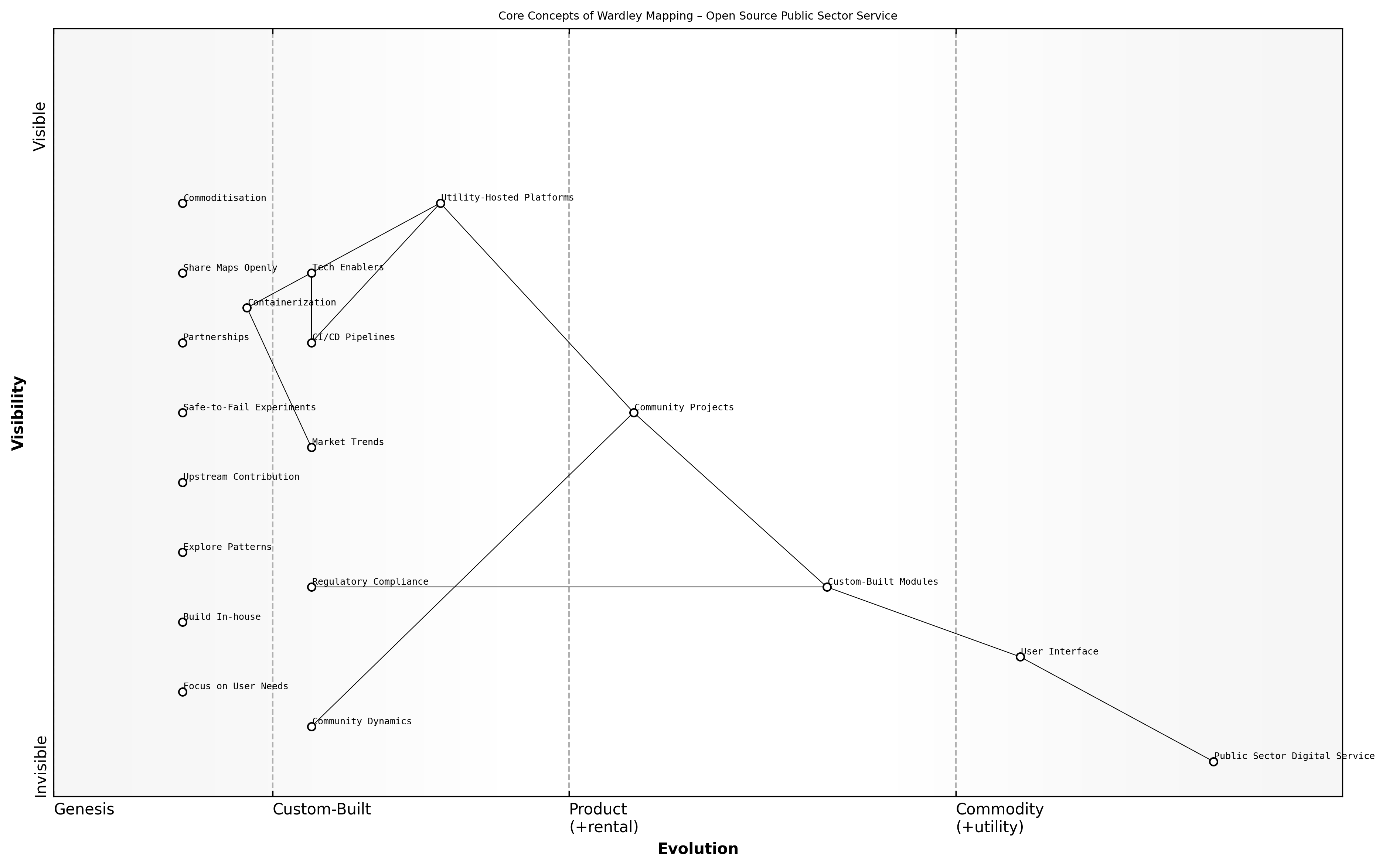
Mapping the evolution of each component revealed where to shift development upstream and where to consume community offerings says a senior government official
Mapping an open source ecosystem
Mapping an open source ecosystem extends the core principles of Wardley Mapping from individual components to the entire landscape of projects, contributors, governance bodies and downstream adopters. This holistic perspective enables leaders to visualise interdependencies and strategic dynamics across the ecosystem rather than isolated modules.
By decomposing the ecosystem into value chain activities—from project inception through to commoditised infrastructure—we reveal how community health, governance models and market forces interact. This approach directly supports open source as a competitive weapon by pinpointing where to invest in upstream contributions, where to commoditise services and where to cultivate partnerships.
- Define ecosystem scope, including core projects, adjacent libraries and hosting platforms
- Identify user needs and anchor points such as standards compliance or feature requirements
- List all ecosystem participants: maintainers, corporate sponsors, integrators and end users
- Position each participant and activity along the evolution axis from Genesis to Commodity
- Draw dependencies to illustrate flows of code, governance decisions and resource contributions
The climate layer in an ecosystem map captures external influences that shape community evolution. Regulatory mandates, funding programmes, geopolitical tensions and emerging technology trends all exert pressure on where projects move along the evolution axis and how contributors allocate effort.
- Regulatory changes impacting licence compliance and data sovereignty
- Funding and grant initiatives that seed new projects in Genesis
- Geopolitical considerations influencing hosting location or contributor access
- Technological shifts such as containerisation or AI that drive adoption
- Corporate strategic directives that prioritise certain repositories or foundations
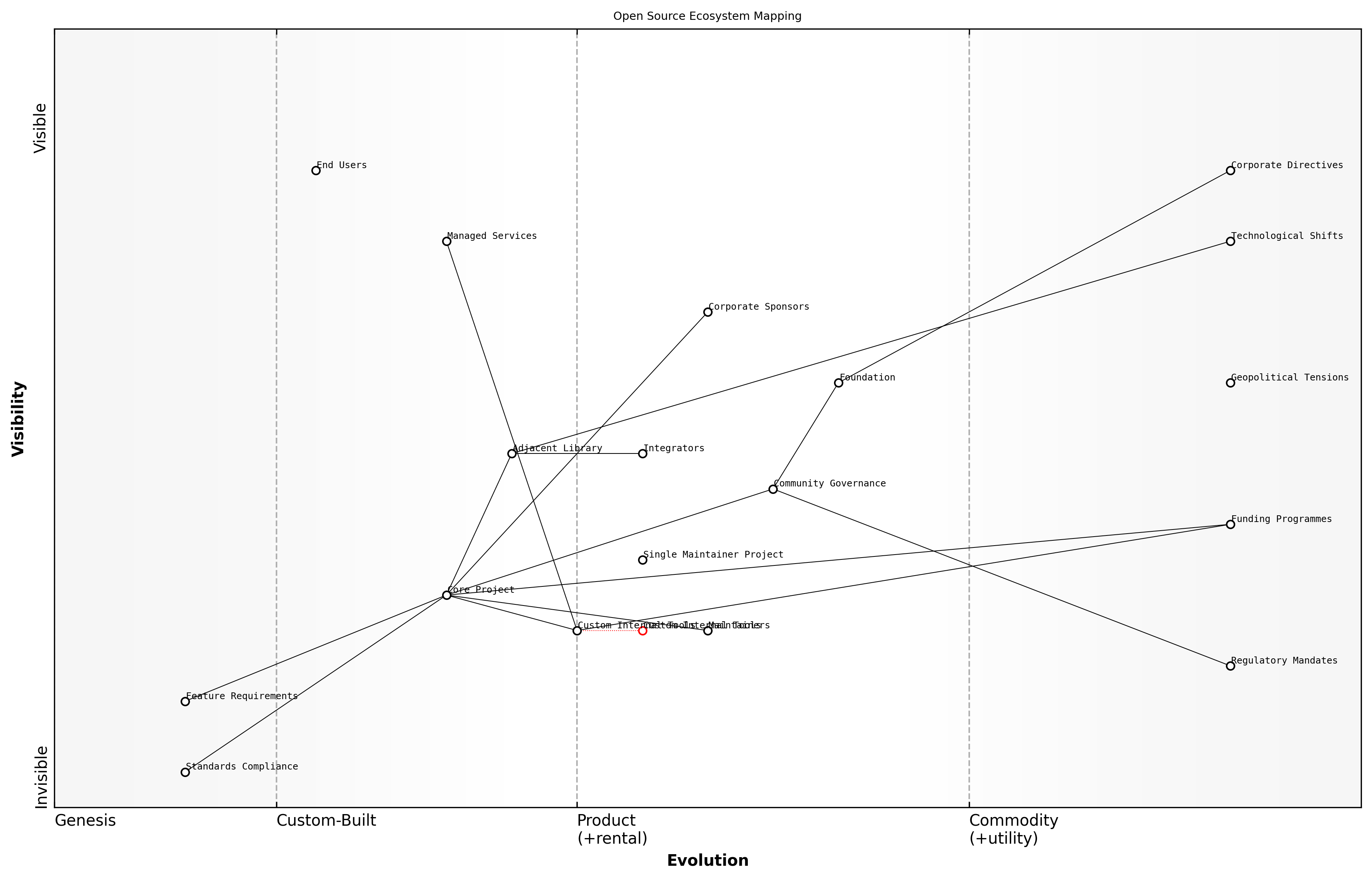
Interpreting the ecosystem map reveals strategic plays such as migrating custom internal tools into community projects, commoditising mature components via managed services or forming foundations to steward mid‑stage technologies. The map guides resource allocation to high‑impact areas and highlights potential single points of failure.
Visualising the entire open source ecosystem accelerates alignment between technical teams and boardroom strategists, says a senior government official
Practical considerations for ecosystem mapping include updating the map at regular intervals, involving cross‑functional stakeholders (legal, security, procurement) and aligning mapping workshops with release cadences and community governance meetings.
- Identify strategic gaps where ecosystem stewardship can yield competitive differentiation
- Mitigate risks by spotting dependencies on immature or single‑maintainer projects
- Prioritise upstream contribution investments to accelerate project maturity
- Inform partnership and funding decisions based on ecosystem topology
- Enhance cross‑team collaboration by providing a shared visual reference
Identifying strategic plays and migrations
In the context of open source as a competitive weapon, identifying strategic plays and migrations is critical for leadership teams. Wardley Mapping reveals not only where components reside on the evolution axis but also the possible motions—known as plays—that organisations can execute to reshape their landscape. By consciously selecting plays, public sector bodies and enterprises align investment, community engagement and risk management towards strategic objectives.
- Contribute upstream to accelerate maturity of Custom Built components and reduce internal maintenance overhead
- Commodify as a service by offering managed hosting for Commodity utilities, capturing recurring revenue and strengthening ecosystem influence
- Chain components into integrated platforms, bundling open source modules to deliver end‑to‑end solutions that competitors struggle to replicate
- Migrate in‑house builds into community‑driven projects, shifting maintenance burden and benefiting from collective innovation
- Localise or sovereignise critical utilities by forking or tailoring regional distributions to meet data sovereignty and security mandates
- Harvest value from mature components through tiered support and training services, balancing open access with premium offerings
Each play aligns with a specific phase on the Wardley Map evolution axis. For instance, a novel capability in Genesis may warrant in‑house development and targeted upstream contributions to seed a new community. Conversely, a Product/Rental offering can be commoditised as a hosted service when automation and scale make proprietary differentiation unsustainable.
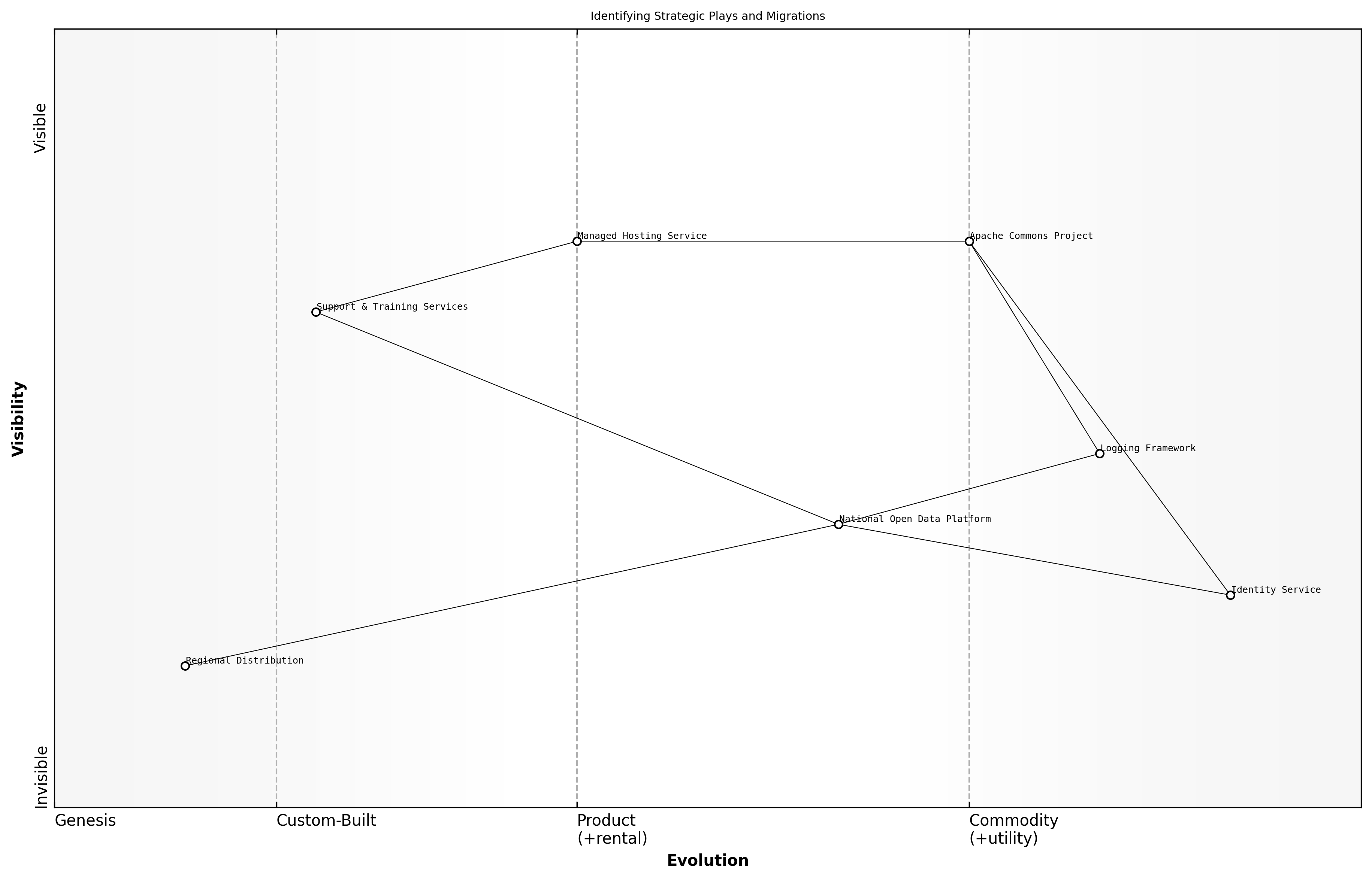
Consider a national open data platform that migrated its bespoke logging framework into the Apache Commons project. By contributing extensively upstream, the agency reduced maintenance costs by 40 percent, benefited from a broader security review and set the foundation for a new managed service payroll integration that generated positive revenue.
- Component maturity and user dependency profiles
- Health and governance of the target open source community
- Regulatory constraints around licence compatibility and data residency
- Internal capability to manage contributor relationships and code reviews
- Commercial impact of commoditising versus retaining proprietary control
- Alignment with broader interoperability and sovereign capability mandates
Open source migrations allow agencies to focus on value creation rather than reinventing the wheel says a senior government official
Selecting the right play requires cross‑disciplinary insight. Economic public‑goods theory guides the understanding of upstream investment returns, while organisational sociology highlights power dynamics when forking or localising community projects. Network science can identify critical hubs for influence, and behavioural psychology informs recognition systems that motivate contributors during migration phases.
Porter’s Five Forces Meets Lean Startup
Adapting Porter’s model to communities
Open source communities are more than code repositories and mailing lists: they are dynamic ecosystems in which organisations, individual contributors and end users interact under shifting power relationships. Adapting Porter’s Five Forces to this context provides a structured way to analyse competitive pressures, collaboration opportunities and risks that shape community health and strategic outcomes.
Porter’s original model identifies five forces that determine industry profitability: threat of new entrants, bargaining power of suppliers, bargaining power of buyers, threat of substitute products or services, and intensity of competitive rivalry. In open source communities, these forces manifest differently, demanding a reinterpretation that accounts for the public‑goods nature of code, network effects and governance structures.
- Threat of new entrants becomes the risk of forked projects or new communities forming around adjacent technologies, potentially drawing away contributors and users.
- Bargaining power of suppliers maps to the influence of key maintainers and core contributors whose decisions on roadmap, licensing and governance can shape project direction.
- Bargaining power of buyers reflects downstream organisations and integrators that adopt, package or host the software, whose support commitments and funding can sway feature priorities.
- Threat of substitutes covers alternative libraries, frameworks or proprietary offerings that address similar use cases, affecting contributor retention and community growth.
- Rivalry among existing projects encapsulates competition for mindshare, funding, contributor time and ecosystem integrations across similar open source initiatives.
However, open source communities also introduce unique dynamics. Contributors are both suppliers and customers of code; they vote with pull requests, issue reporting and governance participation. Decision pathways are transparent, and forking acts as both a competitive incentive and a safety valve against stagnation or unfavourable governance changes.
- Network effects as a barrier to entry: large, active communities deter new forks by offering rich plugin ecosystems and rapid issue resolution.
- Reputation economy: individual contributors build social capital, influencing their bargaining power within governance bodies and sponsor organisations.
- Governance model as a force multiplier: foundation‑led or hybrid governance can stabilise supplier power by diluting single‑maintainer influence and opening formal voting rights.
- Community health metrics: visible indicators such as contributor growth, issue backlog age and merge times affect perceptions of rivalry and substitute risk.
- Sovereign forking: public sector bodies may fork projects to meet regulatory or data‑sovereignty mandates, reconfiguring threat of substitutes in regional markets.
To operationalise this adapted model, practitioners should define measurable indicators for each force and integrate them into a community dashboard. This enables continuous monitoring of shifts in contributor behaviour, adoption trends and governance disputes, providing an early‑warning system for strategic decision‑makers.
- Number of new forks and divergence in feature branches (threat of new entrants)
- Concentration ratio of code contributions among top n% of maintainers (supplier power)
- Volume and monetary value of corporate sponsorships or paid support contracts (buyer power)
- Rate of migration to alternative projects or proprietary replacements (substitute threat)
- Comparative commit activity and release cadence across similar open source initiatives (competitive rivalry)
By reframing Porter’s forces through a community lens, organisations can identify where to invest in governance reforms, contributor incentives or integration partnerships to shift the balance of power in their favour says a leading strategist in open source
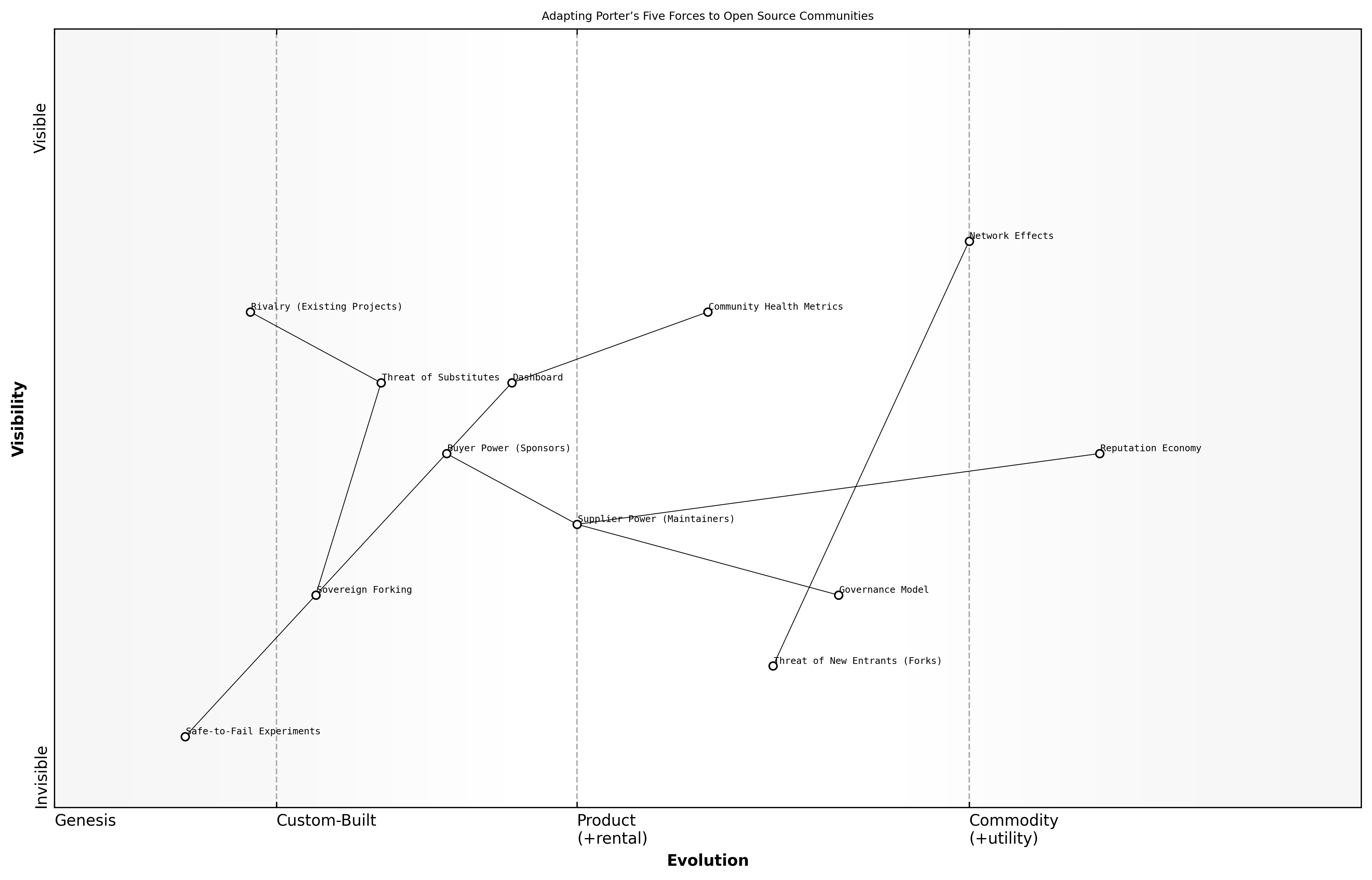
This community‑centric interpretation of Porter’s model dovetails with Lean Startup principles by emphasising validated learning through continuous measurement. Running safe‑to‑fail experiments—such as trial governance changes or sponsored contributor programmes—allows teams to test hypotheses about force dynamics, iterate rapidly and refine their competitive positioning within the open source ecosystem.
Lean Startup principles in open source projects
Open source projects often navigate high uncertainty around feature viability, contributor engagement and downstream adoption. Lean Startup principles provide a structured approach to reduce risk through rapid experimentation, validated learning and iterative development cycles tailored to community dynamics.
- Build a minimal viable release by identifying the smallest set of features that address a core user need and publishing an alpha or beta version
- Measure community response through issue volume, pull request feedback, download counts and sentiment in discussion forums
- Learn by analysing data and qualitative feedback to refine the roadmap, pivot modules, or double down on promising features
Applying innovation accounting in an open source context means choosing metrics that reflect both technical progress and community health. By focusing on actionable indicators, project maintainers can demonstrate value to sponsors and adapt priorities based on real‑world evidence rather than assumptions.
- Cycle time from issue creation to merged pull request to measure development speed
- Number of active contributors per release to assess community engagement
- Download or installation metrics to gauge adoption and identify popular features
- Rate of new issues and feature requests to understand user pain points
Adopting lean experiments in an open source project accelerates learning while keeping contributor motivation high says a leading strategist in open source
Experimentation fosters a culture of safe‑to‑fail prototypes, encouraging contributors to propose novel ideas without fear of wasted effort. Over time, small validated wins compound into a robust roadmap aligned with both community needs and strategic objectives.
[Insert Lean Startup Experiment Canvas illustrating build‑measure‑learn cycles in an open source project]
Integrating both frameworks for maximum insight
By uniting Porter’s Five Forces with Lean Startup principles, organisations gain a dual lens that combines competitive analysis with rapid experimentation. This integrated approach helps uncover hidden risks in an open source community while iteratively testing interventions to shift the balance of power in your favour.
- Map each force to a set of testable hypotheses that address community dynamics and market pressures
- Design minimal viable experiments (MVEs) to probe supplier power, substitute threats and competitive rivalry
- Embed community health and performance metrics into build–measure–learn cycles
- Use validated learning to adapt governance, contribution pathways and licensing strategies
- Prioritise safe‑to‑fail pilots in areas with high impact and high uncertainty
A practical four‑step process brings these ideas to life:
- Select the force you wish to influence (for example, reduce bargaining power of key maintainers).
- Frame a Lean experiment by defining an MVE (such as a streamlined mentorship programme).
- Measure outcomes with both force‑related indicators (contributor concentration ratio) and Lean metrics (cycle time from issue to merge).
- Learn and iterate by adjusting incentives, governance charters or tooling based on real‑world evidence.
[Insert Combined Framework Matrix illustrating how each of Porter’s forces aligns with build–measure–learn stages and corresponding community metrics]
Integrating both frameworks into a single dashboard enables board‑level oversight with aligned KPIs. For instance, tracking a supplier_power_index alongside average merge cycle time reveals whether core contributors are becoming bottlenecks or if community resilience is improving.
metrics:
  supplier_power_index: top_5_contributor_percentage
  cycle_time: average_time_to_merge
experiments:
  - hypothesis: lifting entry barriers will reduce threat_of_substitutes
    mve: simplified contribution guide
    success_metric: 20% increase in new contributors per sprint
Combining competitive forces analysis with lean experimentation delivers actionable insights that boards can trust says a leading strategist in open source
Cross‑Disciplinary Lenses
Economic public‑goods theory and commons management
Economic public‑goods theory provides the conceptual foundation for understanding open source as a non‑rivalrous, non‑excludable resource. By treating code and documentation as public goods, organisations unlock network effects that drive innovation velocity and ecosystem resilience.
Traditional public‑goods economics identifies two core properties that apply directly to open source projects. Recognising these properties helps leaders design governance models and funding mechanisms that sustain healthy communities and guard against under‑provision or over‑use.
- Non‑rivalry: one user’s consumption of code does not diminish its availability to others
- Non‑excludability: projects licensed under permissive or copyleft terms remain accessible to all
- Positive network externalities: each additional contributor or adopter increases overall value
Commons management theory, pioneered by Elinor Ostrom, offers design principles for stewarding shared resources without centralised control or privatisation. Open source communities embody these principles by instituting transparent processes, defined roles and collective decision‑making.
- Clearly defined boundaries for contributor and user roles
- Congruence between rules and local conditions, for example code‑of‑conduct aligning with project goals
- Collective decision‑making through meritocratic or democratic governance
- Graduated sanctions for rule violations, such as moderation steps before removal
- Conflict resolution mechanisms that preserve trust and minimize fragmentation
- Monitoring and accountability via public dashboards and transparent issue tracking
Effective commons management transforms a software project from a collection of individual efforts into a self‑sustaining ecosystem says a leading expert in the field
Integrating public‑goods theory with open source governance enables organisations to: identify funding gaps, calibrate contribution incentives and measure the health of the commons. These insights inform strategic plays such as upstream contributions or localised forks to meet sovereign requirements.
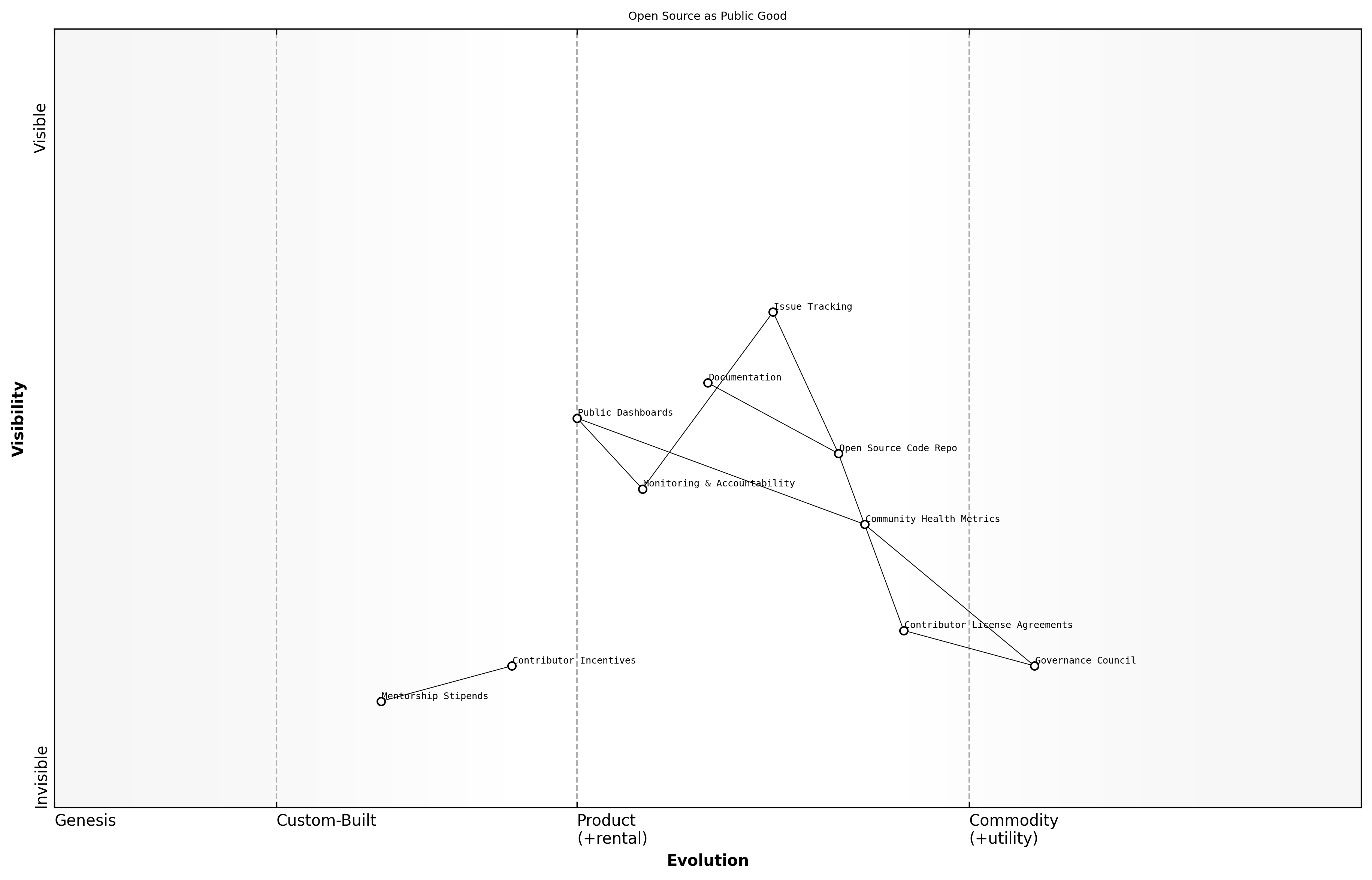
In practice, government and public‑sector bodies can apply commons management by matching resource provisioning with contributor incentives and embedding governance charters into procurement contracts. This approach ensures long‑term sustainability and reduces reliance on proprietary vendors.
- Establish public funding pools to cover critical maintenance tasks
- Implement contributor licence agreements that respect community norms
- Integrate community health metrics into performance dashboards
- Offer mentorship stipends to lower barriers for new contributors
- Set up polycentric governance councils to distribute decision authority
- Conduct periodic audits of licence compliance and code quality
By viewing open source contributions as investments in a shared public good, organisations shift from short‑term gains to enduring competitive advantage says a senior government official
commons_metrics:
  total_contributors: integer
  active_maintainers: integer
  funding_allocated: currency
  issues_closed_per_month: integer
  governance_meetings_held: integer
Organisational sociology of collaborative projects
Organisational sociology examines how social structures, roles and power relationships shape behaviour and outcomes within collaborative open source projects. By applying these lenses, leaders in the public sector can understand the hidden dynamics driving contributor engagement and strategic influence, ensuring their initiatives become sustained engines of innovation.
- Role structures and hierarchies that emerge organically
- Informal networks and boundary spanners connecting stakeholder groups
- Cultural norms, rituals and shared symbols that reinforce identity
- Motivational drivers and identity formation among contributors
- Impact of power relations on decision making and resource distribution
Social structures in open source communities often defy traditional organisational charts. Instead of rigid hierarchies, projects feature fluid constellations where influence is earned through merit and visible contributions. Understanding these emergent structures helps strategists identify who holds de facto authority, who acts as connectors and where potential bottlenecks lie.
- Core maintainers who set technical direction
- Peripheral contributors who offer sporadic patches
- Gatekeepers such as release managers and triage teams
- Sponsors and funding bodies influencing roadmap priorities
- Boundary spanners linking internal teams with the wider community
Informal networks underpin the flow of knowledge and resources across project boundaries. These networks often operate through direct messaging channels, social media interactions and side collaborations. Recognising boundary spanners—individuals who bridge corporate and community spheres—allows organisations to strengthen ties and accelerate knowledge transfer.
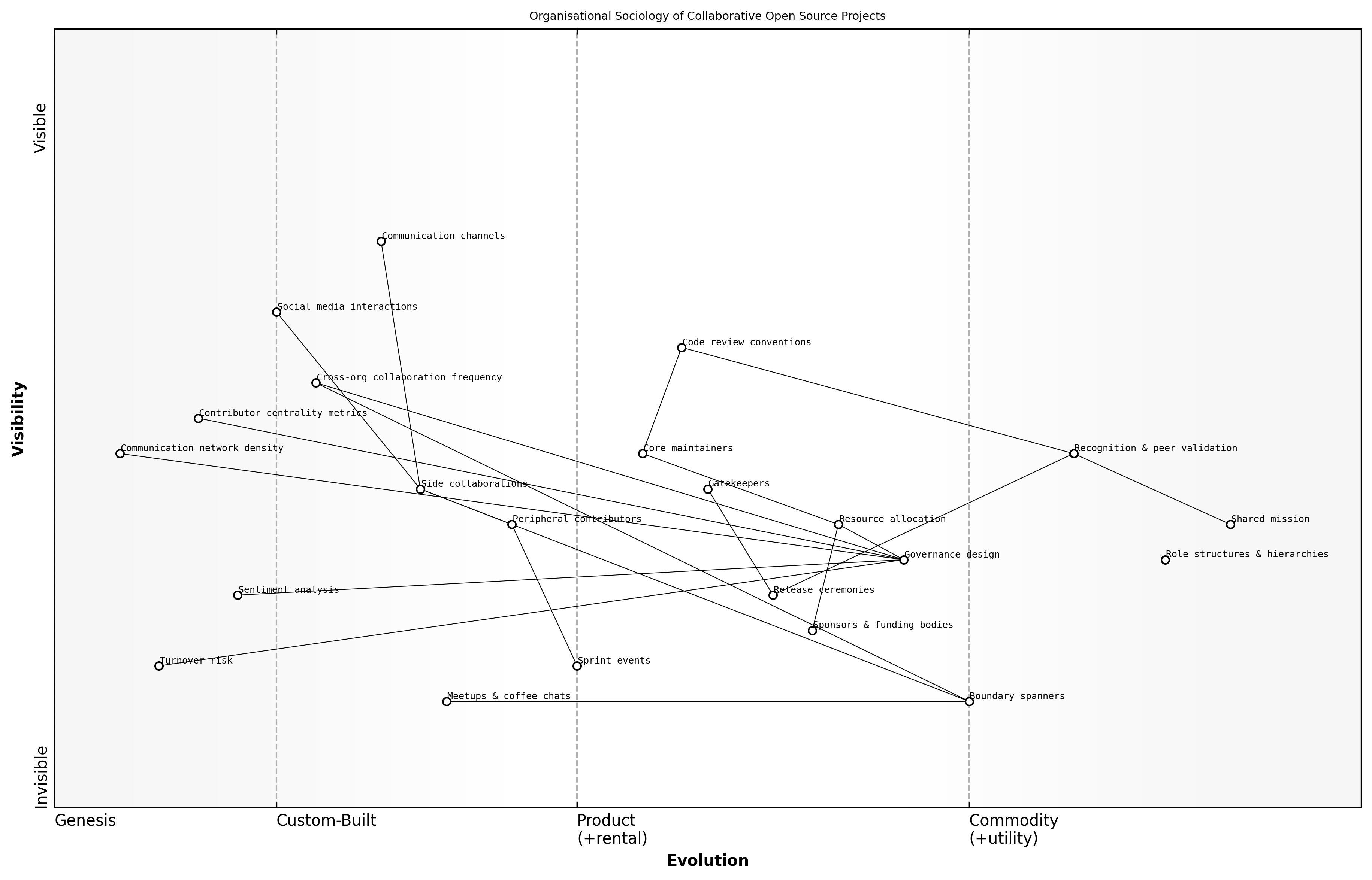
Cultural norms and rituals—such as code review conventions, release ceremonies and collaborative sprints—reinforce a shared sense of purpose and belonging. These symbolic practices sustain engagement, transmit values to newcomers and reduce coordination friction by establishing predictable patterns of collaboration.
- Code of Conduct announcements that set behavioural expectations
- Regular release retrospectives that celebrate achievements
- Mentorship programmes and sprint events to onboard new contributors
- Community stand‑ups and town halls for transparent decision making
- Informal gatherings like meetups and virtual coffee chats to build trust
Contributor identity and motivation emerge from a blend of personal, social and instrumental factors. Contributors find purpose through recognition, peer validation and alignment with project goals. For government bodies, fostering a sense of shared mission—such as delivering public good—can strengthen intrinsic motivation and loyalty.
Organisational sociology reveals that trust is the currency of open source communities and understanding power dynamics is essential for effective stewardship says a senior strategist
Integrating organisational sociology insights into governance design and strategic planning empowers leadership to anticipate community reactions, allocate resources effectively and design interventions that align social incentives with policy objectives. By mapping social roles alongside technical components, public sector leaders can deploy open source as a nuanced tool of statecraft and innovation.
- Contributor centrality metrics to identify key influencers
- Density of communication networks to gauge collaboration strength
- Turnover rates in core teams as risk indicators
- Sentiment analysis of discussion forums for cultural health
- Frequency of cross‑organisation collaborations
Network science: understanding ecosystem topology
Applying network science to open source ecosystems reveals the hidden architecture of connections between projects, contributors, governance bodies and adopters. By viewing the community as a graph of nodes and edges, public sector organisations can identify critical hubs, potential points of failure and opportunities to strengthen resilience and influence.
- Nodes representing actors such as maintainers, corporate sponsors, downstream integrators and user organisations
- Edges capturing interactions like code contributions, issue comments, sponsorship relationships and governance votes
- Topological patterns including centralisation, modular clusters and bridging nodes
- Dynamic metrics tracking growth, churn and information flow over time
At its core, ecosystem topology analysis decomposes the community into its structural components. Leaders in government and public sector contexts can use this lens to ensure that critical services are not overly dependent on a small number of maintainers, to spot emerging subcommunities working on strategic features, and to measure the robustness of governance networks.
Network metrics provide quantitative insight into community health and risk. By integrating these into a dashboard alongside Wardley maps and Porter–Lean experiments, boards gain a multi‑dimensional view of strategic posture and emergent threats.
- Degree centrality measuring the number of direct connections each actor has
- Betweenness centrality identifying nodes that bridge otherwise disconnected clusters
- Clustering coefficient revealing tight‑knit subcommunities and their cohesion
- Average path length indicating how quickly information diffuses across the network
- Network density quantifying overall connectivity relative to possible links
- Modularity scores to detect thematic or functional groupings within the ecosystem
Practical applications include designing succession plans for key maintainers, targeting outreach to under‑connected user groups, and simulating the impact of contributor departures. For example, a ministry of defence might map dependencies in a secure communications stack, then proactively invest in training new maintainers to reduce single‑point‑of‑failure risk.
[Insert Network Map: detailed description of a force‑directed graph visualising contributor interactions, module dependencies and sponsorship flows, annotated with centrality heatmaps]
A step‑by‑step approach to ecosystem topology analysis empowers teams to move from raw data to strategic insight:
- Collect contribution and interaction data from repositories, mailing lists and governance platforms
- Construct a graph data model defining nodes, edges and attributes such as role or organisation
- Compute centrality, clustering and modularity metrics using network analysis libraries
- Visualise the graph to highlight critical nodes and clusters
- Interpret results in the context of strategic plays (for instance, strengthening weak bridges)
- Integrate findings into board‑level dashboards alongside financial and health KPIs
A network view uncovers dependencies you cannot see in code alone says a senior government official
metrics:
  nodes:
    total: node_count
    key_hubs: top_10_percent_centrality
  edges:
    total: edge_count
    average_degree: avg_degree
  connectivity:
    density: edge_density
    clustering: average_clustering_coefficient
  information_flow:
    average_path_length: avg_path_length
    betweenness: top_5_betweenness
Behavioural psychology: motivating contributors
Behavioural psychology examines the mental models and stimuli that drive individuals to participate actively in collaborative projects. By understanding what motivates contributors, organisations can sculpt environments that foster sustained engagement and innovation in open source communities.
Motivation arises from a combination of intrinsic and extrinsic factors. Intrinsic drivers—such as mastery, purpose and autonomy—fuel long‑term commitment, while extrinsic elements—like recognition, rewards and social proof—kick‑start participation and reinforce positive behaviour.
- Mastery: the desire to learn new skills and solve challenging problems
- Autonomy: freedom to choose tasks, tools and working styles
- Purpose: meaningful mission that aligns personal and community goals
- Recognition: visible acknowledgement of contributions through badges, leaderboards or shout‑outs
- Belonging: sense of identity and social connection within the project
To translate these drivers into practice, projects should implement behavioural design patterns that guide contributors along a clear journey. Reducing friction at key stages and offering timely feedback creates a scaffold for sustained engagement.
- Clear onboarding flows with step‑by‑step guides and interactive tutorials
- Micro‑commit milestones that celebrate small wins and build confidence
- Mentorship pairings that connect newcomers with experienced contributors
- Gamification elements such as progress bars, badges and community challenges
- Regular feedback loops through code reviews, surveys and retrospective meetings
Intrinsic motives such as purpose and mastery often outweigh external rewards in sustaining long‑term engagement says a leading expert in open source
[Insert Behavioural Design Checklist: detailed table mapping motivational techniques to lifecycle stages from onboarding through stewardship]
Case Study: A public‑sector digital transformation unit introduced a badge system recognising first contributions, code reviews and documentation efforts. In six months, new contributor retention rose by 40% and average pull‑request completion time dropped by 25%, illustrating the power of timely recognition and feedback loops.
metrics:
  autonomy_index: percentage_of_contributions_initiated_by_contributors
  mastery_score: average_number_of_reviewed_pull_requests_per_contributor
  recognition_count: badges_awarded_per_release_cycle
  engagement_rate: active_contributors_per_week
experiments:
  - hypothesis: introducing a mentorship programme will increase mastery_score by 20%
    mve: pilot mentor‑mentee pairing for ten newcomers
    success_metric: 20 percent uplift in average pull‑requests reviewed
Chapter 2: Building and Governing High‑Impact Communities
Selecting and Evolving Governance Models
Benevolent dictator vs foundation models
Selecting an appropriate governance model is foundational to building high‑impact open source communities. In government and public sector contexts, the choice between a benevolent dictator model and a foundation‑led approach carries significant implications for agility, risk management and ecosystem influence. This section examines both models, contrasts their benefits and limitations, and outlines criteria for evolving governance to meet strategic objectives.
The benevolent dictator model, sometimes referred to as a BDFL (Benevolent Dictator For Life), concentrates decision‑making authority in a single lead maintainer or small core team. This individual or group sets the technical direction, reviews contributions, and resolves disputes. While it can accelerate decision cycles and ensure coherent vision, it also introduces potential single‑point‑of‑failure risks.
-
Clear technical vision driven by a single authority
-
Rapid decision‑making and streamlined roadmap execution
-
Strong personal accountability for project success
-
Lower overhead compared with formal governance bodies
-
Risk of bottlenecks if the lead maintainer lacks capacity
-
Perceived lack of transparency in decision processes
-
Difficulty in scaling contributor base and delegating responsibilities
-
Potential for abrupt forks if personal disputes arise
A benevolent dictator model can deliver speed and coherence but requires careful succession planning to avoid mission‑critical outages says a senior government official
In contrast, a foundation model establishes a neutral legal and organisational entity to oversee project governance. Foundations typically define charters, boards, working groups and formal voting processes. They offer a robust framework for vendor neutrality, structured fundraising and regulatory compliance, which aligns well with public sector expectations around accountability and transparency.
-
Impartial governance that mitigates individual bias
-
Formal processes for decision‑making, dispute resolution and compliance
-
Enhanced trust from corporate sponsors and regulatory bodies
-
Scalable structure supporting multiple projects under one umbrella
-
Increased administrative overhead and slower decision cycles
-
Potential dilution of technical leadership and vision
-
Complexity in aligning diverse stakeholder interests
-
Need for sustained funding to maintain foundation operations
While benevolent dictator models excel in early‑stage projects requiring tight coordination, foundation models are ideal for mature ecosystems demanding neutrality and scalability. Public sector bodies often begin with a lead‑maintainer approach and later transition to a foundation as community size, compliance requirements and stakeholder diversity increase.
- Project maturity and contributor count
- Regulatory and compliance obligations
- Funding and sponsorship complexity
- Risk tolerance and succession planning
- Community expectations for transparency
Evolving governance demands a structured decision framework. Organisations should monitor key indicators such as contributor growth, decision latency and dispute frequency. When thresholds are crossed, a migration plan ensures continuity of operations, protection of intellectual property and community alignment.
- Contributor headcount exceeding maintainable ratio
- Average time to resolve critical issues surpassing service‑level targets
- Increase in third‑party sponsorships and legal agreements
- Recurring conflicts that cannot be resolved by individual maintainers
[Insert governance evolution decision matrix illustrating triggers, decision points and migration steps from benevolent dictator to foundation model]
Governance must adapt as communities grow; static models create hidden risks says a leading strategist in open source
Hybrid governance approaches
Hybrid governance combines the strengths of benevolent dictator and foundation models to balance rapid decision‑making with formal accountability in open source projects. This approach recognises that as communities grow and stakeholder diversity increases, neither extreme centralisation nor full decentralisation delivers optimal results on its own.
In a hybrid model, a core technical steering committee or lead maintainer coexists with a legal entity or advisory board. Day‑to‑day technical decisions remain agile under the guidance of experienced maintainers, while strategic, financial and compliance responsibilities are overseen by a structured governance body.
- A technical steering committee empowered to approve roadmaps and architectural changes
- A legal foundation or advisory board responsible for policy, fundraising and licence compliance
- Working groups or special interest teams for modules, localisation and security
- Defined escalation pathways between technical and strategic bodies
- Transparent charters that document roles, decision rights and conflict‑resolution processes
This design harnesses the agility of the benevolent dictator model for innovation velocity, while leveraging the neutral platform of a foundation to enhance trust, diversify sponsorship and mitigate single‑point‑failure risks.
- Accelerated feature delivery through empowered maintainers
- Enhanced legal and financial stability via a formal entity
- Greater inclusivity by delegating module‑specific authority
- Clearer accountability for compliance and policy adherence
- Improved succession planning with distributed leadership
However, hybrid governance introduces complexity that must be managed carefully. Overlapping authorities can create ambiguity. Documentation and communication protocols are essential to prevent decision‑latency and governance friction.
- Risk of duplicated effort between technical and strategic bodies mitigated by clear charters
- Potential for slowed decisions without defined escalation rules
- Increased administrative overhead requiring dedicated secretariat support
- Necessity for ongoing alignment sessions to reconcile roadmap priorities
Organisation maturity and ecosystem factors guide the adoption of hybrid models. Projects typically transition when contributor numbers exceed single‑maintainer capacity, when sponsorship volumes require oversight, or when regulatory mandates demand formalised structures.
- Contributor count surpasses maintainable ratio under benevolent dictator model
- Complex funding and sponsorship agreements require fiduciary governance
- Community diversity spans multiple time zones, languages and sectors
- Heightened compliance or security requirements from public sector regulations
- Desire to decentralise module‑level authority without losing strategic coherence
A well‑executed hybrid governance framework harnesses both centralised agility and decentralised inclusivity, says a senior government official
Criteria for model selection
Selecting an appropriate governance model requires a clear set of criteria that align organisational objectives, community dynamics and regulatory obligations. In public sector contexts, where transparency, accountability and risk management are paramount, these criteria serve as decision levers for choosing between benevolent dictator, hybrid or foundation models and guide the timing of any future evolution.
- {}
- {}
- {}
- {}
- {}
- {}
- {}
Each criterion should be mapped to measurable indicators drawn from community dashboards and governance assessments. For example, a contributors_per_maintainer ratio above a defined threshold may trigger consideration of a hybrid model, while an uptick in governance_dispute_frequency could prompt a move to a foundation structure with formal dispute‑resolution processes.
[Insert governance evolution decision matrix illustrating triggers, decision points and migration steps from benevolent dictator through hybrid to foundation]
```yaml
metrics:
  contributors_per_maintainer: 30
  critical_issue_response_time_hours: 72
  sponsor_agreements_count: 5
  governance_dispute_frequency_per_month: 2
> Governance selection should reflect both current community dynamics and future strategic ambitions says a senior government advisor

By embedding these criteria into a continuous review process, public sector bodies can ensure their governance model remains fit for purpose. Regularly revisiting thresholds, reviewing community feedback and aligning with evolving regulatory landscapes protects both innovation velocity and institutional integrity.


### <a id="contributor-onboarding-and-retention"></a>Contributor Onboarding and Retention

#### <a id="crafting-clear-contribution-pathways"></a>Crafting clear contribution pathways

A well‑defined contribution pathway is the backbone of any high‑impact open source community. By mapping the journey from first contact to sustained engagement, organisations reduce uncertainty, accelerate learning curves and align contributor efforts with strategic objectives. In government and public sector contexts, clear pathways not only foster inclusion but also ensure that mission‑critical projects benefit from reliable, diverse participation.

- Awareness: discoverability via documentation, websites and outreach
- Preparation: setting up development environments and granting access
- First Contribution: low‑risk tasks to build confidence
- Ramp‑up: deeper technical work and mentorship support
- Stewardship: assuming leadership roles and driving roadmap initiatives

Each phase serves a distinct purpose. In the Awareness stage, clear calls to action on project portals and social channels invite newcomers. Preparation involves automated scripts and containerised environments that eliminate setup errors. First Contribution tasks—such as typo fixes, documentation improvements or test coverage enhancements—are labelled accordingly, signalling safe entry points. As contributors gain familiarity, they progress to Ramp‑up tasks with structured mentorship. Finally, Stewardship recognises those ready to influence architecture, governance and community strategy.

- Comprehensive CONTRIBUTING.md guide with step‑by‑step screenshots
- Issue and pull request templates to standardise submissions
- Automated continuous integration checks with clear pass/fail feedback
- Dedicated chat channels or forums for real‑time support
- Badge systems or digital recognitions that celebrate milestones

Reducing friction requires both technical and social tooling. Automated scripts (`./setup.sh`), container images (`Dockerfile`), or virtual machine templates accelerate environment onboarding. Issue templates pre‑populate metadata, guiding contributors to include version information, test cases and compliance checklists. Real‑time communication channels—such as Slack, Mattermost or Matrix—ensure questions are answered promptly, preventing drop‑off at critical moments.

[Insert Contributor Journey Map: diagram illustrating phases from newcomer to maintainer with key touchpoints, resources and decision gates]

Inclusivity and accessibility are essential. Documentation should use plain language, adhere to accessibility guidelines (WCAG), and offer translations where possible. Interactive tutorials or browser‑based sandboxes allow contributors to experiment without local setup. Providing multiple pathways—text guides, video walkthroughs and paired programming sessions—caters to diverse learning styles and strengthens retention.

> A well defined path transforms confusion into confidence says a senior government official
Sample CONTRIBUTING.md
1. Get the code
git clone https://example.org/project.git
cd project
./setup.sh
2. Choose an issue
Look for issues labelled good‑first‑issue or documentation in ISSUE_TEMPLATE.md.
3. Submit a pull request
Create a branch, commit with a clear message, and open a PR referencing the issue number.
4. Automated checks
Ensure all CI tests pass and fix any lint or formatting errors reported in the build logs.
5. Review and merge
Engage in the code review, address feedback, and celebrate your first merged contribution!
By combining structured pathways, automated tooling and inclusive practices, public sector projects can turn sporadic interest into sustained contributions. This structured approach not only uplifts community health metrics—reducing time‑to‑first‑merge and increasing contributor retention—but also embeds open source principles into organisational culture, reinforcing open source as a strategic asset.


#### <a id="mentorship-and-documentation-best-practices"></a>Mentorship and documentation best practices

Effective mentorship and comprehensive documentation are twin pillars of contributor onboarding and retention. In high‑impact open source communities, a structured mentorship programme accelerates learning and fosters a sense of belonging, while living documentation ensures consistency, reduces dependency on direct support and embeds institutional knowledge.

- Clear pairing mechanisms for new contributors and experienced maintainers
- Defined mentorship goals and milestones aligned with project roadmap
- Regular check‑ins and feedback sessions to reinforce learning
- Access to paired programming or shadowing opportunities
- Recognition and support for mentors as well as mentees

Documentation must serve both as a reference and a teaching tool. Well‑structured docs reduce cognitive load for newcomers and provide experienced contributors with clear guidelines on code style, architecture decisions and testing requirements.

- Maintain a living CONTRIBUTING.md with step‑by‑step setup and contribution guidelines
- Use templates for issues and pull requests to standardise metadata and streamline reviews
- Provide inline code examples and tutorials for common workflows
- Implement clear navigation with labelled sections and a searchable index
- Offer translations and accessibility‑compliant formats where possible
- Update documentation as part of the definition of done in every release cycle

By integrating mentorship with documentation, communities create a self‑reinforcing ecosystem where mentors and novices alike rely on shared resources. Mentors guide contributors through docs, while feedback from mentoring sessions highlights gaps and drives continuous improvements in documentation.

[Insert Contributor Mentorship Flowchart: diagram showing the interplay between mentorship touchpoints and documentation resources]

- Average time from initial query to mentor assignment
- First‑contribution completion time with mentor support versus without
- Frequency of documentation updates following mentorship feedback
- Contributor satisfaction scores from periodic surveys
- Mentor engagement rate and uptake of support incentives

> Effective mentorship and living documentation transform onboarding into a strategic advantage says a senior government official


#### <a id="incentives-recognition-and-longterm-engagement"></a>Incentives, recognition and long‑term engagement

Incentives and recognition are pivotal for converting one‑off contributors into long‑term community stewards. Drawing on behavioural psychology, projects that align reward structures with intrinsic motivations and fair visibility foster sustained engagement and reduce contributor churn.

- Mastery – opportunities to learn, mentor and solve complex problems
- Purpose – participation in a mission that aligns with public service goals
- Autonomy – freedom to select tasks and influence roadmaps
- Recognition – visible credit for work and community status
- Belonging – sense of identity within a diverse contributor network

Effective programmes balance intrinsic and extrinsic incentives. Intrinsic rewards nurture long‑term commitment, while targeted extrinsic benefits accelerate early participation and reinforce positive behaviour.

- Stewardship roles such as module maintainer or working group lead
- Skill development through sponsored training and conference passes
- Influence over feature prioritisation and governance charters
- Mission alignment via invitations to strategic planning workshops

- Swag and branded merchandise for community events
- Bounties or small grants for high‑value issues
- Certificates of contribution issued by a foundation or public body
- Access to specialist tooling or cloud credits

A transparent recognition framework sets clear criteria and ensures equity. Contributors understand how to progress and what behaviours earn visibility, creating a virtuous cycle of motivation and reward.

- Digital badges for milestones such as first PR, code review or documentation improvement
- Leaderboards tracked in community dashboards and newsletters
- Mention in release notes and blog posts highlighting key achievements
- Annual community awards voted on by peers

> Sustained contribution thrives when individuals see their efforts valued and visible says a leading expert in the field

Long‑term engagement is cemented by clear progression pathways. From onboarding tasks to governance roles, each stage should build on prior achievements and open new avenues for influence and decision‑making.

- First contribution – fix a typo or write a test case
- Regular contributor – own a set of issues and mentor newcomers
- Module maintainer – approve PRs, manage releases and review roadmap proposals
- Technical steering group – set strategic direction and oversee governance
- Ambassador roles – represent the project at events and liaise with stakeholders

Aligning incentive programmes with community health metrics ensures that recognition efforts drive strategic outcomes. Dashboards should track retention rates, contributor growth and the impact of reward initiatives.

Insert Mentorship Progression Map illustrating contributor progression and incentive touchpoints

Continuous monitoring and iteration keep incentive structures relevant. Regular surveys, metric reviews and feedback loops enable adjustments that reflect evolving community needs and public sector priorities.
engagement_metrics:
  retention_rate: contributors_active_over_6_months_percentage
  churn_rate: contributors_not_returning_percentage
  recognition_count: badges_awarded_per_quarter
  promotion_rate: contributors_advancing_stages_per_cycle
> Well structured incentives turn casual volunteers into committed stewards says a senior government official


### <a id="measuring-community-health"></a>Measuring Community Health

#### <a id="key-health-metrics-and-indicators"></a>Key health metrics and indicators

Measuring community health requires a balanced set of metrics that capture both activity and vibrancy. In government and public sector contexts, these indicators help boards understand innovation velocity, risk exposure and strategic alignment with mission objectives.

Metrics can be classified as **quantitative** or **qualitative**, and as **leading** or **lagging** indicators. Leading metrics surface emerging trends, while lagging metrics confirm historical performance. Qualitative metrics reveal sentiment and governance dynamics, supplementing numeric data with human context.

- Contributor growth rate: percentage increase in new contributors per period
- Contributor retention rate: proportion of contributors active over multiple cycles
- Activity volume: number of commits, pull requests and issue interactions
- Response times: average time to triage issues and merge pull requests
- Backlog health: age and size of open issues and pull requests
- Bus factor: concentration ratio of contributions among top maintainers

- Community sentiment: tone and content of discussion forums and surveys
- Governance dispute frequency: number of conflicts requiring formal resolution
- Diversity and inclusion: representation across skill levels and demographics
- Mentorship effectiveness: satisfaction scores from mentee feedback
- Documentation quality: completeness and clarity scored by newcomer experience

Integrating these metrics into a dashboard provides boards with a real‑time view of community health, highlighting areas for intervention and investment. Setting thresholds for each indicator enables safe‑to‑fail experiments and timely governance adjustments.
community_health_metrics:
  contributor_growth_rate: new_contributors_percentage
  retention_rate: contributors_active_over_6_months_percentage
  response_time_hours: avg_issue_triage_and_merge_time
  backlog_size: open_issues_count
  bus_factor: top_5_contributor_percentage
  sentiment_score: forum_sentiment_index
[Insert Community Health Dashboard template illustrating metric trends and threshold alerts]

> Robust metrics surface issues before they become critical and guide strategic investments says a senior government official


#### <a id="building-and-using-community-dashboards"></a>Building and using community dashboards

In order to translate community health metrics into actionable governance and strategic investments, organisations require a centralised dashboard that provides clarity, context and real‑time visibility. A well designed community dashboard bridges the gap between raw data and board‑level decision‑making by highlighting emerging risks, tracking progress against thresholds and aligning insights with broader open source strategy.

- Clarity: use intuitive visualisations and concise labels to reduce cognitive load
- Real‑time data: automate metric collection and refresh intervals to surface early warnings
- Threshold alerts: define leading and lagging indicator thresholds to trigger interventions
- Visual layering: group related metrics into panels or tabs for role‑based views
- Accessibility: ensure dashboards meet WCAG guidelines and support multiple devices
- Integration: embed links to underlying issue trackers, network maps and experiment logs

Selecting the right metrics is critical for a dashboard to serve as a competitive weapon. Metrics should balance technical progress, contributor dynamics and qualitative sentiment. By choosing a mix of leading indicators (for example, contributor growth rate) and lagging indicators (for example, bus factor), leaders can monitor both emerging trends and historical performance.

- Contributor growth chart with new versus returning contributors
- Retention heatmap showing active contributors per week
- Bus factor gauge tracking concentration of top maintainers
- Sentiment timeline from forums, issue comments and surveys
- Response time histogram for issue triage and pull‑request merges
- Backlog health gauge measuring age and size of open issues
- Network centrality panel highlighting key hubs and bridges

[Insert Community Dashboard Prototype: a wireframe showing metric panels with threshold alerts and trend lines]

To derive strategic insight, dashboards must integrate with frameworks such as Wardley Mapping and the combined Porter‑Lean model. By linking metric panels to strategic plays and experiment outcomes, organisations can visualise how community health impacts migration decisions, value chain evolution and competitive positioning.

- Align each metric with a strategic play or evolution stage on your Wardley Map
- Map response‑time improvements to Lean Startup build–measure–learn cycles
- Embed links from dashboard panels to issue or experiment reports
- Annotate map components with health thresholds to guide play selection
- Share annotated maps and dashboards in quarterly board briefings

> A well designed dashboard turns raw data into strategic insight says a chief open source strategist

Building a community dashboard is an iterative process. Start with a minimum viable dashboard that surfaces core metrics. Solicit feedback from maintainers, contributors and executives, then refine visualisations, add qualitative sentiment panels and introduce advanced analytics such as anomaly detection or predictive modelling.
# <a id="sample-dashboard-configuration"></a>Sample dashboard configuration
metrics:
  contributor_growth: weekly_new_returning_ratio
  bus_factor: top_5_contributor_percentage
  response_time: avg_hours_to_merge
  backlog_health: open_issues_age_distribution
alerts:
  - metric: response_time
    threshold: 48h
    severity: warning
  - metric: bus_factor
    threshold: 30%
    severity: critical
panels:
  - title: Contributor Dynamics
    metrics: [contributor_growth, retention_rate]
  - title: Technical Risk
    metrics: [bus_factor, backlog_health]
[Insert Community Dashboard Workshop Exercise: instructions for a hands‑on session to build a customised dashboard from sample data sources]


#### <a id="continuous-iteration-based-on-data"></a>Continuous iteration based on data

In high‑impact open source communities, continuous iteration based on data is the mechanism that turns raw metrics into targeted improvements. By establishing tight feedback loops between measurement and action, public sector projects can respond rapidly to emerging issues, adapt governance practices and enhance contributor experiences in line with strategic objectives.

- Define and prioritise key community health metrics aligned with user needs and strategic plays
- Automate data collection and dashboard updates to ensure real‑time visibility
- Diagnose trends and anomalies against leading and lagging indicators
- Design safe‑to‑fail experiments or process adjustments
- Implement changes in documentation, tooling or governance workflows
- Measure impact and refine hypotheses for the next cycle

Dashboards serve not only as reporting tools but as living instruments for driving iteration. When a metric crosses a predefined threshold—such as average merge time exceeding 48 hours or bus factor falling below 25 percent—teams can trigger reviews, convene working groups and allocate resources to root‑cause analysis.
metrics: merge_time_hours: threshold: 48 alert: warning bus_factor: threshold: 25 alert: critical actions:
- metric: merge_time_hours on_alert: convene_triage_meeting
- metric: bus_factor on_alert: recruit_backup_maintainers
[Insert Iteration Cycle Diagram: a circular flowchart illustrating metric collection, diagnosis, experiment design, implementation, evaluation and adjustment]

Experimentation can target diverse aspects of community operations: updating CONTRIBUTING.md to reduce first‑time merge latency, tweaking CI tooling to surface test failures earlier, or revising governance charters to streamline decision escalation. Each change is framed as a hypothesis, tested in a controlled manner and evaluated with both quantitative and qualitative feedback.

> Data driven iteration ensures that adjustments are timely and aligned with strategic objectives says a senior government official

Regular retrospectives—open to maintainers, contributors and stakeholders—close the loop by reviewing experiment outcomes, sharing lessons learned and updating the dashboard thresholds. Over successive cycles, this approach creates a resilient community culture where continuous improvement is embedded into everyday governance.


### <a id="conflict-resolution-and-cultural-stewardship"></a>Conflict Resolution and Cultural Stewardship

#### <a id="common-conflict-scenarios"></a>Common conflict scenarios

Effective conflict resolution begins with recognising the scenarios that often arise as communities grow. Without early awareness, disputes can erode trust, stall decision cycles and undermine the innovation velocity that open source projects depend on.

- Governance and decision‑making disputes between maintainers, sponsors and advisory bodies
- Code ownership struggles when contributors clash over module stewardship or branching rights
- Cultural misunderstandings arising from diverse backgrounds, time zones and working practices
- Process and tooling disagreements over workflows, CI/CD requirements and coding standards
- Resource allocation conflicts involving funding, infrastructure or support commitments
- Strategic vision tensions between long‑term roadmap ambitions and immediate tactical needs

Each scenario demands a nuanced response grounded in formal governance charters, clear contribution pathways and a culture of psychological safety. By mapping these conflict types to appropriate mediation techniques, communities can deploy timely interventions such as structured triage meetings, charter updates or facilitated dialogue sessions.

[Insert Conflict Scenario Matrix: detailed description of a matrix mapping each conflict type to resolution strategies, stakeholders and escalation pathways]

> Early recognition of conflict patterns empowers communities to maintain cohesion and sustain innovation says a senior open source strategist


#### <a id="frameworks-for-mediation-and-resolution"></a>Frameworks for mediation and resolution

Effective mediation and resolution frameworks are vital to maintaining trust, cohesion and innovation velocity in high‑impact open source communities. By formalising conflict pathways, public sector projects can address disputes early, safeguard psychological safety and uphold governance charters aligned with strategic objectives.

- **Interest‑Based Relational Approach** emphasises mutual understanding, separating people from problems and focusing on shared goals
- **Alternative Dispute Resolution (ADR)** workflows such as facilitated dialogue sessions or peer‑review panels to resolve technical or governance disagreements
- **Ombudsperson Model** appoints an impartial advocate to listen confidentially, mediate grievances and propose solutions
- **RACI Escalation Matrix** defines who is Responsible, Accountable, Consulted and Informed at each conflict stage

[Insert Process Flowchart: a step‑by‑step diagram illustrating conflict detection, initial triage, mediation session, resolution agreement and post‑mortem review]

Each framework stage should align with community health dashboards and governance metrics. Early warning triggers — such as repeated code review disputes or prolonged issue backlog latency — feed into the escalation matrix and activate the appropriate mediation channel.

- Detect conflict via automated sentiment analysis and governance dispute frequency alerts
- Triage with maintainers, sponsors and community stewards to categorise severity and urgency
- Select a mediation channel: ADR panel, one‑on‑one coaching or ombudsperson intervention
- Facilitate resolution session with agreed rules of engagement and documented outcomes
- Review post‑resolution metrics, update charters and share anonymised learnings in a community retrospective

> Early intervention in disputes transforms potential flashpoints into opportunities for stronger alignment says a senior government official
# <a id="sample-raci-escalation-snippet"></a>Sample RACI escalation snippet
conflict_stage:
  initial_triage:
    Responsible: community_steward
    Accountable: project_maintainer
    Consulted: governance_board
    Informed: contributor
  formal_mediation:
    Responsible: ombudsperson
    Accountable: advisory_board
    Consulted: legal_team
    Informed: all_stakeholders
In a recent case study at a public sector digital services unit, adoption of the Interest‑Based Relational Approach reduced heated code ownership disputes by 60 percent and cut average resolution time from two weeks to three days. Continuous iteration of the framework, informed by quantitative and qualitative feedback, reinforced cultural stewardship and improved contributor retention.
By embedding these mediation frameworks into governance charters and community dashboards, public sector bodies can ensure conflicts are resolved constructively and that cultural norms of respect, transparency and collaboration remain at the heart of open source as a competitive weapon.
#### <a id="maintaining-a-positive-community-culture"></a>Maintaining a positive community culture
A thriving open source community depends not only on technical governance and conflict resolution frameworks but also on a consciously nurtured culture. Maintaining a positive community culture ensures that contributors feel valued, conflicts are minimised, and innovation flourishes even under pressure.
Culture stewardship complements the dispute resolution pathways described earlier. When community norms, shared values and ongoing rituals reinforce psychological safety and inclusion, potential flashpoints are defused before they escalate into formal conflicts.
- Psychological safety so individuals can speak up without fear of reprisal
- Shared values and a clear code of conduct to guide behaviour
- Inclusive participation across roles, backgrounds and time zones
- Recognition rituals that celebrate contributions and milestones
- Continuous feedback loops and culture metrics to inform improvement
Psychological safety lies at the heart of a positive culture. When contributors know their ideas will be heard respectfully, they are more willing to suggest novel solutions, report issues early and collaborate openly. This environment reduces stress, increases engagement and accelerates collective learning.
> Maintaining psychological safety transforms debates into creative problem solving says a senior government official
- Host regular open forums where ideas can be shared without agenda
- Encourage safe‑to‑fail prototypes and small experiments
- Provide anonymous feedback channels for concerns and suggestions
- Train maintainers in empathetic communication and active listening
- Model vulnerability by acknowledging mistakes and lessons learned
Shared values and a well-crafted code of conduct establish behavioural guardrails. By articulating expectations around respect, collaboration and accountability, communities set a clear standard that guides interactions and minimises misunderstandings.
[Insert Culture Reinforcement Loop: diagram illustrating how values, rituals, recognition and feedback form a continuous cycle sustaining positive community norms]
- Monthly community showcases to highlight new features and contributors
- Contributor spotlights in newsletters or release notes
- Virtual or in‑person hackathons to build camaraderie
- Celebration of diversity through open days, local meetups and translation sprints
- Ritualised retrospectives that focus on both successes and cultural improvements
Continuous feedback and culture metrics turn intangible norms into actionable insight. Surveys, pulse checks and sentiment analysis feed into governance dashboards, enabling timely interventions and data‑driven enhancements.
> A positive community culture becomes a competitive weapon when it embeds resilience, trust and innovation into every collaboration says a leading expert in the field
By weaving psychological safety, shared values, inclusive rituals and ongoing feedback into the community fabric, public sector projects ensure that culture remains a living asset. This culture underpins conflict resolution, sustains contributor engagement and magnifies the strategic impact of open source initiatives.
## <a id="chapter-3-business-models-monetisation-and-ip-management"></a>Chapter 3: Business Models, Monetisation and IP Management
### <a id="open-core-and-dual-licensing-strategies"></a>Open Core and Dual Licensing Strategies
#### <a id="designing-an-open-core-offering"></a>Designing an open core offering
An open core offering is a strategic model that balances transparent collaboration with sustainable revenue generation. By exposing a fully functional core under an open source licence and reserving advanced features for commercial editions, organisations can accelerate adoption, foster community engagement and capture enterprise value.
- Accelerates adoption by providing a fully functional open source core
- Builds trust through transparent development and community collaboration
- Creates predictable revenue from advanced features and enterprise support
- Balances community investment with sustainable commercial incentive
At its essence, an open core offering defines a clear boundary between the freely available core components and the proprietary extensions that deliver premium value. This separation relies on a modular architecture that ensures community contributions benefit the core while preserving proprietary features for commercial clients.
- Modular architecture – ensure clean separation between core and extensions
- Licensing strategy – choose copyleft or permissive licence aligned with business objectives
- Community impact – foster upstream contributions and avoid dilution of core engagement
- Feature selection – reserve advanced functionality, integrations or tooling for commercial tiers
- Maintenance overhead – allocate resources for both community and enterprise support
- Compliance and governance – define processes for merging community contributions
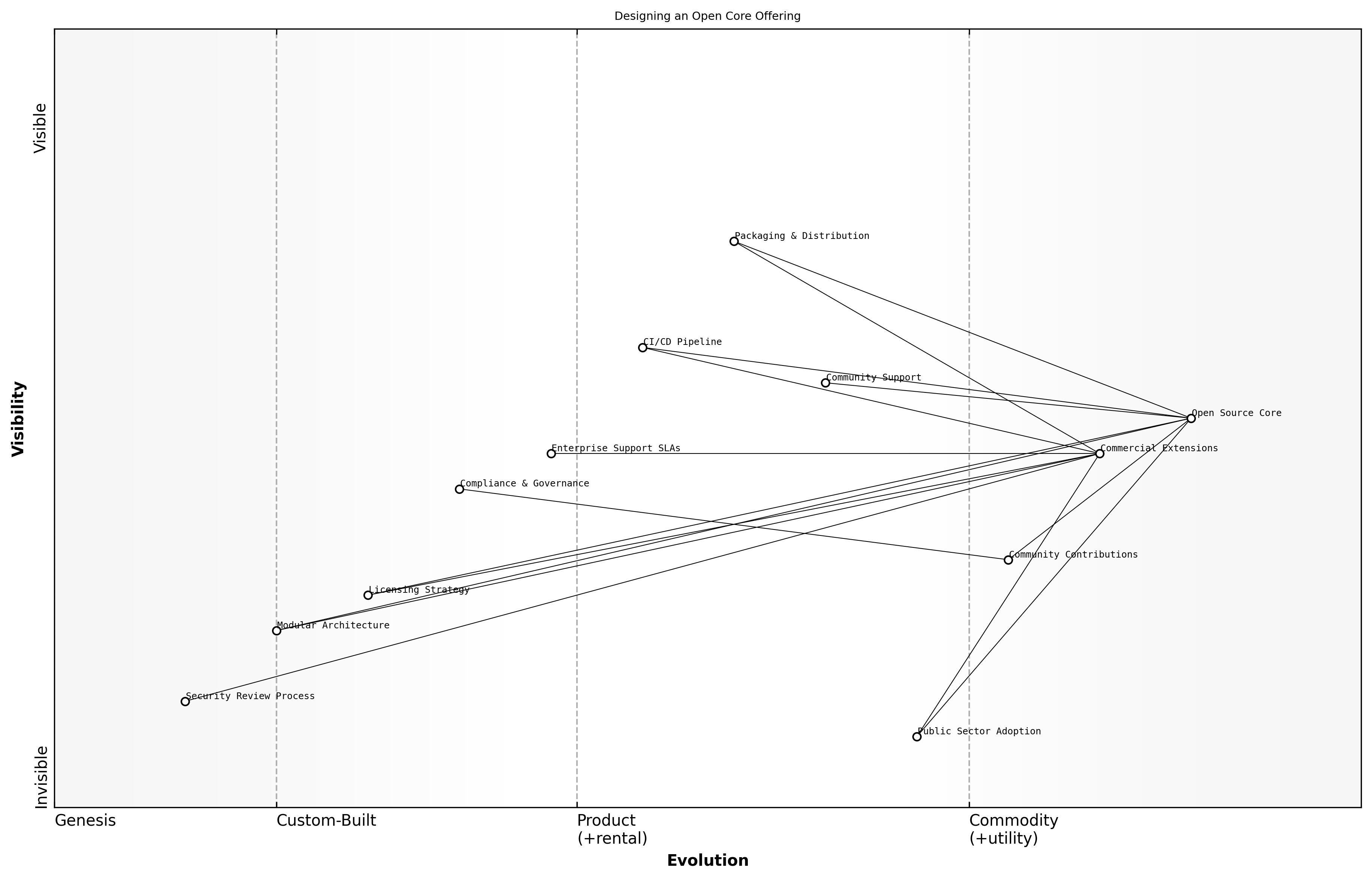
[Edit this Wardley Map](https://create.wardleymaps.ai/#clone:7efd498d9996c370a4)
Aligning the open core offering with strategic objectives requires a deep understanding of how proprietary extensions deliver unique differentiation. Enterprise customers often prioritise capabilities such as enhanced security, compliance certifications or performance tuning, which should map directly to the value proposition of the commercial modules.
- Identify the project’s universal value drivers and core functionality
- Conduct a Wardley Mapping exercise to locate components on the evolution axis
- Architect feature boundaries with plugin or extension frameworks
- Select licensing terms for core and extensions to balance openness and protection
- Establish contribution policies and CI/CD pipelines for both codebases
- Prototype packaging and distribution artefacts for community and enterprise editions
- Define support, maintenance SLAs and upgrade paths for paying customers
- Validate offering through pilot partnerships and community feedback
Practical considerations in public sector contexts often emphasise compliance, data sovereignty and transparency. Maintaining an open core fosters trust with public stakeholders, while proprietary modules must undergo rigorous security reviews and accreditation processes before release.
project/
├── core/
│   ├── src/
│   ├── LICENSE
│   └── README.md
├── enterprise/
│   ├── src/
│   ├── NOTICE
│   └── setup.py
└── docs/
    ├── core_guide.md
    └── enterprise_guide.md
> A clear modular design ensures the community thrives on the core while enterprises find unique value in premium extensions says a leading expert in the field

In one public sector digital transformation programme, the open core model enabled a government agency to adopt the core workflow engine free of charge, while premium connectors for secure identity management and audit logging were bundled in an enterprise module. This approach drove rapid community contributions to the workflow engine and financed ongoing development of critical security features.


#### <a id="mechanics-and-economics-of-dual-licensing"></a>Mechanics and economics of dual licensing

Dual licensing combines an open source licence for community users with a commercial licence for proprietary extensions or enterprise support. This approach preserves transparency and community collaboration while enabling price discrimination and revenue capture from organisations requiring indemnification, warranty or integration services.

- Select complementary licences that allow code reuse under an open licence and proprietary use under a commercial licence
- Implement contributor licence agreements to clarify ownership and enable commercial relicensing
- Segment feature sets: core functionality in the open licence, advanced modules under commercial terms
- Manage compliance and enforcement through audit processes and tooling
- Integrate commercial releases into existing distribution and support workflows

In an open core context, dual licensing underpins the ecosystem play. Community contributions improve the shared core while commercial users fund ongoing development of premium features. This alignment drives upstream innovation and ensures both licenced editions evolve in parallel.

- Price discrimination: charge enterprise customers for indemnity and professional services
- Market segmentation: appeal to cost‑sensitive adopters with the open licence, and to risk‑averse buyers with commercial terms
- Sustainable funding: reinvest licence revenue into community roadmap priorities
- Risk mitigation: commercial licence provides warranty, support SLAs and patent pledges
- Ecosystem leverage: partners pay for rebranding, integration and training services

> Dual licensing provides optionality for public sector agencies and commercial adopters says a leading strategist in open source
licence_decision_matrix:
  open_core:
    community_licence: MIT or Apache 2.0
    commercial_licence: Proprietary Enterprise Licence
  dual_licensing:
    contribution_agreement: Required
    pricing_tiers:
      - community: free
      - standard: support only
      - premium: warranty and indemnity
[Insert Decision Matrix: mapping licence models to revenue streams, community engagement metrics and risk profiles]


#### <a id="risks-rewards-and-case-comparisons"></a>Risks, rewards and case comparisons

In open core and dual licensing strategies organisations navigate a trade‑off between fostering community collaboration and capturing sustainable revenue. Understanding the risks and rewards of each approach is vital to avoid undermining trust or missing commercial objectives.

- Risk of fragmenting the community when proprietary features create roadmap divergence
- Licence proliferation as contributors bypass restrictions through forks
- Governance ambiguity leading to confusion over which edition to prioritise
- Upstream engagement diminishing if core contributors feel undervalued
- Legal complexity in managing multiple licence compliance workflows

- Accelerated adoption of core assets fosters broader ecosystem growth
- Predictable revenue from enterprise licences and support services
- Incentive alignment encouraging contributions that benefit both models
- Market segmentation enabling tailored offerings for community and commercial users
- Opportunity to reinvest commercial proceeds into upstream development

Balancing these factors demands clear architectural separation, transparent governance and robust IP management. By codifying feature boundaries and contribution processes, organisations safeguard community health while realising commercial value.

[Insert Decision Matrix: mapping licence models to revenue streams community engagement metrics and risk profiles]

Case comparisons reveal how leading projects have navigated this landscape to varying effect.

- Elastic began with an open core model that delivered rapid feature feedback from community but faced criticism over proprietary extensions, eventually shifting to a co‑ownership foundation to restore trust and stabilise revenue
- MongoDB introduced a server‑side public licence to protect its cloud business, triggering forks like YugabyteDB that sought licence clarity and reinforcing the importance of community alignment in licensing shifts
- MariaDB forked MySQL under a GPL licence and adopted dual licensing, combining community‑driven advances with enterprise contracts, demonstrating how early open core strategies can evolve into balanced dual‑licensing models

> Adopting a hybrid licensing model requires constant dialogue with contributors to ensure that community and commercial interests remain in harmony says a senior government advisor
risk_reward_profile:
  risks:
    community_forking: high
    complexity: medium
  rewards:
    revenue_predictability: high
    ecosystem_growth: medium
  mitigation:
    clear_architectural_boundaries: true
    transparent_governance: true
### <a id="support-services-and-platform-plays"></a>Support, Services and Platform Plays

#### <a id="consulting-training-and-support-models"></a>Consulting, training and support models

Consulting, training and support services extend the reach of open source platforms by translating community‑driven innovation into enterprise‑grade capabilities. These services act as bridges between upstream projects and mission‑critical deployments, ensuring that public sector bodies capture full value from their open source investments.

By offering advisory, instructional and operational assistance, organisations position themselves as ecosystem stewards and competitive differentiators. Services align with the core principles of open source as a competitive weapon by accelerating adoption, mitigating risk and fostering sovereign capability.

- Strategic advisory: roadmap alignment, technology audits and governance reviews
- Custom integration: bespoke connectors, data migration and compliance adaptations
- Architecture and performance tuning: scalability assessments and optimisation workshops
- Inner‑source enablement: rolling out open source practices across government departments
- Ecosystem brokerage: partner matchmaking and co‑innovation programmes

Training services combine hands‑on instruction with certification to build internal skill‑sets and reduce external dependency. Structured learning paths reinforce autonomy and mastery among public sector teams, aligning with the behavioural psychology drivers of purpose and competence.

- Certified curriculum: role‑based tracks for developers, architects and administrators
- Hands‑on labs: simulated environments reflecting real‑world missions
- Train‑the‑trainer programmes: building in‑house instructors for scale
- E‑learning modules: on‑demand courses with progress tracking
- Assessment and badges: measurable milestones to validate mastery

> Consulting services transform open source from a tool into a strategic capability says a senior government official

Support models must balance cost predictability with rapid response. Tiered service level agreements (SLAs) offer clear escalation paths and defined performance targets, while community support channels supplement paid offerings with peer assistance.

- Community support: forums, mailing lists and knowledge bases
- Basic SLA: business‑hours response, best‑effort bug triage
- Premium SLA: 24/7 incident response, dedicated escalation engineer
- Proactive monitoring: automated health checks and patch management
- Managed services: fully hosted platforms with compliance reporting
support_tiers:
  community:
    response_time: best_effort
    coverage: community_forums
  standard:
    response_time: 8h_business_hours
    coverage: ticketed_support
  enterprise:
    response_time: 2h_24x7
    coverage: dedicated_engineer, proactive_health_checks
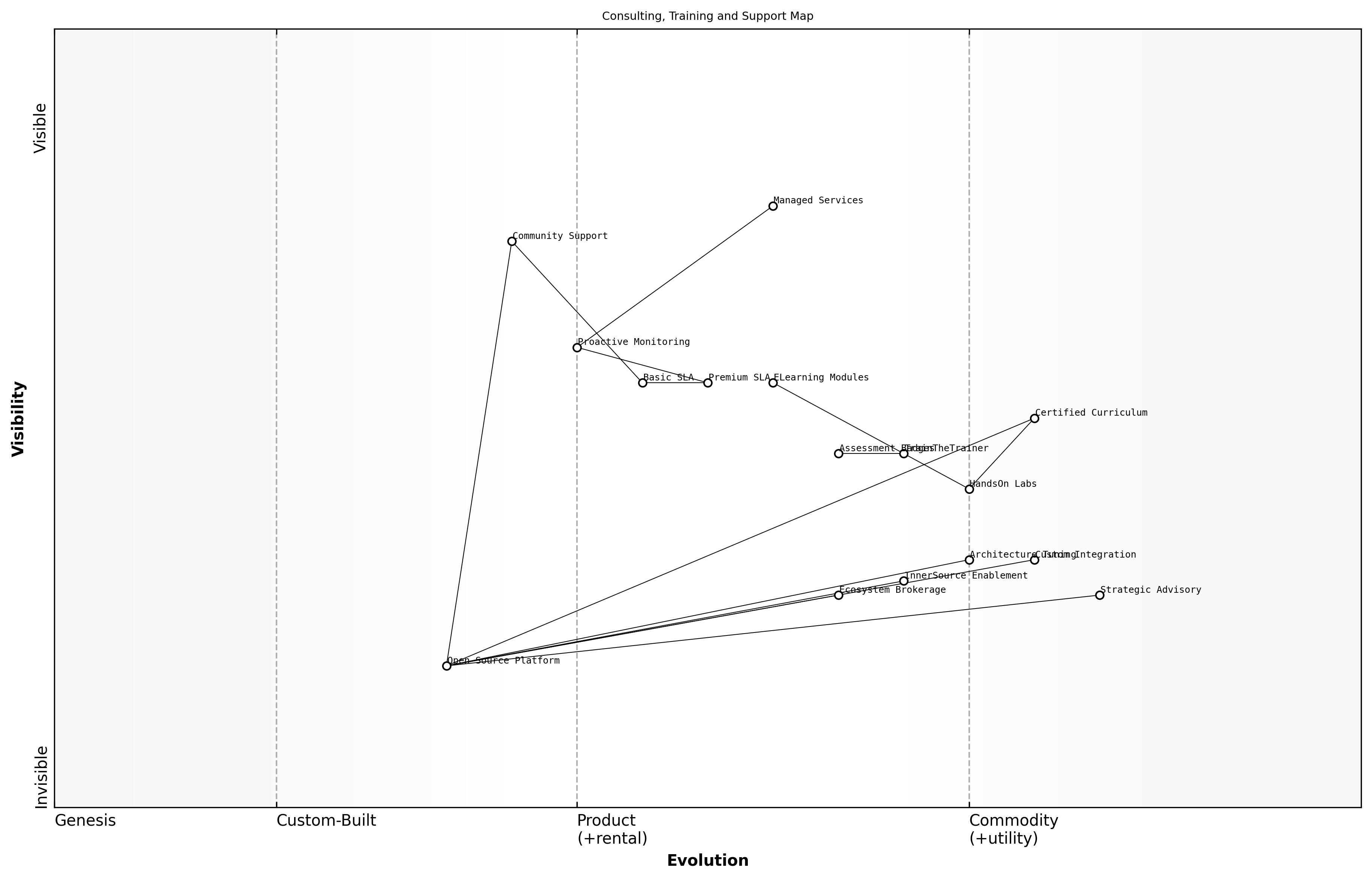
[Edit this Wardley Map](https://create.wardleymaps.ai/#clone:2c62965caa637ffeb6)
Bundling consulting, training and support into integrated packages creates upsell pathways and increases customer stickiness. By mapping customer journeys—from initial pilot to enterprise rollout—organisations can design modular service bundles that scale with evolving requirements.
[Insert ROI calculator excerpt for consulting and support revenue: sample inputs and output scenarios for public sector engagements]
#### <a id="saas-and-hosted-platform-strategies"></a>SaaS and hosted platform strategies
Transforming open source projects into SaaS and hosted platforms amplifies their strategic impact by shifting focus from code consumption to service orchestration. These offerings deliver managed experiences that align with board‑level aims for cost predictability, rapid scalability and sovereign capability.
- Recurring revenue model aligned with usage and value
- Zero‑touch deployment lowering barriers to adoption
- Deep telemetry and feedback loops for continuous improvement
- Sovereign hosting to meet data residency and compliance mandates
In designing a SaaS platform around an open source codebase, organisations must prioritise automation, security and agility. A multi‑tenant architecture ensures efficient resource utilisation, while *infrastructure as code* pipelines deliver repeatable, auditable deployments across environments.
- Multi‑tenant design with tenant isolation and resource quotas
- Automated provisioning via CI/CD and GitOps workflows
- Immutable infrastructure and containerised workloads
- Region‑based deployments to satisfy sovereignty requirements
- Integrated security posture via OPA policies and vulnerability scanning
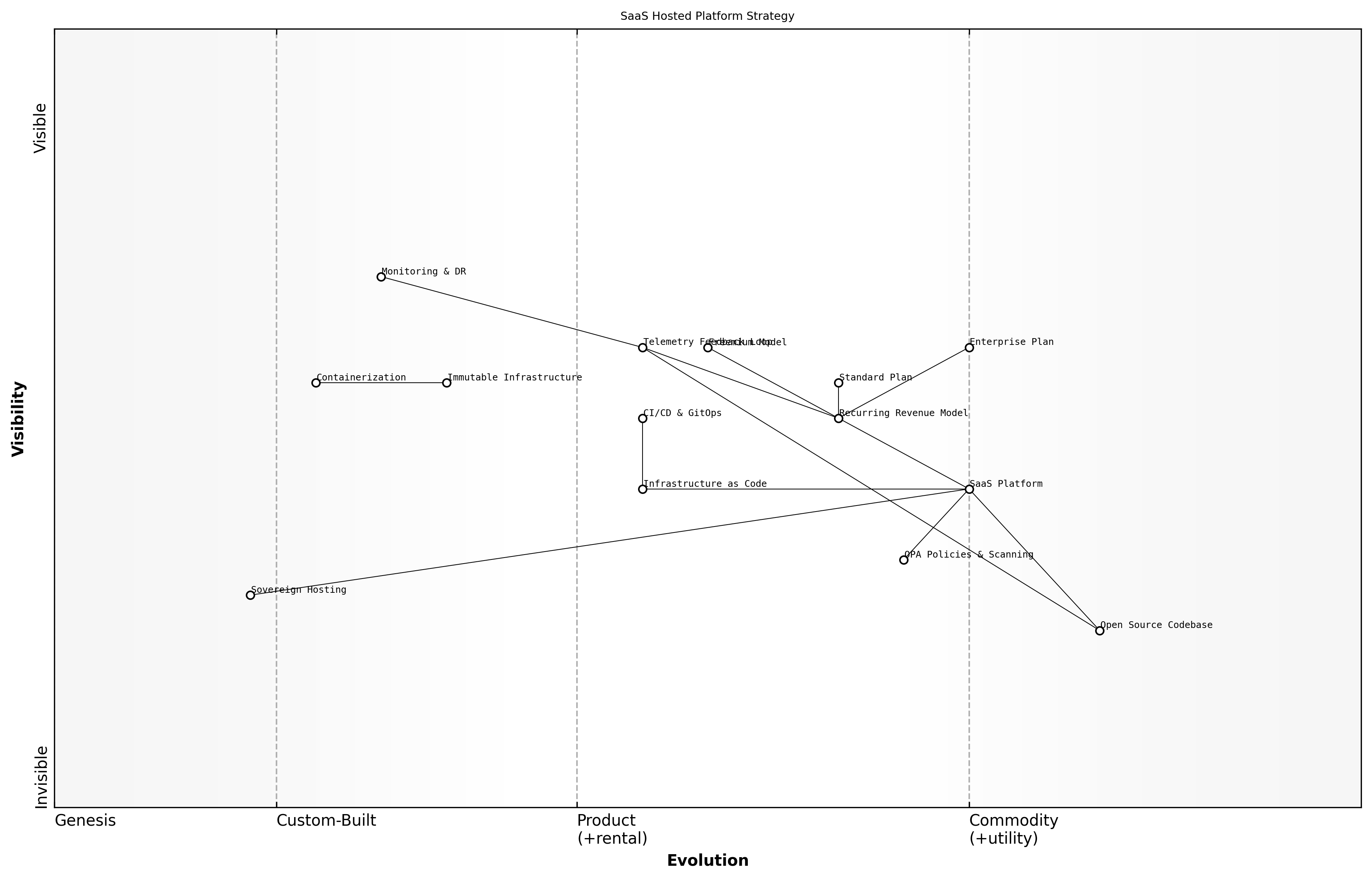
[Edit this Wardley Map](https://create.wardleymaps.ai/#clone:89f6aecfff0488816f)
Developing clear pricing tiers ensures that each customer segment—from small teams to large agencies—sees a path to value. A freemium model can drive initial adoption, while enterprise SLAs underpin mission‑critical commitments and justify premium fees.
plans:
  free:
    price: 0
    features:
      - coreAPI access
      - community support
  standard:
    price: 100/month
    features:
      - SLA 8h response
      - audit logging
  enterprise:
    price: custom
    features:
      - SLA 2h response
      - dedicated account manager
      - on‑prem connectors
Reliable operations undergird the competitive weapon of SaaS. Continuous monitoring, automated patch management and disaster‑recovery strategies are non‑negotiable for public sector customers demanding resilience and transparency.

> Operating a managed service around open source projects builds trust and unlocks new contributions says a senior government official

- Predictable revenue streams aligned with adoption metrics
- Direct telemetry feeding back into upstream roadmaps
- Enhanced ecosystem influence through governed deployments
- Strengthened data residency and compliance controls

[Insert Workshop Exercise: outline steps to model a SaaS offering on your organisation’s Wardley Map, including evolution stages and strategic plays]


#### <a id="upsell-and-integration-pathways"></a>Upsell and integration pathways

Effective upsell and integration pathways extend the value of core open source offerings by guiding customers from basic deployment to advanced services, premium modules and ecosystem partnerships. In a public sector context, these pathways reinforce sovereignty, interoperability and mission alignment while generating sustainable revenue streams.

- Modular architecture that cleanly separates core, premium and integration components
- Customer segmentation to identify use cases and trigger points for upsell
- Product bundling with feature tiers, training credits and support SLAs
- API‑first design enabling seamless connector development
- Partner ecosystem to deliver bespoke integrations and co‑innovation
- Usage‑based pricing models aligned with service level commitments

Integration pathways focus on embedding open source capabilities within wider enterprise landscapes. By offering pre‑built connectors, reference architectures and integration services, organisations transform isolated deployments into cohesive platforms. This approach drives stickiness, reduces operational friction and positions open source as the nucleus of digital transformation.

[Insert Customer Journey Map: diagram illustrating progression from open source pilot to integrated enterprise platform with upsell and integration touchpoints]

Aligning upsell strategies with open source principles ensures community trust and long‑term ecosystem health. Contributions to shared connectors, reference implementations and integration testing frameworks not only improve product quality but also reinforce the organisation’s role as a steward and collaborator.
# <a id="sample-integration-module-definition"></a>Sample integration module definition
integrations:
  - name: audit-connector
    version: 1.2.0
    license: Apache-2.0
    repository: https://example.org/integrations/audit-connector.git
    dependencies:
      - core-platform >=2.0.0
      - security-module >=1.5.0
> Successful upsell and integration pathways turn one‑off deployments into strategic platforms that scale across departments and agencies says a senior government official


### <a id="navigating-licence-compliance-and-patents"></a>Navigating Licence Compliance and Patents

#### <a id="open-source-licence-landscape"></a>Open source licence landscape

Understanding the open source licence landscape is critical for any organisation seeking to wield open source as a competitive weapon. Licences define the legal framework for code use, modification and distribution, shaping community dynamics, risk exposure and commercial opportunities.

- Permissive licences (e.g. MIT, Apache 2.0) allowing broad reuse and proprietary relicencing
- Reciprocal licences (copyleft) (e.g. GPL, AGPL) requiring derivative works to be open under the same terms
- Network copyleft licences (e.g. AGPL) closing the SaaS loophole for hosted deployments
- Patent‑granting licences (e.g. Apache 2.0) explicitly protecting contributors and users from patent litigation
- Public domain or unlicenced code (e.g. CC0) with minimal restrictions

Licence compatibility and obligations must be evaluated when combining multiple components. Permissive licences generally interoperate freely, while strong copyleft introduces share‑alike obligations. When mixing licences, organisations must track provenance, ensure compliance with attribution requirements and avoid licence conflicts in downstream deliverables.

- Compatibility: confirm whether key dependencies can be combined under your chosen licence
- Obligations: identify requirements for source distribution, notice files and contributor acknowledgements
- Enforcement: establish processes for monitoring and remedying non‑compliance
- Patent provisions: assess whether patent grants or defensive publication clauses meet your risk appetite
- Community alignment: select licences recognised and accepted by your target contributor base

In government and public sector contexts, standardisation around a small set of approved licences (for example, a policy permitting Apache 2.0 and GPL v3 only) simplifies procurement and legal review. Embedding SPDX identifiers in repository metadata accelerates automated compliance checks and ensures transparency across diverse codebases.
/* SPDX‑License‑Identifier: Apache‑2.0 Copyright © 2024 Public Sector Agency */
package org.example.project;
public class Example { // implementation }
[Insert Licence Decision Matrix: mapping licence families to obligations, compatibility and strategic fit]

> Selecting the right licence portfolio becomes a strategic lever when it aligns legal certainty with ecosystem growth, says a senior government advisor


#### <a id="compliance-tools-and-processes"></a>Compliance tools and processes

Ensuring licence compliance across open source codebases requires both robust tools and well-defined processes. Automated scanning, bill of materials generation and governance workflows must integrate seamlessly into existing development pipelines. This allows organisations to detect licence conflicts early and maintain a transparent audit trail for board‑level reporting.

- Define an organisation‑wide open source policy encompassing approved licences and review thresholds
- Automate code scanning to identify licence metadata and potential conflicts
- Generate SPDX‑compliant software bills of materials (SBOMs) for all releases
- Establish approval workflows for new dependencies and change requests
- Integrate compliance checks into CI/CD pipelines for real‑time feedback

By embedding compliance steps into continuous integration, teams shift licence obligations left, reducing manual overhead and accelerating delivery. Effective processes also assign clear responsibilities for maintaining compliance records, from developers to legal counsel.

- Scancode toolkit for licence and copyright scanning
- SPDX tools for SBOM creation and validation
- OSS Review Toolkit for end‑to‑end supply chain analysis
- Black Duck or FOSSA for comprehensive codebase monitoring
- Custom scripts and licence whitelists integrated into CI jobs
# <a id="example-gitlab-ci-job-for-licence-scanning"></a>Example GitLab CI job for licence scanning
license_scan:
  stage: test
  image: registry.example.com/tools/scancode:latest
  script:
    - scancode --format spdx-tv --output spdx-tv.json .
  artifacts:
    paths:
      - spdx-tv.json
Insert compliance workflow diagram illustrating tools and processes across development stages

Regular audits, combining automated reports with manual reviews, ensure anomalies are addressed promptly. Maintaining an audit log and generating compliance dashboards provide transparency to stakeholders and support risk management strategies.

> Automating licence scanning creates a living audit log that strengthens both legal defensibility and strategic oversight says a senior open source strategist


#### <a id="defensive-publishing-and-patent-strategies"></a>Defensive publishing and patent strategies

In the context of open source as a competitive weapon, defensive publishing and patent strategies serve to safeguard innovation while preventing adversaries from weaponising patents against the community or the organisation. By proactively documenting inventions and adopting patent commitments, public sector bodies can reduce legal risk, reinforce sovereign capabilities and maintain interoperability.

Defensive publishing involves creating publicly accessible prior art that invalidates patent claims on key technical innovations. This approach shifts the balance of power away from patent assertion entities and ensures that fundamental open source building blocks remain free for all to use and evolve.

- Establishes public record of innovation timestamps to block new patents
- Reduces freedom‑to‑operate uncertainty for downstream adopters
- Demonstrates transparent stewardship of shared software assets
- Aligns with open source licence compliance by avoiding hidden IPR encumbrances

The defensive publishing process typically integrates directly into development workflows. Key steps include identifying patent‑relevant contributions, preparing concise technical disclosures, and publishing them via recognised channels such as academic archives, standards bodies or code repositories with clear metadata.

- Use a project wiki or dedicated prior‑art registry with date‑stamped entries
- Submit technical disclosures to preprint servers under open licences
- Embed patent‑relevant documentation in source code comments and release notes
- Leverage foundation or consortium portals to ensure broad visibility

Complementary to defensive publishing, a robust patent strategy involves legal commitments and collaborative mechanisms that protect the ecosystem. These strategies foster trust, encourage contributions and mitigate the risk of patent litigation.

- Patent pledges or non‑assertion covenants against community participants
- Joining patent commons or pools such as the Open Invention Network
- Adopting royalty‑free commitments for specific open source technologies
- Implementing a defensive patent grant clause in contributor agreements

> Defensive publishing transforms potential liability into a protective moat says a senior government official

[Insert Patent Strategy Workflow Diagram: illustrates steps from invention identification through disclosure, community review, and non‑assertion pledge execution]

By weaving defensive publishing and patent commitments into governance charters and CI pipelines, public sector organisations convert intellectual property from a potential threat into a strategic asset. These measures reinforce the resilience of open source ecosystems, uphold interoperability mandates and contribute to a sustainable innovation commons.


### <a id="contributor-agreements-and-legal-frameworks"></a>Contributor Agreements and Legal Frameworks

#### <a id="contributor-licence-agreements-clas-vs-developer-certificate-of-origin-dco"></a>Contributor licence agreements (CLAs) vs developer certificate of origin (DCO)

Contributor licence agreements (CLAs) and developer certificate of origin (DCO) are foundational legal instruments that define how intellectual property is contributed, owned and managed within open source communities. They ensure clarity of rights, enforce compliance with licensing policies and align community collaboration with enterprise risk frameworks.

A CLA is a formal contract between contributors and the governing entity that grants explicit rights to use, modify and relicense contributions. In contrast, a DCO is a lightweight sign‑off system where contributors assert that they have the right to submit code under the project licence, embedding a legal declaration into each commit. Both approaches serve to protect projects against downstream IP disputes and provide corporate sponsors with confidence in the integrity of the codebase.

- Grants a broad patent and copyright assignment or licence to the project steward
- Allows the project or corporate entity to relicense or dual‑license contributions
- Often requires an external signature process with recorded agreement metadata
- Provides enterprise‑grade assurance for indemnification and downstream licensing

- Uses a simple commit sign‑off to declare origin and licences of contributions
- Embeds provenance directly in version control without a separate agreement
- Minimises administrative overhead and accelerates contribution velocity
- Relies on volunteer self‑certification rather than formal assignment of rights

While a CLA offers stronger legal certainty for complex commercial plays—such as dual licensing or defensive patent pledges—a DCO aligns closely with founding open source doctrines of transparency and minimal entry barriers. Enterprises often adopt a hybrid approach, using a DCO for routine external contributions and reserving a CLA for high‑value or sensitive code submissions.

- Scale and diversity of contributors and corporate sponsors
- Need for relicensing flexibility or downstream commercial distribution
- Regulatory and compliance obligations within public sector contexts
- Administrative capacity to manage agreement workflows at scale
- Governance model maturity and risk tolerance for IP disputes
Signed-off-by: Contributor Name <contrib@example.org>
cla:
  required: true
  provider: EasyCLA
> Using a DCO fosters lightweight onboarding while a CLA provides enterprise-grade IP certainty says a senior government official

[Insert Decision Matrix: mapping CLA and DCO features to governance criteria and project characteristics]


#### <a id="best-practices-in-legal-onboarding"></a>Best practices in legal onboarding

In public sector projects legal onboarding for contributors is a strategic imperative to maintain compliance without impeding innovation. A clear and streamlined process ensures intellectual property clarity, mitigates risk and aligns with governance charters and licence policies.

- Clarity of terms in contributor agreements and sign‑off notices
- Minimal friction through embedded workflows and automated checks
- Alignment with governance model and IP management strategy
- Integration with version control and CI/CD pipelines
- Automated verification for DCO sign‑offs or CLA acknowledgements
- Transparent audit trails and centralized record‑keeping

Selecting between a Contributor Licence Agreement (CLA) and a Developer Certificate of Origin (DCO) depends on project maturity, contributor base and risk tolerance. CLAs offer broad assignment or licensing rights for commercial plays, while DCOs provide a lightweight self‑certification that accelerates onboarding. Hybrid approaches can use DCO for routine patches and CLA for sensitive modules.
Signed-off-by: Contributor Name contrib@example.org
cla: required: true provider: EasyCLA on_pull_request: verify_cla_status
Insert Contributor Legal Onboarding Flowchart illustrating the sequence from choice of CLA or DCO to automated verification, access grant and compliance logging

- Embed licence requirements in ISSUE_TEMPLATE.md and PR guidelines
- Present CLA or DCO checkbox in web‑based contribution form
- Invoke bot or CI job to verify sign‑off on every pull request
- Grant repository or issue tracker access upon successful verification
- Log agreements in a central registry with timestamped records
- Send periodic reminders to contributors for licence renewals or updates

> A lightweight onboarding process balances legal certainty with contributor experience says a senior government advisor

Continuous improvement relies on tracking metrics such as sign‑off completion time, drop‑off rates and compliance audit findings. Regularly review these indicators, solicit contributor feedback and refine forms, bots and documentation to reduce barriers while preserving IP integrity.


#### <a id="managing-risk-and-liability"></a>Managing risk and liability

Managing risk and liability is a critical aspect of contributor agreements and legal frameworks. In public sector open source initiatives, where compliance, transparency and accountability are paramount, clearly defining risk allocation helps protect both the project and its contributors.

Contributor agreements such as CLAs and DCOs must go beyond mere IP attribution. They should include warranty disclaimers, indemnification clauses and choice of law provisions that align with organisational risk appetite. Without these elements, projects may face unexpected legal exposure or conflicting obligations.

- Intellectual property infringement and misattribution
- Patent assertion and potential litigation threats
- Warranty obligations and support commitments
- Jurisdictional compliance and governing law conflicts
- Data sovereignty regulation and privacy liabilities

Effective contributor agreements typically incorporate the following risk management clauses to mitigate exposure.

- Warranty disclaimer stating that contributions are provided as is without any guarantees
- Indemnity clause requiring contributors to indemnify the project against third party IP claims
- Limitation of liability cap that restricts total damages recoverable
- Choice of governing law and venue to standardise dispute resolution
- Compliance statements for export control, data protection and security regulations

Integrating these clauses into automated workflows ensures early detection of risk. CI pipelines can enforce that every pull request includes a sign off line and a verified agreement status before merge, reducing human error and audit overhead.
jobs: risk_check: runs-on: ubuntu-latest steps: - uses: actions/checkout@v2 - name: Verify DCO sign off run: git log --format=%B | grep Signed-off-by - name: Check CLA status uses: cla-bot/verify@v1
Risk management is a continuous process. Regular audits, SBOM generation and legal reviews keep contributor agreements aligned with changing policy and regulatory landscapes.
- Schedule quarterly compliance audits against CLA and DCO records
- Generate Software Bill of Materials (SBOM) for each release to track IP provenance
- Review governing law clauses when operating in new jurisdictions
- Update agreement templates in response to new data protection or export regulations
Insert Risk and Liability Matrix showing how clauses map to risk categories and project stages
> Effective risk management in open source transforms potential liabilities into defined governance practices says a senior government advisor
## <a id="chapter-4-case-studies-in-strategic-open-source"></a>Chapter 4: Case Studies in Strategic Open Source
### <a id="elastic-pivoting-with-open-core"></a>Elastic: Pivoting with Open Core
#### <a id="origins-and-business-shift"></a>Origins and business shift
_Origins and business shift_ outlines how Elastic transformed from a standalone open source search engine into a strategic open core vendor, illustrating a compelling case of open source as a competitive weapon.
The story begins in 2010 when the initial **Elasticsearch** engine was released under Apache 2.0 licence. Built to address complex search and analytics use cases, its modular architecture and simple REST API attracted a growing community of developers. Early adopters contributed plugins and enhancements, validating the project’s technical merit and forging a vibrant ecosystem.
As adoption soared, the founders established Elastic NV and secured venture funding. In 2015 they introduced an open core model: the core engine remained fully open, while premium features—security, monitoring, alerting and graph analytics—were bundled as **X‑Pack** under a commercial licence. This dual‑licensing approach balanced transparent collaboration with sustainable revenue generation.
- Core remained Apache 2.0 licensed to maintain community trust
- Premium modules bundled as X‑Pack under a proprietary licence
- Elastic NV formed to provide governance and attract investment
- Launch of Elastic Cloud as a managed service for recurring revenue
- Upstream contributions continued to fuel core innovation
This shift was not purely financial. It aimed to protect against unauthorised hosted services, align contributor incentives with paid support, and enable Elastic to invest in roadmap acceleration. By preserving an open core, Elastic sustained community engagement while capturing enterprise value through extensions and managed offerings.
> Elastic pivoted to an open core model to balance community growth with sustainable funding says a senior strategist in open source
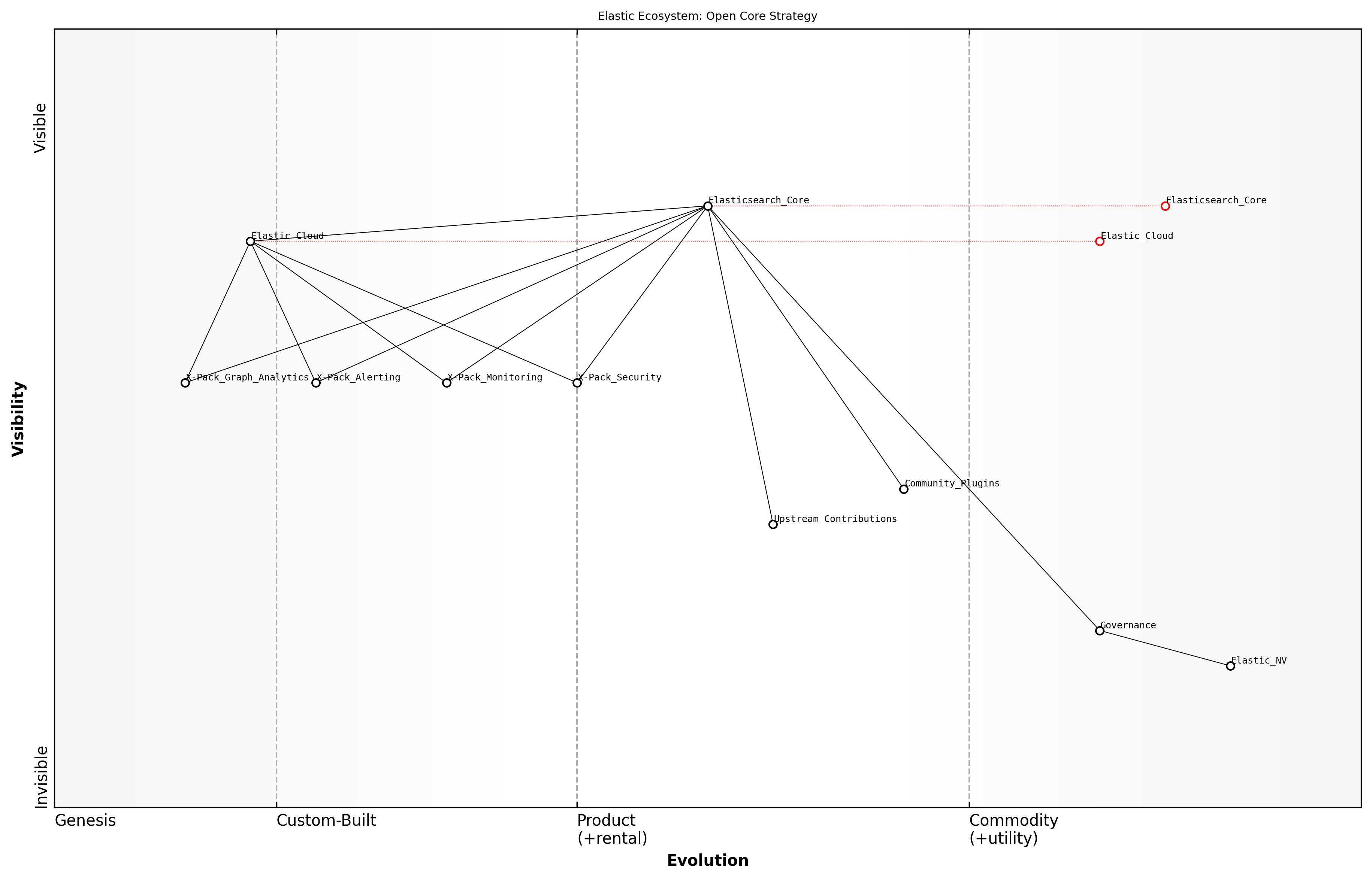
[Edit this Wardley Map](https://create.wardleymaps.ai/#clone:9138781a58082a5654)
#### <a id="community-reactions-and-market-impact"></a>Community reactions and market impact
Elastic’s introduction of a proprietary module layer alongside its open source core prompted a wave of community reactions that shaped both project governance and market positioning. Contributors and downstream users re‑examined their assumptions about feature ownership, licence compatibility and the future direction of the Elasticsearch ecosystem.
- Concerns over licence clarity and potential vendor lock‑in
- Emergence of forks as community‑driven alternatives
- Debate around the balance between upstream contributions and premium features
- Calls for stronger governance transparency and community representation
In response to these concerns Elastic NV engaged in open dialogues, updated its contributor guidelines and reinforced upstream workflows to reassure maintainers that the core would remain fully open. This iterative approach mitigated conflict, restored trust among key contributors and prevented major fragmentation within the community.
> An industry expert notes that maintaining an open channel of communication is essential to balance commercial interests with community ethos
On the market side, the open core pivot enabled Elastic to capture new revenue streams and accelerate the adoption of its managed service offerings. By positioning premium modules as value‑add extensions, Elastic NV strengthened its competitive differentiation against both proprietary incumbents and cloud providers entering the search market.
- Revenue growth as paid subscriptions and support contracts gained traction
- Rapid uptake of Elastic Cloud in public sector and enterprise deployments
- Proliferation of forks such as OpenSearch, driving parallel innovation and healthy competition
- Reinforced ecosystem influence through certified partner networks and training programmes
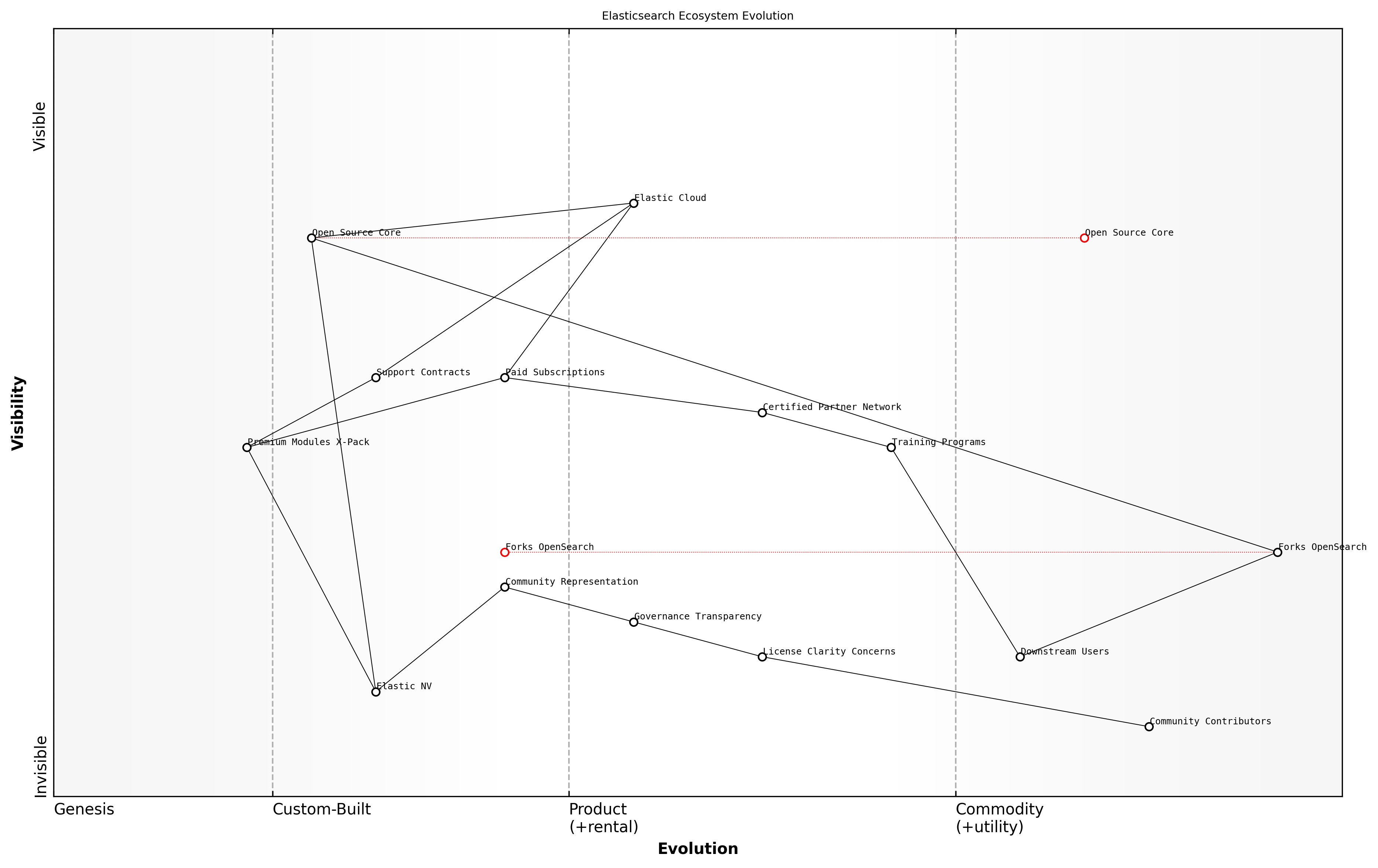
[Edit this Wardley Map](https://create.wardleymaps.ai/#clone:c5b64ffcfa4ab7add3)
> A senior strategist observes that Elastic’s pivot preserved core innovation while unlocking predictable commercial value
#### <a id="key-strategic-takeaways"></a>Key strategic takeaways
Elastic’s journey illustrates how an open core strategy can be wielded as a competitive weapon when executed with clarity, transparency and community alignment. By preserving an Apache 2.0 core and layering premium features under a commercial licence, Elastic balanced ecosystem growth with sustainable revenue, all while adapting governance and communication to safeguard trust.
- Define clear architectural boundaries between open core and proprietary modules to avoid community fragmentation
- Maintain upstream contribution pathways so that core innovation remains driven by a broad network of maintainers and users
- Communicate licensing changes openly and solicit feedback to pre‑empt forks and build consensus
- Monitor forks and downstream distributions as early indicators of community sentiment and competitive shifts
- Iterate governance charters in response to ecosystem size and sponsorship complexity to preserve transparency
- Leverage managed services and hosted platforms to capture recurring revenue while reinforcing sovereign capability
> A clear separation of open and premium features transforms potential conflict into a structured growth engine says a senior government strategist
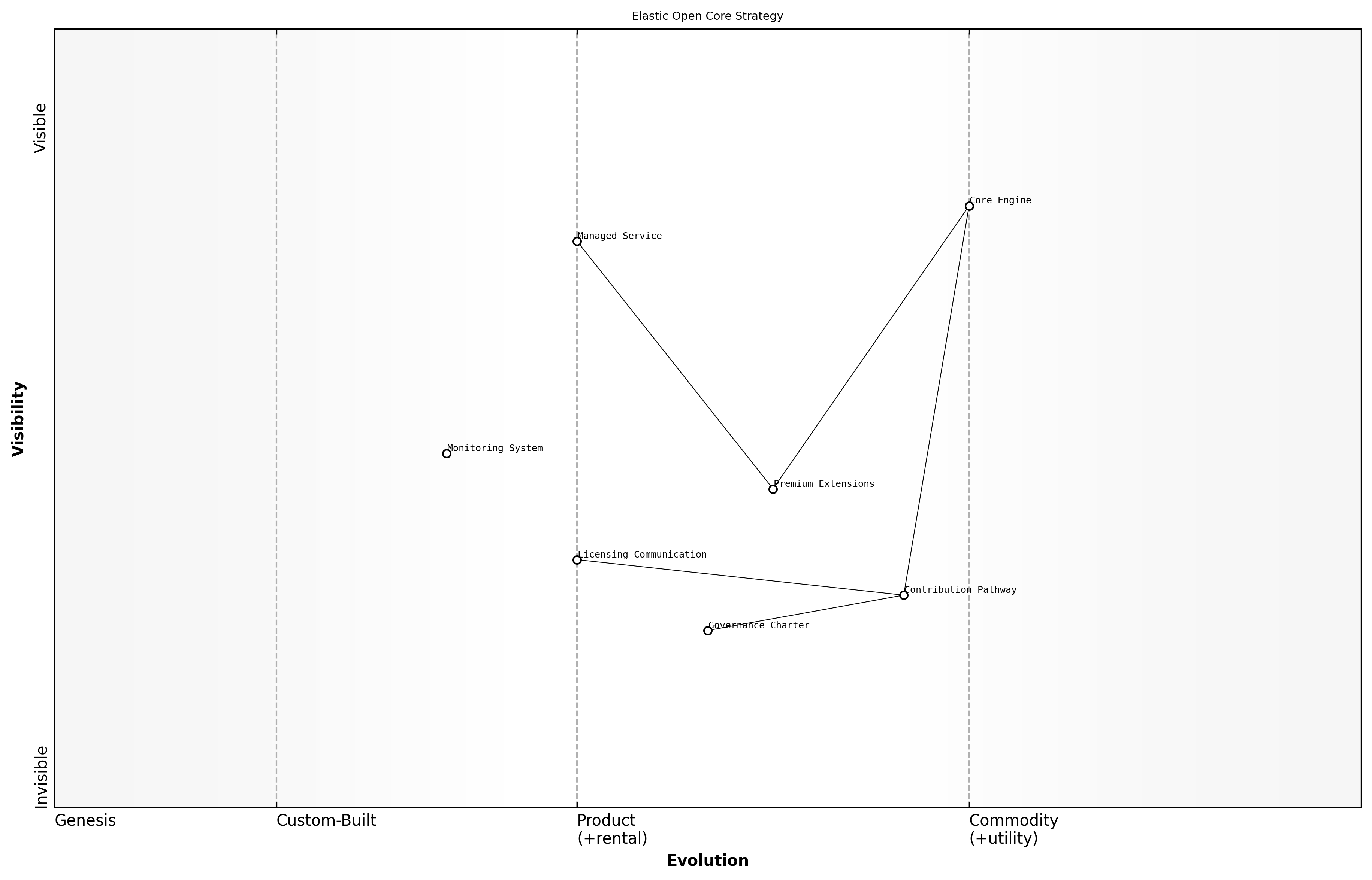
[Edit this Wardley Map](https://create.wardleymaps.ai/#clone:11fce5b9c04f5e3d84)
### <a id="mongodbs-licensing-transformation"></a>MongoDB’s Licensing Transformation
#### <a id="from-gpl-to-sspl"></a>From GPL to SSPL
In 2018 MongoDB announced a licence transformation, moving from the GNU AGPL v3 to the Server Side Public Licence (SSPL). This shift aimed to close the so‑called SaaS loophole in copyleft licences by requiring any service provider offering the database as a managed service to release the complete service stack under SSPL, thereby protecting ecosystem value and revenue streams.
- Closing the SaaS loophole by extending copyleft obligations to service orchestration and management code
- Mandating that cloud vendors publish the full source of all modules required to run MongoDB as a service
- Preserving strong copyleft on the database core while explicitly targeting service providers rather than downstream application developers
- Incentivising contributions from major cloud players by requiring reciprocal licensing of infrastructure components
- Signalling to the market a robust defence of ecosystem health and revenue capture for the project steward
The technical scope of SSPL goes beyond traditional database code. Under SSPL, any code used to offer MongoDB as a service—including provisioning, monitoring and backup tooling—must be open‑sourced. This broadened copyleft model aligns licence obligations with the strategic imperative of ecosystem stewardship, making it a competitive weapon against unauthorised commercial forks.
> Adopting SSPL ensured that cloud providers either contributed back or lost the right to offer MongoDB as a service says a leading strategist in open source
/* SPDX-License-Identifier: SSPL-1.0 */
Insert Decision Matrix mapping licence shift to community reactions and competitive positioning
#### <a id="competitive-responses-and-ecosystem-effects"></a>Competitive responses and ecosystem effects
The SSPL licence change prompted a wave of competitive responses and reshaped the MongoDB ecosystem. Organisations and cloud providers re‑evaluated service offerings, community‑driven forks gained momentum, and similar database projects revised their own licence strategies. These ripples highlight how licence shifts can serve as a strategic lever with far‑reaching effects across open source as a competitive weapon.
- Emergence of forks such as YugabyteDB and TiDB that maintain compatibility under permissive licences
- Proprietary clones by major cloud providers seeking to avoid SSPL obligations
- Revised licence policies from other database projects like Redis and Confluent to pre‑empt similar risks
- Heightened procurement scrutiny from enterprise and public sector consumers over copyleft implications
> This licensing shift prompted leading cloud providers to evaluate their service offerings says a senior government official
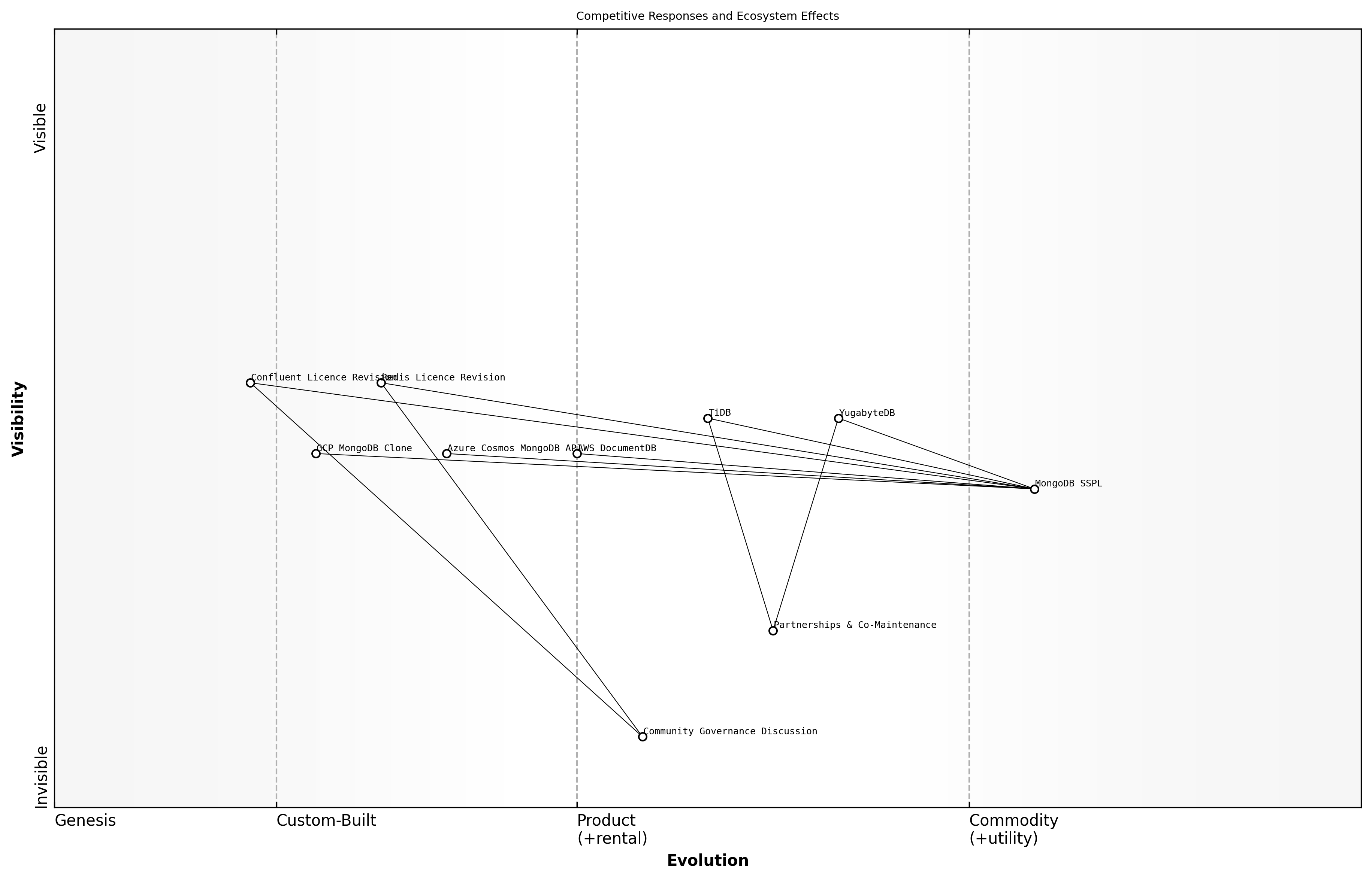
[Edit this Wardley Map](https://create.wardleymaps.ai/#clone:468bbd78371c69c6a8)
As forks proliferated, the ecosystem experienced both fragmentation and consolidation. New projects attracted contributors seeking permissive licence environments, while some organisations formed partnerships to share maintenance burdens. Over time, community efforts coalesced around a few robust forks, demonstrating the self‑organising nature of open source ecosystems under licence pressure.
/* SPDX-License-Identifier: SSPL-1.0 */
- Increased forking as a safety valve against perceived vendor lock‑in
- Redistribution of contributor effort across multiple compatible implementations
- Elevated community governance discussions on licence stewardship and patent commitments
- Impact on sovereign adoption decisions as public sector agencies assessed copyleft obligations

> Public sector agencies recalibrated procurement policies to account for the new copyleft implications says a senior government advisor


#### <a id="lessons-for-licence-strategy"></a>Lessons for licence strategy

As organisations consider licence transformations, the MongoDB SSPL example highlights several strategic lessons. These lessons ensure that licence changes reinforce ecosystem health, preserve adoption momentum and safeguard long‑term competitive advantage.

- Align licence objectives with ecosystem stewardship
- Anticipate and plan for community forks
- Engage contributors and adopters early
- Balance copyleft strength with ease of adoption
- Monitor market reactions and iterate

First, articulate clear objectives for licence change and map them to ecosystem health metrics. If the goal is to protect managed‑service revenue, define how new obligations will be tracked and enforced without alienating existing contributors.

Second, expect forks and competitive responses. Establish migration pathways and communication plans so that forks can be integrated or leveraged as complementary projects rather than adversarial offshoots.

Third, involve your community in the discussion. Early workshops, surveys and draft licence reviews build trust and reduce uncertainty. Open dialogue mitigates the risk of surprise and fosters collective buy‑in.

Fourth, weigh copyleft obligations against uptake barriers. Stronger reciprocity may protect revenue, but overly restrictive terms can deter new adopters and contributors, undermining innovation velocity.

Finally, embed monitoring into your licence strategy. Use community health dashboards and competitive analysis to track forking rates, adoption trends and compliance signals, then iterate licence terms or enforcement approaches as needed.

> Licence shifts must be communicated transparently to avoid community rifts says a senior strategist in open source
/* SPDX-License-Identifier: SSPL-1.0 */
Insert Decision Matrix: mapping each lesson to risk profiles, compliance triggers and strategic actions
### <a id="awss-strategic-open-source-moves"></a>AWS’s Strategic Open Source Moves
#### <a id="contributions-to-key-projects"></a>Contributions to key projects
AWS has consciously shifted from merely consuming open source to strategically contributing to core projects that underpin its cloud offerings. By investing in upstream communities, AWS shapes roadmaps, accelerates feature delivery and embeds itself within the ecosystem it competes in.
- Firecracker: a micro‑VM runtime open sourced to optimise serverless isolation
- Bottlerocket: a purpose‑built OS for container workloads, engineered with community input
- OpenTelemetry: contributions to vendor‑neutral tracing and metrics standards
- S2N: a lightweight TLS implementation donated to strengthen wider security stacks
- Cortex and Thanos: scalable monitoring backends built alongside CNCF communities
These contributions align with strategic plays identified in Wardley Mapping. By moving nascent components from Custom Built into Product/Rental and Commodity stages, AWS accelerates their maturity and reduces in‑house maintenance burdens.
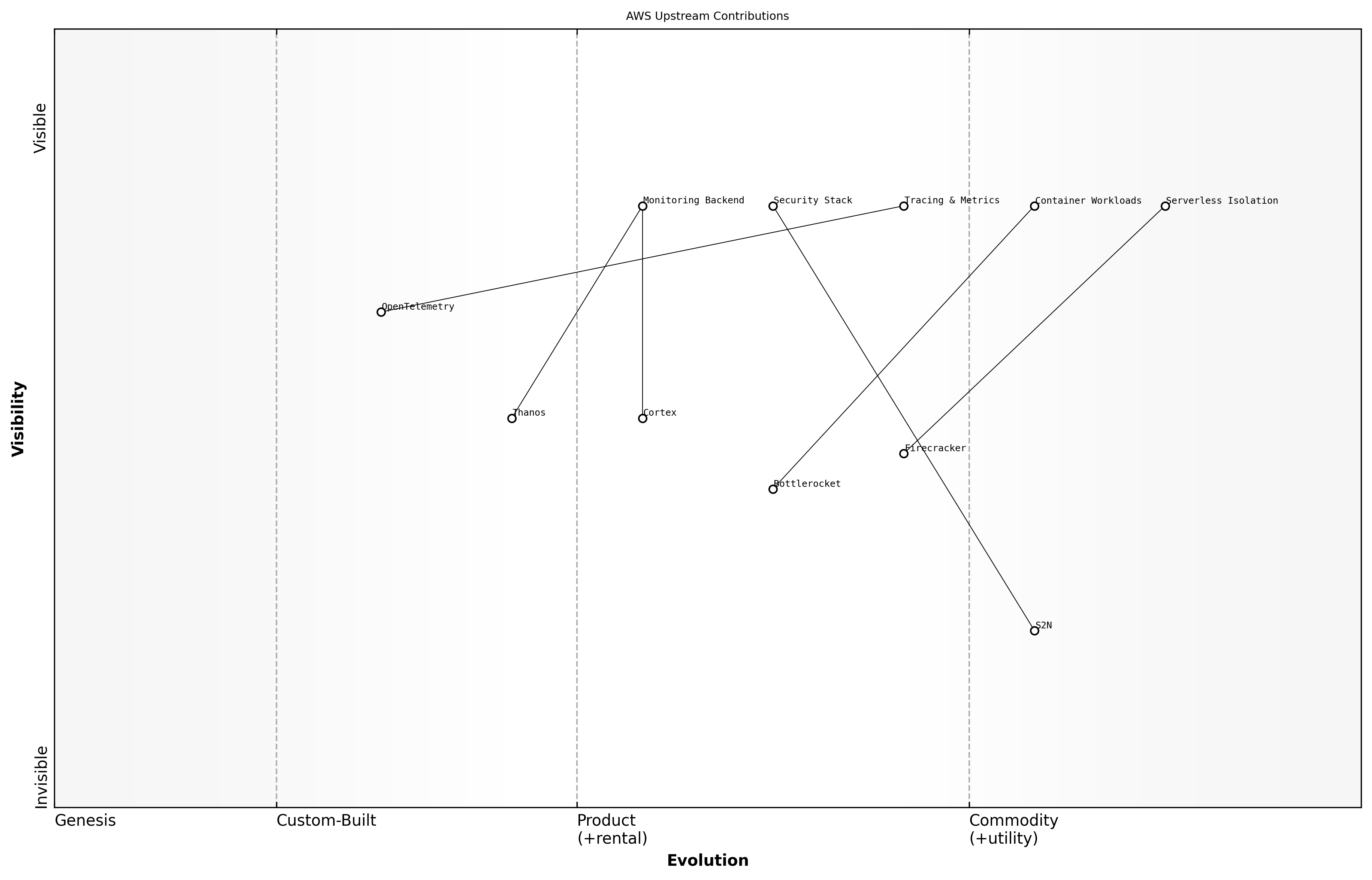
[Edit this Wardley Map](https://create.wardleymaps.ai/#clone:3e51fbca032f282648)
AWS’s upstream engagement also serves as a defensive moat. By ensuring critical features and optimisations are delivered upstream, the company lowers integration risk, secures interoperability for its services and makes it harder for competitors to differentiate on core capabilities.
> By contributing upstream, AWS shapes project roadmaps and reduces integration risk says a leading cloud strategist
From a Porter‑Lean perspective, AWS’s contributions shift the bargaining power of maintainers and raise barriers to substitute projects. Safe‑to‑fail experiments in open source communities, such as pilot patches or tooling enhancements, gather validated learning while reinforcing AWS’s influence.
Sample tracking of AWS open source contributions
contributions:
- project: firecracker commits: 1200 contributors: aws-os-team
- project: bottlerocket commits: 500 contributors: aws-infra-team
- project: opentelemetry-collector commits: 800 contributors: aws-monitoring-team
For public sector bodies, AWS’s model highlights practical considerations: assess vendor contributions when evaluating supply‑chain resilience, map strategic dependencies, and incorporate community health metrics into procurement decisions.
#### <a id="balancing-competition-and-collaboration"></a>Balancing competition and collaboration
In AWS’s strategic open source moves, balancing competition and collaboration is core to their ecosystem influence. They contribute upstream to shape project roadmaps while also protecting proprietary services that differentiate their cloud platform.
- Contribute under neutral community governance to avoid perceived vendor capture
- Separate service‑specific enhancements from core contributions to maintain trust
- Engage in standardisation efforts to steer project priorities towards compatibility
- Use clear licensing and patent pledges to safeguard both community and commercial interests
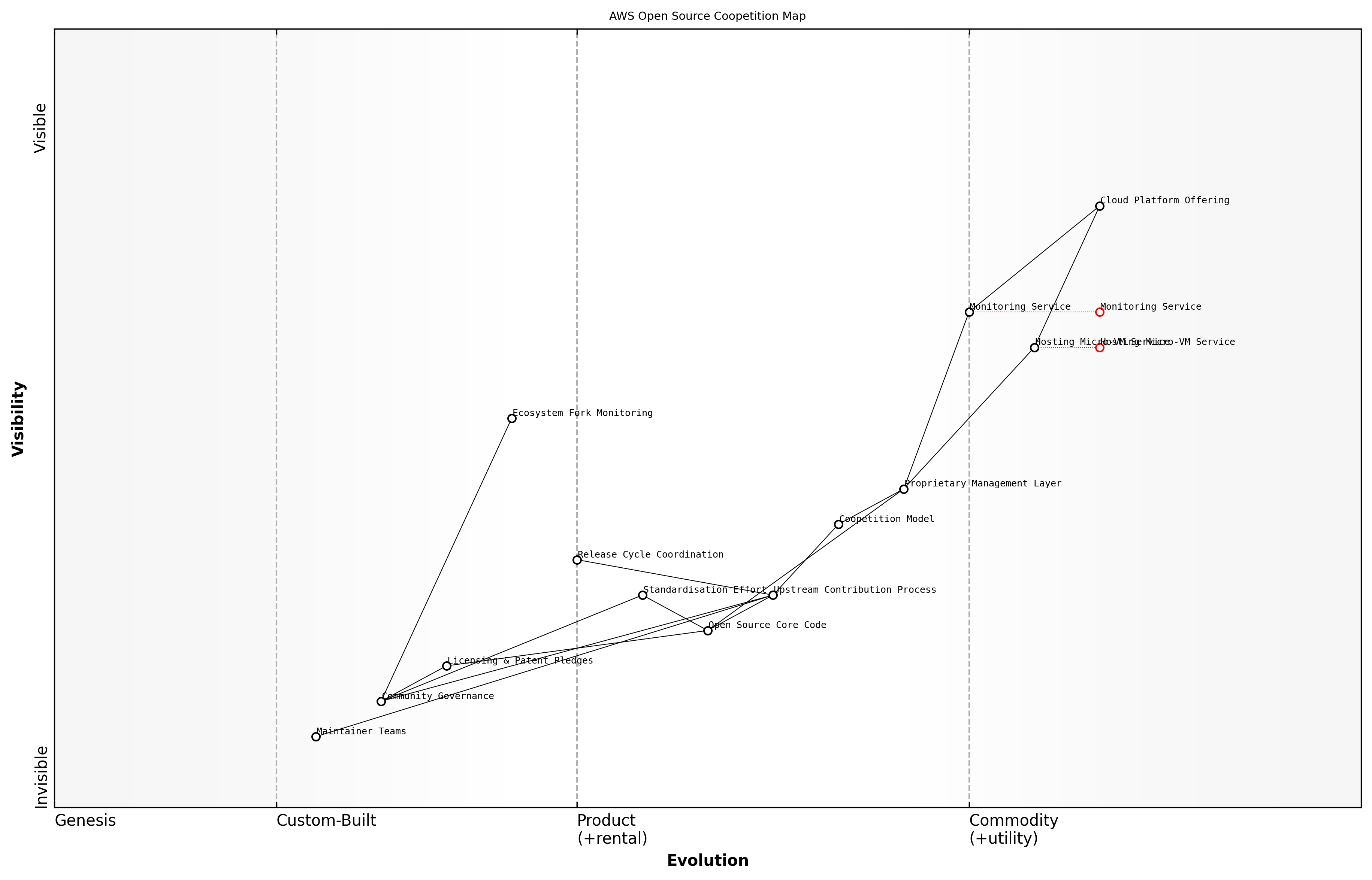
[Edit this Wardley Map](https://create.wardleymaps.ai/#clone:3e10dec26cc8043911)
By adopting a coopetition model, AWS ensures that their proprietary enhancements do not undermine community confidence, simultaneously driving innovation in open source and retaining competitive differentiation in hosted offerings.
- Open source neutral code under permissive licences while keeping management layers proprietary
- Allocate maintainers to both open source projects and internal service teams
- Coordinate release cycles to align community and platform roadmaps
- Monitor ecosystem forks as signals of community sentiment
> Effective coopetition turns potential conflicts into strategic alignment between cloud providers and open source communities says a senior cloud strategist
This balance emphasises that open source collaboration and competitive positioning are not mutually exclusive but complementary strategic levers for public sector and enterprise cloud deployments.
#### <a id="analysing-ecosystem-influence"></a>Analysing ecosystem influence
AWS’s strategic contributions extend beyond code and services to shape the broader open source ecosystem. Analysing ecosystem influence reveals how a major cloud provider can drive project adoption, guide technical roadmaps and align community objectives with commercial imperatives. For public sector leaders, understanding these levers is vital to negotiate partnerships, anticipate shifts in project governance and position sovereign capabilities at the heart of innovation.
- Foundation leadership including seats on governing boards and working groups
- Upstream contributions that steer feature priorities and architectural direction
- Donation of tooling and reference implementations for multi‑tenant, security and compliance use cases
- Engagement in standardisation committees to codify best practices across providers and users
- Sponsorship of conferences, meetups and grant programmes to cultivate contributor networks
- Collaboration on interoperability projects that reduce vendor lock‑in and enhance portability
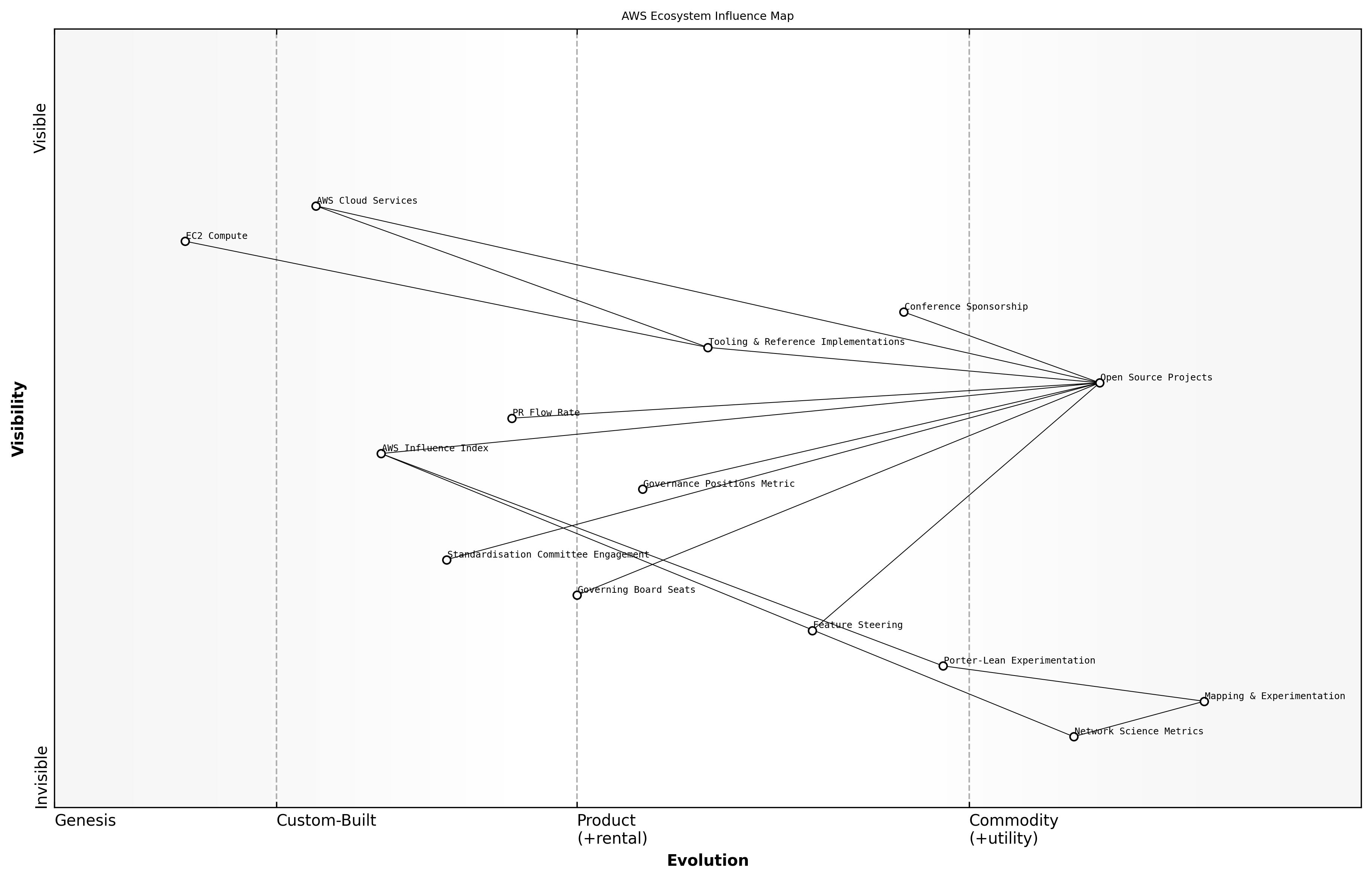
[Edit this Wardley Map](https://create.wardleymaps.ai/#clone:efb9d66e30f0efa46c)
To quantify ecosystem influence, public sector programme leads can combine network science metrics with Porter‑Lean experimentation and mapping insights. Key indicators include contributor centrality, governance position count and pull request velocity. By overlaying these metrics onto a visual map, boards gain clarity on where strategic partnerships amplify impact and where bottlenecks may emerge.
metrics: aws_influence_index: percentage_of_EC2_contributors_among_top_50 governance_positions: total_foundation_seats_held pr_flow_rate: pull_requests_merged_per_month
> Ecosystem influence is measured not by code alone but by the partnerships and platforms you enable says a leading strategist in open source
[Insert Network Map: force-directed graph illustrating AWS contributor interactions, sponsored projects and cross-provider dependencies]
For government organisations, this analysis informs decisions on collaboration, compliance and capacity building. Mapping how AWS shapes project trajectories helps to identify areas for sovereign forks, targeted contributions or joint stewardship. By treating ecosystem influence as a strategic asset, public sector bodies can negotiate terms, allocate grant funding and build internal expertise in alignment with national digital priorities.
### <a id="synthesising-lessons-learned"></a>Synthesising Lessons Learned
#### <a id="crosscase-patterns"></a>Cross‑case patterns
Cross‑case analysis reveals recurring strategic levers and pitfalls that boards can apply across diverse open source initiatives. By comparing licence pivots, open core shifts and upstream contributions we identify shared dynamics of trust, governance and competitive positioning.
- Clear articulation of commercial boundaries to preserve community trust
- Iterative governance adjustment based on community size and complexity
- Transparent communication during licence or model changes
- Leveraging upstream contributions to accelerate roadmaps while mitigating maintenance burden
- Balancing proprietary extensions with an open core to capture value without forking risk
- Embedding data‑driven metrics to guide strategic plays and community health
These patterns echo cross‑disciplinary frameworks: each case shows how mapping component evolution, applying competitive forces analysis and running lean experiments inform strategic decisions and reduce uncertainty.
> Recurring themes across case studies show that proactive engagement and transparent governance are as critical as technical innovation says a senior open source strategist
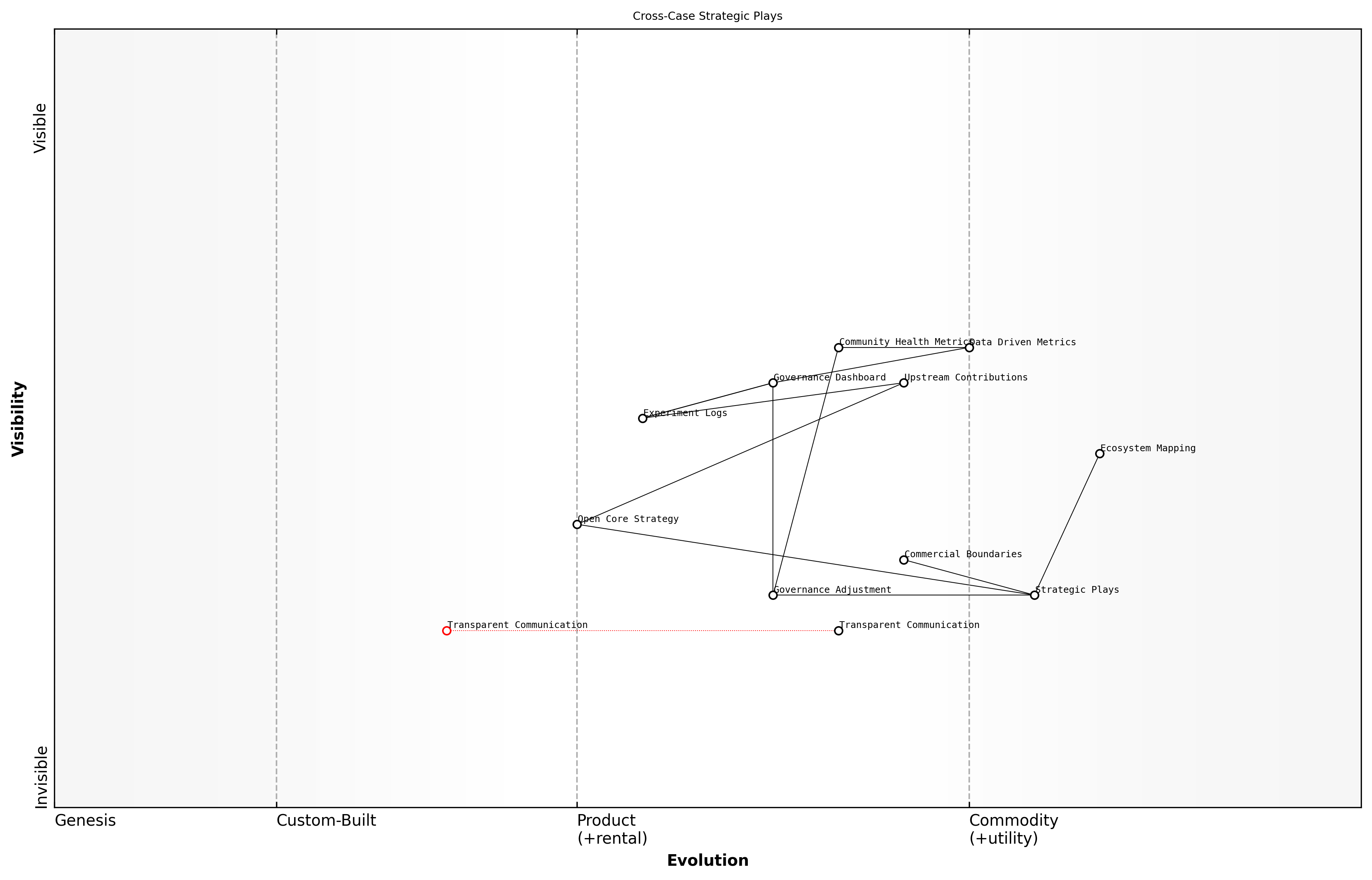
[Edit this Wardley Map](https://create.wardleymaps.ai/#clone:3439db98b9b76603d4)
Applying these patterns requires a structured approach: start with ecosystem mapping, define strategic plays, iterate via governance dashboards and capture learnings in experiment logs.
- Map critical components and dependencies across the ecosystem
- Select plays such as commoditisation, upstream contribution or licence migration
- Communicate the plan to stakeholders and contributors
- Launch safe‑to‑fail pilots and measure impact on community health metrics
- Scale successful experiments and evolve governance charters accordingly
> Cross‑case patterns become powerful strategic guides when organisations adapt them to their unique context says a leading government advisor
#### <a id="common-pitfalls-and-success-factors"></a>Common pitfalls and success factors
This section distils recurring pitfalls and success factors from Elastic, MongoDB and AWS that illustrate how licence shifts, open core strategies and upstream contributions can either undermine or reinforce open source as a competitive weapon in public sector contexts.
- Lack of transparent communication during licence or model changes leading to community distrust and forks
- Unclear architectural boundaries between open core and proprietary extensions causing roadmap divergence
- Governance rigidity that slows decision cycles and frustrates contributors as community size grows
- Neglecting to monitor community sentiment and health metrics, allowing emerging issues to escalate unnoticed
- Underestimating the importance of upstream contributions, resulting in maintenance burden and reduced influence
- Insufficient IP and risk management practices exposing projects to patent challenges or compliance gaps
- Failure to engage diverse contributors early, limiting innovation velocity and ecosystem resilience
> Transparent dialogue throughout strategic shifts transforms potential fractures into opportunities for alignment, says a leading expert in open source
By contrast, the following success factors have proven critical for public sector bodies seeking to wield open source strategically without sacrificing community trust or innovation speed.
- Define and document clear separation in code and governance between open core components and premium features
- Adopt an iterative governance model that scales from benevolent dictator to hybrid or foundation structure in response to growth metrics
- Embed data-driven iteration via community dashboards that link health indicators to Wardley map evolution stages
- Combine competitive forces analysis with lean experimentation to test hypotheses about contributor dynamics and market pressures
- Proactively contribute upstream to influence project roadmaps and accelerate migrations from custom builds to commodity utilities
- Implement robust IP management including SPDX identifiers, CLA or DCO sign-offs and defensive publishing to mitigate legal risk
- Foster inclusive onboarding via mentorship programmes, behavioural design patterns and recognition systems to sustain long-term engagement
> A structured approach to boundaries, metrics and upstream engagement turns open source from a tool into a strategic capability, says a senior government strategist
[Insert Decision Matrix: mapping common pitfalls against corresponding success factors and strategic plays]
#### <a id="translating-insights-to-your-context"></a>Translating insights to your context
Applying strategic case study insights requires adapting patterns to your unique environment by understanding local value chains, governance structures and community dynamics.
- **Assess** your organisation’s strategic objectives and open source maturity
- **Map** cross-case patterns to your value chain components using a Wardley map
- **Prioritise** strategic plays that align with mission-critical user needs
- **Design** safe-to-fail experiments to validate assumptions in context
- **Iterate** governance and licence models based on real-world data
- **Embed** success metrics into board-level dashboards for sustained oversight
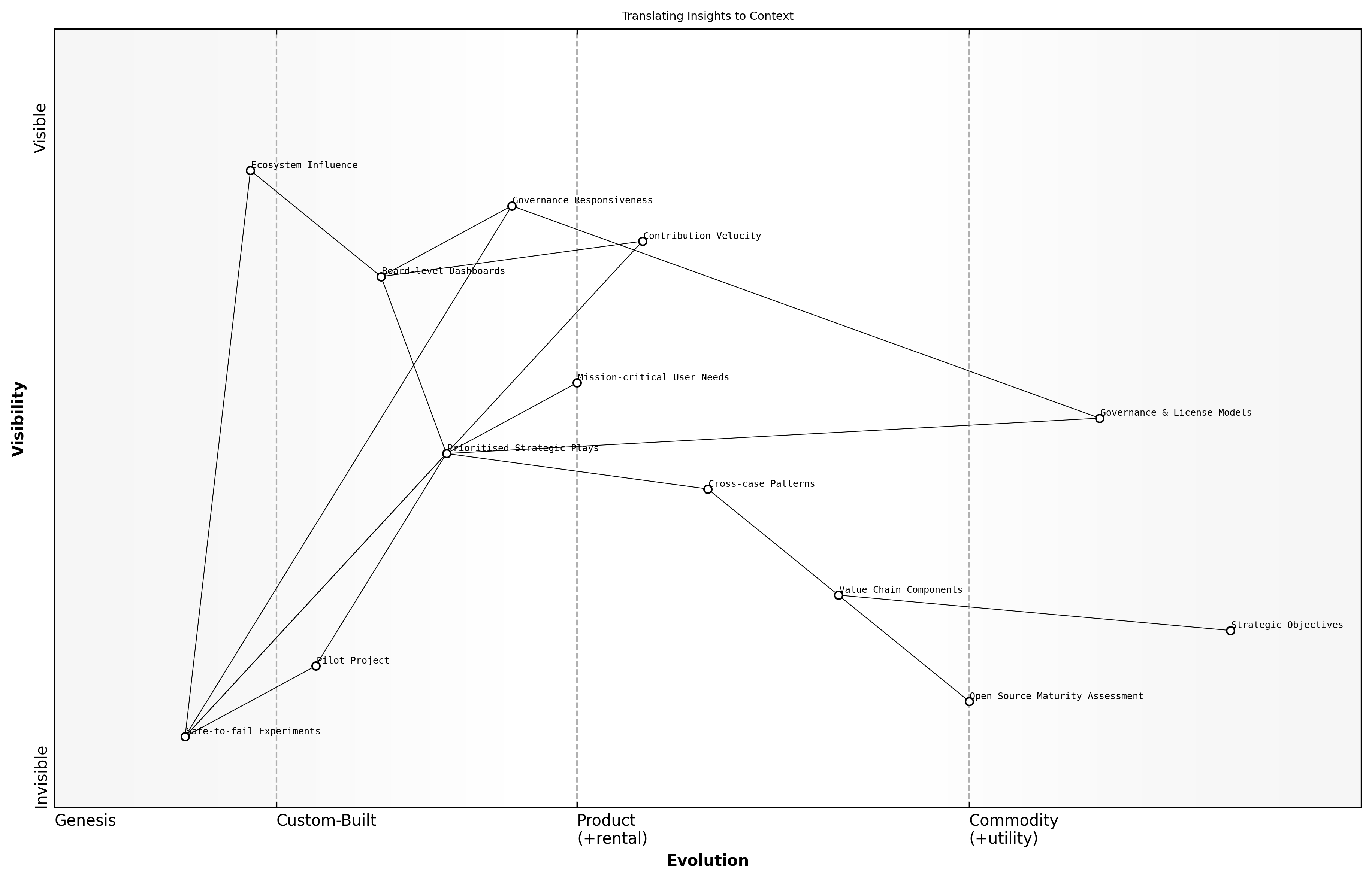
[Edit this Wardley Map](https://create.wardleymaps.ai/#clone:54a8c0d69c5aa7cb4c)
> Translating strategic plays into local context ensures sustainable impact says a senior government official
Begin with a small-scale pilot in a non-critical project to refine your approach. Use lean experimentation to gather community feedback and measure improvements in contribution velocity, governance responsiveness and ecosystem influence.
## <a id="chapter-5-practical-toolkits-and-workshops"></a>Chapter 5: Practical Toolkits and Workshops
### <a id="wardley-mapping-workshop"></a>Wardley Mapping Workshop
#### <a id="workshop-materials-and-setup"></a>Workshop materials and setup
A successful Wardley Mapping workshop depends on thorough preparation and the right materials. By aligning physical and digital tools with strategic objectives, facilitators ensure participants can visualise and navigate open source ecosystems as competitive weapons.
- Participants receive pre‑reading materials on open source strategy and Wardley Mapping fundamentals
- Tailored Wardley Map templates printed (A1/A0) or loaded in a collaborative tool
- Sample ecosystem descriptions and anchor user‑need statements for warm‑up exercises
- Baseline maps and component lists for facilitator reference
- Large printed mapping canvases with evolution and value chain axes
- Sticky notes in at least three colours and various sizes
- Flip charts, whiteboards and coloured markers
- Tape or magnets to affix notes to surfaces
- Name badges, participant cards and group assignment sheets
- Collaborative mapping software (eg Miro, MURAL) with pre‑loaded canvas
- Video conferencing platform supporting screen share and breakout rooms
- Shared document repository for templates, examples and resources
- Timer or clock app to time‑box activities
Room layout should accommodate small breakout tables for group mapping, a central display for the facilitator, and clear sightlines to any physical maps. Ensure stable Wi‑Fi, plentiful power outlets and minimal noise distractions.
Facilitators prepare a time‑boxed agenda with clear objectives for each mapping activity, backup analog materials in case of technical issues, and a pre‑built example map to illustrate key steps and set participant expectations.
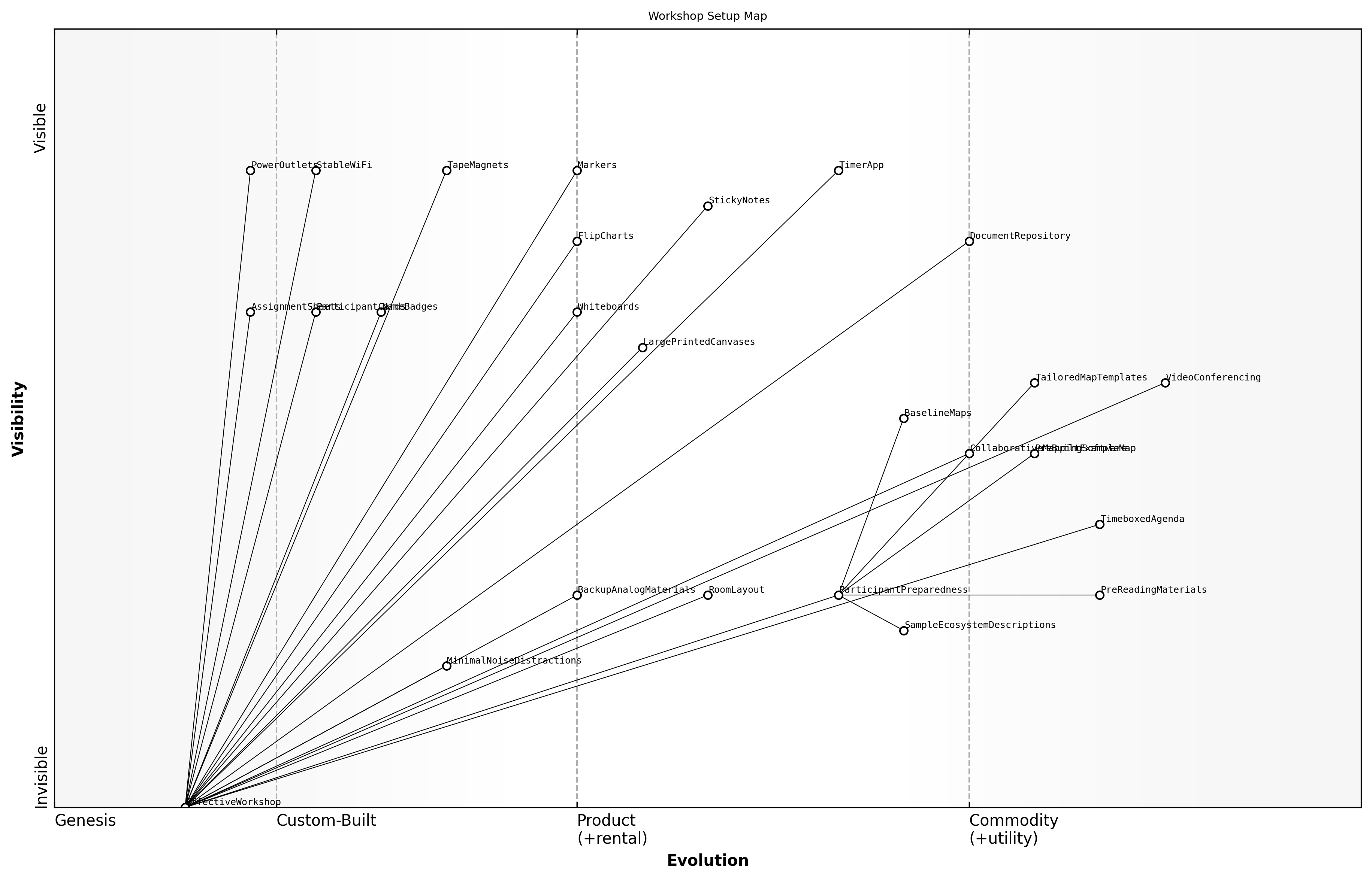
[Edit this Wardley Map](https://create.wardleymaps.ai/#clone:2ac7e8ccc3a9403f14)
agenda:
  introduction: 15 minutes
  mapping_overview: 30 minutes
  group_mapping: 60 minutes
  break: 15 minutes
  map_analysis: 45 minutes
  strategic_play_discussion: 45 minutes
  closing_reflections: 10 minutes
> Workshops create a shared language around strategic plays and map components across the ecosystem says a seasoned facilitator
#### <a id="stepbystep-mapping-exercises"></a>Step‑by‑step mapping exercises
These exercises guide participants through a visualisation of the open source ecosystem by following a structured set of steps. A clear step‑by‑step process ensures that teams align on user needs, component evolution and strategic plays.
- Define the anchor user need and context for the open source ecosystem
- Decompose the user need into its constituent components and activities
- Position each component on the evolution axis from Genesis through Custom Built, Product/Rental to Commodity/Utility
- Draw dependency links to reveal value chain flows between components
- Overlay climate factors such as regulatory mandates, community dynamics and technology trends
- Annotate the map with doctrinal guidelines like safe‑to‑fail experiments and focus on user needs
- Identify potential strategic plays (for example, commoditise as a service or contribute upstream)
- Document key insights, risks and next‑steps for board‑level discussion
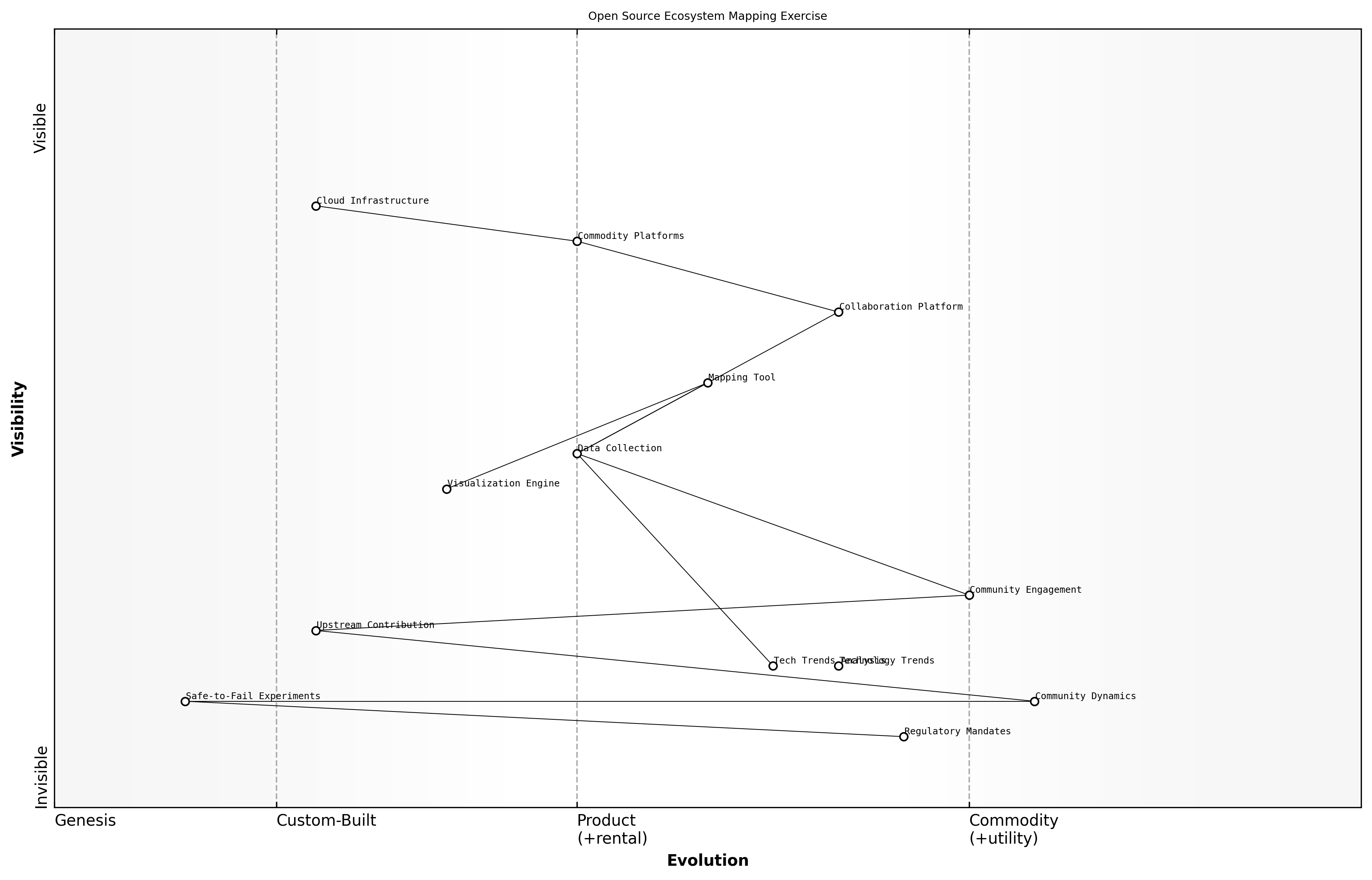
[Edit this Wardley Map](https://create.wardleymaps.ai/#clone:68e4730fbf6f522dd1)
Facilitators should time‑box each step, encourage cross‑functional dialogue and capture annotations directly on the physical or virtual canvas. Small breakout groups map discrete segments, then reconvene for plenary review to synthesise findings and surface common patterns.
> Early experiments light the path to strategic clarity says a leading expert in the field
#### <a id="interpreting-and-actioning-your-map"></a>Interpreting and actioning your map
Once the map is complete, the key is to move from visualisation to actionable insight. This phase transforms static notes into a living blueprint that informs strategic plays, resource allocation and governance decisions.
- Identify strategic hotspots such as Custom Built components ripe for upstream contribution
- Spot Commodity utilities suitable for commoditisation or managed services
- Highlight high‑friction areas that demand tooling, process enhancements or governance refinement
- Map climate factors that call for defensive or offensive plays (regulatory change, talent shifts)
- Monitor emerging Genesis initiatives for incubation or strategic partnerships
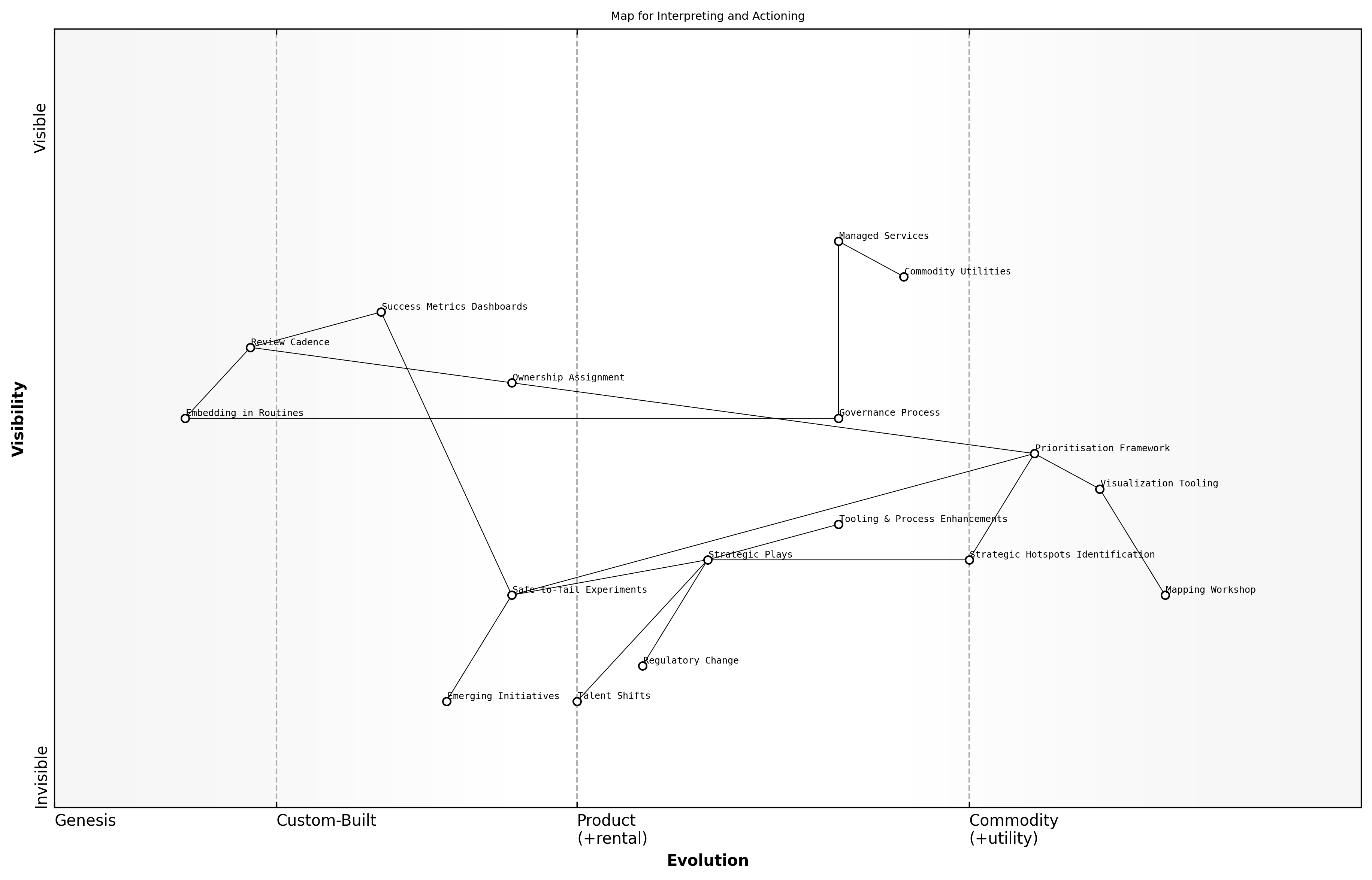
[Edit this Wardley Map](https://create.wardleymaps.ai/#clone:94dd25a4eaaea8464f)
Facilitators encourage participants to annotate the map with priorities, initiatives and named owners. This exercise aligns teams around concrete next steps and clarifies handoffs between strategy, community governance and delivery teams.
> The map only delivers value when it informs concrete actions, says the workshop leader
- Prioritise plays by impact and feasibility, balancing long‑term vision with short‑term wins
- Design safe‑to‑fail experiments around selected components to validate assumptions
- Assign clear ownership and allocate resources for each strategic play
- Define success metrics and integrate them into community and board‑level dashboards
- Establish a regular review cadence to update the map and adapt actions based on new data
Embedding the map into organisational routines — such as quarterly strategy reviews or community health retrospectives — ensures continuous alignment between strategic intent and operational execution.
### <a id="community-health-dashboard-templates"></a>Community Health Dashboard Templates
#### <a id="selecting-metrics-and-kpis"></a>Selecting metrics and KPIs
Choosing the right metrics and KPIs is crucial for making your community dashboard a board‑level decision support tool. Metrics must reflect both the operational health of the community and its strategic impact on mission objectives. Well‑selected indicators guide investment, flag emerging risks and demonstrate how open source initiatives underpin broader organisational goals.
- Align each metric with a specific strategic play or value‑chain stage on the Wardley map
- Balance leading indicators (emerging trends) with lagging measures (historical performance)
- Ensure every KPI is actionable and linked to a clear governance or process response
- Limit the total number of KPIs to avoid dashboard overload and maintain focus
- Validate data quality and collection methods before committing to a metric
Metrics fall into distinct categories that together provide a holistic view of community health and strategic progress. By grouping KPIs, stakeholders can quickly navigate to the area of interest—whether it is contributor dynamics, process efficiency, outcome impact or sentiment and culture.
- Contributor metrics (growth rate, retention rate, bus factor)
- Process metrics (average time to triage, pull‑request cycle time, issue backlog size)
- Outcome metrics (feature delivery rate, upstream contribution ratio, release frequency)
- Sentiment and culture metrics (forum sentiment index, code‑of‑conduct incidents, diversity indicators)
- Strategic alignment metrics (percentage of components contributed upstream, alignment with custom‑built versus commodity stages)
# <a id="sample-kpi-configuration-for-community-dashboard"></a>Sample KPI configuration for community dashboard
metrics:
  contributor_growth_rate:
    description: percentage of new contributors per quarter
    threshold: 10%
  average_merge_time:
    description: hours from PR open to merge
    threshold: 48h
  upstream_contribution_ratio:
    description: proportion of code merged upstream versus proprietary forks
    threshold: 30%
alerts:
  - metric: average_merge_time
    severity: warning
    action: schedule process review
[Insert KPI Selection Matrix: decision matrix mapping each metric category to strategic objectives, data sources and threshold‑based actions]

> Selecting KPIs is not about data for data’s sake but about empowering boards to steer open source initiatives with precision says a senior open source strategist


#### <a id="dashboard-design-patterns"></a>Dashboard design patterns

Effective dashboard design balances clarity, context and actionability to transform raw community health metrics into strategic insight. Well‑crafted layouts guide board‑level audiences through trends, risks and opportunities without overwhelming them.

These design patterns build on KPI selection and threshold alerts, ensuring that each visualisation aligns with established values on the Wardley Map and the combined Porter‑Lean framework for community evolution.

- Role‑based views that present metrics tailored to executives, community managers and technical leads
- Threshold alerts with colour coding to flag emerging issues and trigger predefined actions
- Trend panels and sparklines to surface momentum in key indicators over time
- Heatmaps to visualise retention and participation intensity across contributor cohorts
- Drill‑down tables for detailed investigation of anomalies and outlier events
- Narrative annotations to contextualise shifts in metrics with governance or licence changes
- Interactive filters and date‑range selectors for scenario analysis and retrospective reviews

Role‑based views group related metrics into tabs or panels. Executives see high‑level summaries like bus factor and retention heatmaps, while community leads access detailed response‑time histograms, contributor growth charts and sentiment timelines.

Threshold alerts use conditional formatting. For example, a bus factor above 30 percent might appear in green, while values below 20 percent trigger an amber or red highlight. Each alert links to a playbook entry, defining next steps such as recruiting backup maintainers or convening a governance review.

Trend panels and sparklines reveal directional shifts at a glance. Embedding a micro line chart next to a KPI value allows readers to assess whether contributor growth is accelerating or stalling, supporting lean experiment cycles and safe‑to‑fail interventions.

[Insert Dashboard Wireframe: annotated layout showing role‑based tabs, threshold panels with colour coding, trend sparklines and drill‑down tables]
panels:
  - title: Bus Factor
    type: gauge
    metrics:
      - name: bus_factor
        threshold:
          warning: 25
          critical: 20
    colorMode: threshold
  - title: Contributor Growth Trend
    type: sparkline
    metrics:
      - name: weekly_new_contributors
    options:
      lineWidth: 2
      fillOpacity: 0.3
  - title: Retention Heatmap
    type: heatmap
    metrics:
      - name: activity_by_cohort
    options:
      colorScheme: Blues
> A good dashboard tells a story about community health says a senior open source strategist


#### <a id="customisation-examples"></a>Customisation examples

To ensure dashboards resonate with different stakeholder needs and project contexts, customisation examples illustrate how to adapt templates effectively. Whether focusing on security compliance, operational efficiency or sovereign requirements, tailored dashboards provide actionable insight.

- Security centre view with CVE backlog heatmap and patch response metrics
- Operational efficiency view highlighting CI pipeline health and deployment frequency
- Sovereign cloud view tracking data residency compliance and localisation metrics
- Innovation velocity view focusing on upstream contribution ratio and experiment success rates

Each customisation modifies panel selection, threshold definitions and annotations. For example, a security team may adjust the backlog health gauge to trigger critical alerts at lower thresholds, while a governance body reviews sovereign metrics with region‑based filters.
panels:
  - title: Sovereign Data Residency
    type: table
    metrics:
      - name: region_compliance_rate
        threshold:
          warning: 95%
          critical: 90%
  - title: CVE Backlog Heatmap
    type: heatmap
    metrics:
      - name: cve_backlog_age_distribution
    options:
      colorScheme: Reds
[Insert Dashboard Screenshot: sovereign cloud view with region filters and compliance panels]

> Tailoring dashboards to organisational priorities turns data into strategic guidance says a senior government strategist


### <a id="open-source-roi-calculators"></a>Open Source ROI Calculators

#### <a id="building-a-financial-model"></a>Building a financial model

A robust financial model underpins any open source ROI calculator, translating strategic objectives into quantifiable metrics. By mapping costs and benefits over a defined horizon, public sector teams can demonstrate the value of open source as a competitive weapon and secure board‑level buy‑in.

[Insert Open Source ROI Calculator Template with input fields for cost categories, benefit streams, time horizon and discount rate]

Begin by cataloguing cost categories associated with an open source initiative. Accurate cost capture ensures the model reflects both direct expenses and hidden overheads, providing a credible baseline for ROI analysis.

- Personnel costs: developer hours, DevOps engineers and community managers
- Infrastructure costs: cloud hosting, CI/CD pipelines and test environments
- Support and services: training, consultancy and third‑party SLAs
- Tooling and licences: security scanners, compliance platforms and analytics tools
- Governance overhead: legal reviews, licence compliance audits and foundation dues

Next, identify benefit streams. Open source delivers value beyond cost avoidance: productivity gains, innovation velocity and reputational capital all contribute to the bottom line.

- Cost avoidance: elimination of proprietary licence fees and vendor lock‑in penalties
- Productivity improvements: reduced development time via upstream contributions
- Innovation acceleration: faster feature delivery driven by community experiments
- Risk mitigation: fewer security vulnerabilities through transparent peer review
- Reputational value: enhanced ability to attract talent and form partnerships

Define your input data and assumptions clearly. Transparent assumptions allow stakeholders to interrogate the model, test sensitivity and validate outcomes against real‑world performance.

- Time horizon: typically three to five years to capture long‑term effects
- Discount rate: reflecting public sector cost of capital or opportunity cost
- Inflation and salary growth rates: aligned with organisational forecasts
- Contribution adoption curve: ramp‑up of community engagement over time
- Maintenance effort: expected decline in internal upkeep as upstream maturity grows

Scenario analysis helps illustrate the range of possible outcomes. By modelling optimistic, realistic and conservative cases, boards gain confidence in the resilience of the open source strategy.

- Optimistic scenario: high contribution rate, rapid cost avoidance and strong productivity gains
- Realistic scenario: moderate community ramp‑up and incremental benefit realisation
- Conservative scenario: slower adoption, unanticipated overheads and extended payback period
model:
  time_horizon_years: 5
  discount_rate: 0.05
costs:
  personnel:
    annual_hours: 4000
    rate_per_hour: 80
  infrastructure:
    monthly: 2000
  support_services:
    annual: 30000
benefits:
  licence_avoidance:
    annual: 50000
  productivity_gain:
    annual_percentage: 0.15
  risk_reduction:
    annual: 20000
scenarios:
  optimistic:
    productivity_gain: 0.20
  realistic:
    productivity_gain: 0.15
  conservative:
    productivity_gain: 0.10
Interpret key metrics to communicate value clearly. NPV, IRR and payback period resonate with board‑level audiences, linking open source investments to strategic financial outcomes.

- Net Present Value (NPV): discounted sum of net benefits over the horizon
- Internal Rate of Return (IRR): discount rate at which NPV equals zero
- Payback Period: time required to recover initial investment
- Benefit‑Cost Ratio (BCR): ratio of total benefits to total costs

> Demonstrating a positive NPV and a sub‑three‑year payback turned open source from a concept into a funded programme says a senior government official

Integrate the ROI model into your community health and strategic dashboards. By linking financial outputs to metrics such as upstream contribution ratio or bus factor, leaders can steer investments in a data‑driven manner.

[Insert ROI Calculator Workshop Exercise with step‑by‑step guidance on populating the template and interpreting scenario outputs]


#### <a id="input-data-and-assumptions"></a>Input data and assumptions

Accurate input data and well‑calibrated assumptions underpin a credible open source ROI model. These elements determine whether the financial projections resonate with stakeholders and withstand scrutiny from finance and audit teams. Without a clear framework for capturing and validating inputs, the ROI calculator can produce misleading metrics that erode executive trust.

- Define the time horizon and discount rate that reflect public sector funding cycles and cost of capital
- Catalogue cost categories such as developer effort, infrastructure and tooling, support and consulting, governance overheads
- Identify benefit streams including licence fee avoidance, improved developer productivity, accelerated innovation velocity, reduced security and vendor lock‑in risks, reputational capital
- Establish data sources and validation methods by leveraging time‑tracking systems, procurement records, community health metrics and stakeholder surveys
- Determine scenario parameters for sensitivity analysis across optimistic, realistic and conservative estimates

Each assumption should be documented with its source, rationale and confidence level. Embedding this metadata in your model fosters transparency and enables iterative refinement as real‑world data emerges.

> Embedding clear assumptions and data provenance turns financial projections from a black box into a living dialogue between open source teams and executive sponsors says a senior government strategist
model:
  time_horizon_years: 5  # aligns with strategic planning cycles
  discount_rate: 0.04    # reflects public sector cost of capital
costs:
  personnel:
    annual_hours: 4200
    rate_per_hour: 75
  infrastructure:
    monthly: 2500
  governance_overhead:
    annual: 15000
benefits:
  licence_avoidance:
    annual: 60000
  productivity_improvement:
    annual_percentage: 0.18
  risk_mitigation:
    annual: 30000
scenarios:
  optimistic:
    productivity_improvement: 0.22
  realistic:
    productivity_improvement: 0.18
  conservative:
    productivity_improvement: 0.12
Insert Workshop Exercise: Participants populate the input data table with real‑world values annotate confidence levels and group assumptions by cost and benefit category


#### <a id="interpreting-roi-scenarios"></a>Interpreting ROI scenarios

Interpreting ROI scenarios is the bridge between financial modelling and strategic decision‑making. By comparing net present value, internal rate of return, payback period and benefit‑cost ratio across optimistic, realistic and conservative projections, boards gain clarity on investment timing, risk exposure and expected value delivery.

Effective interpretation goes beyond raw numbers. It situates each scenario within the organisation’s mission, linking cost avoidance, productivity improvements and risk mitigation to user needs and Wardley Mapping evolution stages. This context ensures that ROI insights inform prioritisation of community contributions, platform investments and governance refinements.

- Net Present Value (NPV): indicates whether projected benefits exceed costs after discounting
- Internal Rate of Return (IRR): the break‑even discount rate at which NPV equals zero
- Payback Period: time required to recoup the initial investment
- Benefit‑Cost Ratio (BCR): ratio of total benefits to total costs, highlighting efficiency of spend

Scenario comparison highlights sensitivity to key assumptions. By tracking how IRR shifts when productivity gains vary by ±5 percent or licence‑avoidance volumes change, teams identify high‑impact levers and plan safe‑to‑fail experiments to validate critical hypotheses.
scenarios: optimistic: npv: 120000 irr: 18.5% payback_period_years: 2.3 realistic: npv: 85000 irr: 14.2% payback_period_years: 2.9 conservative: npv: 40000 irr: 9.0% payback_period_years: 4.1
Integrating scenario outputs into the community dashboard aligns financial outcomes with health metrics. For example, linking an optimistic NPV to a target upstream contribution ratio of 30 percent or a bus factor above 20 percent creates a unified view of investment and ecosystem resilience.

> ROI scenarios turn abstract numbers into actionable roadmaps says a senior finance officer

[Insert ROI Scenario Comparison Chart illustrating optimistic, realistic and conservative curves alongside key financial metrics]


### <a id="governance-assessment-toolkit"></a>Governance Assessment Toolkit

#### <a id="selfassessment-questionnaires"></a>Self‑assessment questionnaires

Self‑assessment questionnaires offer a systematic way for organisations to evaluate their governance practices against key criteria. By reflecting on structured questions, public sector bodies can identify strengths, surface gaps and prioritise improvements in their open source governance model.

- Governance model alignment: clarity of charters, decision pathways and role definitions
- Contributor onboarding: completeness of documentation, automated checks and mentorship programmes
- Conflict resolution readiness: presence of escalation matrices, mediation frameworks and ombudsperson roles
- Community health metrics: defined KPIs, dashboard integration and threshold alerts
- Licence and IP compliance: agreement workflows, SPDX usage and patent‑defensive publishing
- Risk management: documented disclaimers, indemnity clauses and jurisdictional provisions
- Continuous iteration: feedback loops, experiment logs and retrospective processes

Each questionnaire section should be scored on maturity levels—from initial ad hoc processes through to optimised and data‑driven practices—enabling a clear roadmap for governance evolution.

[Insert Self‑assessment Questionnaire Template: detailed matrix mapping questions to maturity levels and improvement actions]
questionnaire:
  sections:
    - name: Governance Model Alignment
      questions:
        - text: Are decision‑making roles and responsibilities clearly documented?
          maturity_levels: [ad_hoc, defined, measured, optimised]
        - text: Is there a charter that outlines escalation paths for disputes?
          maturity_levels: [ad_hoc, defined, measured, optimised]
    - name: Contributor Onboarding
      questions:
        - text: Does onboarding include automated environment setup and CI checks?
          maturity_levels: [ad_hoc, defined, measured, optimised]
        - text: Are mentorship pairings assigned within 48 hours of first contribution?
          maturity_levels: [ad_hoc, defined, measured, optimised]
> Effective self assessment transforms governance from static doc to living practice says a senior open source strategist


#### <a id="decision-matrices-for-governance-evolution"></a>Decision matrices for governance evolution

In high‑impact open source programmes, decision matrices serve as practical toolkits to guide the transition between governance models. By correlating quantitative thresholds with predefined actions, public sector organisations can evolve from a benevolent dictator structure to a hybrid or foundation model with minimal disruption. A well‑configured matrix aligns community health metrics, legal obligations and strategic imperatives into a clear roadmap.

- Contributors per maintainer ratio exceeding threshold triggers hybrid governance exploration
- Sponsor agreement count rising above limit initiates foundation readiness planning
- Governance dispute frequency crossing set point prompts formal mediation board establishment
- Average decision latency breaching SLA leads to workflow optimisation or model reassessment
- Regulatory or compliance changes activate sovereign governance review for regional forks
metrics:
  contributors_per_maintainer: 30
  sponsor_agreements_count: 5
  governance_dispute_frequency_per_month: 2
  decision_latency_hours: 72
decisions:
  if contributors_per_maintainer > 25: adopt hybrid governance
  if sponsor_agreements_count > 3: plan foundation formation
  if governance_dispute_frequency_per_month > 1: convene mediation panel
  if decision_latency_hours > 48: streamline escalation paths
[Insert Governance Evolution Decision Matrix: detailed matrix mapping metric thresholds to governance models and migration activities]
> Decision matrices transform static governance guidelines into a living framework that adapts to real‑time community dynamics says a senior government advisor
#### <a id="implementation-planning"></a>Implementation planning
Implementation planning sits at the heart of the Governance Assessment Toolkit, converting diagnostic insights into actionable programmes that evolve governance models in line with community growth and strategic aims.
- Preparation and stakeholder alignment
- Baseline assessment using self‑assessment questionnaires and dashboards
- Roadmap development with phased milestones
- Pilot execution with safe‑to‑fail experiments
- Full rollout across the organisation
- Continuous monitoring and iteration
Begin with a thorough baseline assessment that uses self‑assessment questionnaires and governance dashboards to identify maturity gaps. Combine this with the decision matrix to prioritise which governance models to pilot or evolve.
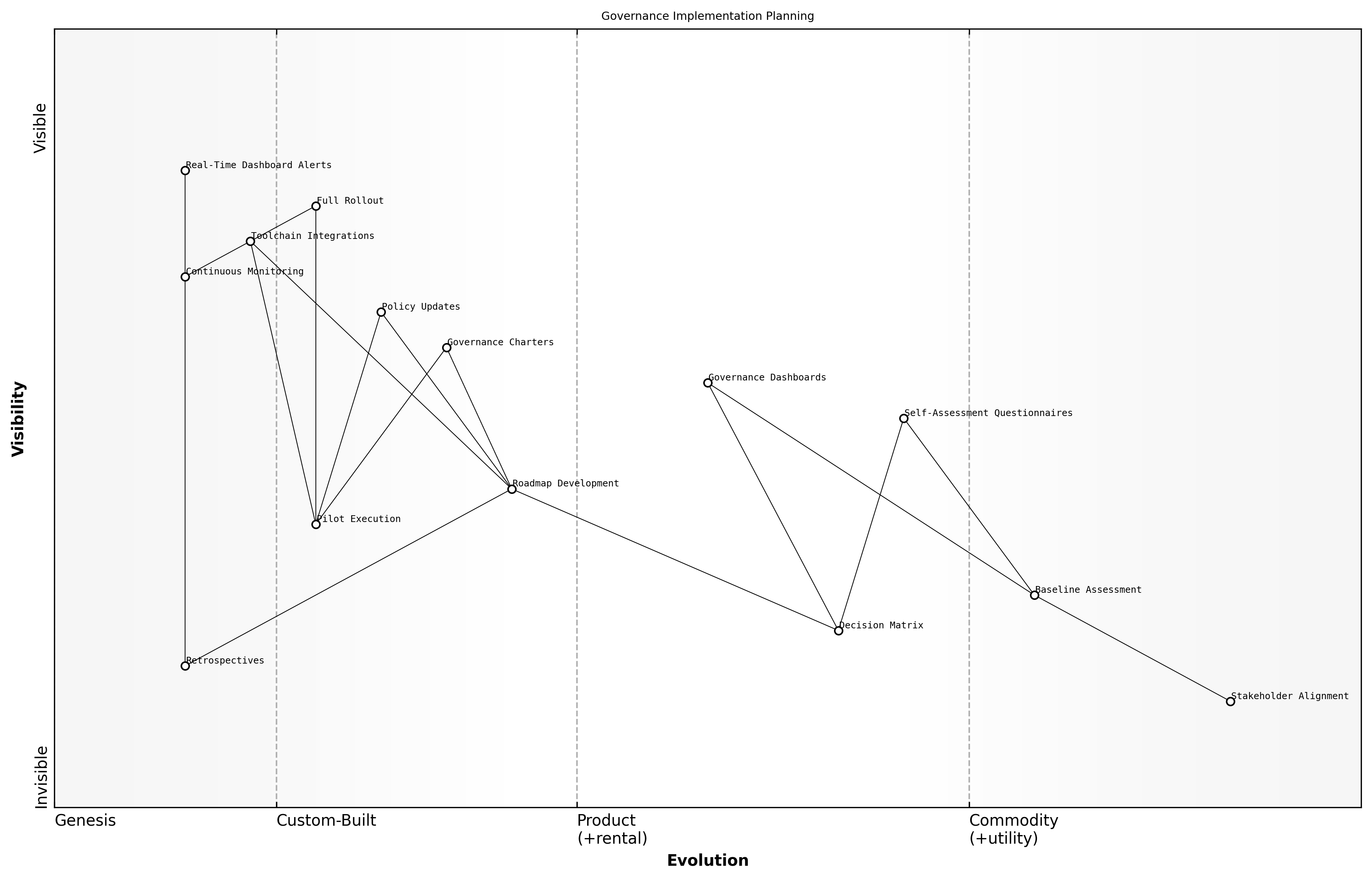
[Edit this Wardley Map](https://create.wardleymaps.ai/#clone:0bcbc57849995a9d40)
When developing the roadmap, assign responsibilities to specific roles such as governance stewards, legal advisors and community managers. Define clear milestones for charters, policy updates and toolchain integrations, and align these with the board‑level implementation plan.
phases: preparation: timeline: Q1 responsible: governance_steering_committee baseline_assessment: timeline: Q2 responsible: community_manager roadmap_development: timeline: Q3 responsible: cross_functional_team pilot: timeline: Q4 responsible: pilot_group full_rollout: timeline: Year2_Q1 responsible: organisational_lead
Pilot execution should follow lean startup principles, framing each governance change as an experiment with defined hypotheses and metrics. Use safe‑to‑fail trials within select project modules before scaling to larger teams or foundation‑level structures.

> Implementation planning requires embedding clear milestones and review points into governance charters and dashboards says a senior government official

Continuous monitoring and iteration complete the implementation cycle. Use real‑time dashboard alerts to detect deviations, convene retrospectives to capture learnings and adjust the roadmap in line with evolving community health and strategic priorities.


## <a id="conclusion-embedding-open-source-as-a-sustained-competitive-weapon"></a>Conclusion: Embedding Open Source as a Sustained Competitive Weapon

### <a id="roadmap-for-boardlevel-adoption"></a>Roadmap for Board‑Level Adoption

#### <a id="phased-implementation-plan"></a>Phased implementation plan

The phased implementation plan decomposes the board-level adoption roadmap into sequential stages, each building on the previous to embed open source as a sustained competitive weapon.

This approach balances strategic clarity with operational agility, enabling boards to monitor progress, mitigate risk and secure cross-functional buy-in at each step.

- Discovery & Assessment
- Pilot & Validation
- Expansion & Integration
- Optimisation & Continuous Improvement

Phase 1: Discovery & Assessment sets the foundation by aligning executive vision with existing capabilities and ecosystem health. In this stage, leadership defines key objectives, assesses community maturity and identifies strategic plays.

- Conduct a strategic gap analysis against the Wardley Map
- Review current open source policies and legal frameworks
- Assemble a cross-functional steering committee
- Define success criteria and evaluation metrics
- Map dependencies and ecosystem stakeholders

Phase 2: Pilot & Validation tests selected open source initiatives through controlled experiments. This phase verifies assumptions, refines governance models and gauges community and technical readiness.

- Select high-impact projects for proof-of-concept
- Run lean experiments to validate value propositions
- Track pilot metrics via community health dashboards
- Obtain feedback from contributors and end users
- Report pilot outcomes to the board with actionable recommendations

Phase 3: Expansion & Integration scales validated pilots across departments and integrates open source practices into standard workflows. Boards allocate resources, formalise policies and embed toolchains for broader adoption.

- Roll out successful pilots organisation-wide
- Standardise contribution pathways and governance charters
- Integrate open source tools into CI/CD and procurement
- Train teams on best practices and incentive programmes
- Establish regular governance reviews and dashboards

Phase 4: Optimisation & Continuous Improvement embeds continuous feedback loops to refine strategy, governance and community engagement. It ensures sustained momentum and adapts to evolving technological and regulatory landscapes.

- Monitor KPIs and adjust metrics thresholds
- Conduct retrospectives and governance self-assessments
- Iterate mentorship programmes and documentation
- Incorporate defensive publishing and licence audits
- Plan next-wave strategic plays based on mapped evolution

> Effective roadmaps break complex change into manageable phases says a senior government official

[Insert Roadmap Timeline Diagram: detailed timeline with phases, milestones and decision gates]

By following these phased stages, organisations weave open source into their strategic fabric, ensuring that each milestone delivers measurable value and cultivates a resilient competitive advantage.


#### <a id="key-milestones-and-metrics"></a>Key milestones and metrics

Key milestones and metrics provide the board with concrete checkpoints that guide the phased implementation plan and ensure strategic objectives are met in a timely fashion. By tying each stage to measurable indicators, executives can monitor progress, mitigate risks and celebrate wins as open source initiatives become a sustained competitive weapon.

- Discovery & Assessment – establish a baseline through Wardley Map alignment and track strategic gap closure ratio
- Pilot & Validation – validate proofs of concept with a pilot success rate and community engagement index
- Expansion & Integration – scale practices organisation‑wide and measure adoption rate alongside process compliance percentage
- Optimisation & Continuous Improvement – embed continuous feedback loops and monitor improvement cycle velocity and culture health index

> Milestones without metrics are aspirations without accountability says a senior government official

Effective metrics must be actionable and linked to governance or operational levers. Leading indicators such as community growth rate or pilot velocity signal emerging trends, while lagging measures like payback period and milestone completion rate confirm historical performance and inform future investment decisions.
milestone_metrics:
  discovery_assessment:
    strategic_gap_closure_ratio: 75%
    steering_committee_engagement: 80%
  pilot_validation:
    pilot_success_rate: 90%
    community_engagement_index: 0.7
  expansion_integration:
    adoption_rate: 60%
    process_compliance_percentage: 85%
  optimisation_continuous:
    improvement_cycle_velocity: 4 cycles per year
    culture_health_index: 0.8
[Insert Milestone–Metric Alignment Matrix: detailed table mapping each milestone to its key performance indicators and governance actions]


#### <a id="crossfunctional-alignment"></a>Cross‑functional alignment

Cross‑functional alignment is the linchpin that transforms open source initiatives from isolated IT projects into enterprise‑wide strategic capabilities. By synchronising objectives, processes and incentives across functions, organisations ensure that open source as a competitive weapon delivers consistent value, mitigates risk and becomes embedded in day‑to‑day operations.

- Executive leadership and board sponsors
- IT and engineering teams
- Legal and compliance departments
- Security and risk management
- Procurement and vendor management
- Finance and budget owners
- Human resources and talent development

A dedicated cross‑functional steering committee fosters shared ownership and accountability. This group convenes representatives from each stakeholder area to review progress against the phased roadmap, resolve inter‑departmental dependencies and approve adaptations to governance, tooling and funding models.

- Monthly alignment workshops with stakeholders to review milestone metrics
- Integrated dashboards presenting community health, financial outcomes and security posture
- Joint decision matrices for governance model evolution and licence strategy changes
- Cross‑departmental training programmes to build open source literacy and best practices
- Shared incentive frameworks linking performance reviews to open source contributions

> Effective cross‑functional alignment turns open source initiatives into a strategic asset says a board‑level sponsor

Insert Roadmap Alignment Diagram: detailed diagram showing alignment of milestones across IT, Legal, Security, Finance and HR with key deliverables and decision gates

To maintain momentum, define clear metrics that resonate across functions. Finance may track payback period and budget utilisation, while security focuses on patch‑response times. IT measures upstream contribution ratio and bus factor, and HR reviews skills uplift and retention rates. Aligning these metrics in a unified dashboard ensures that all teams see how their efforts contribute to broader organisational goals.
alignment_metrics: finance: payback_period_months: 24 budget_variance_percentage: 5 security: patch_response_time_hours: 48 cve_backlog_days: 7 it: upstream_contribution_ratio: 30 bus_factor_percentage: 20 hr: skills_certification_rate: 80 contributor_retention_rate: 70
> Cross‑functional alignment creates both transparency and shared incentives, says a senior government advisor


### <a id="building-organisational-buyin"></a>Building Organisational Buy‑In

#### <a id="crafting-the-executive-narrative"></a>Crafting the executive narrative

Crafting an executive narrative bridges the gap between open source technical practice and board‑level decision making. A compelling narrative aligns open source as a competitive weapon with strategic imperatives such as digital transformation, cost optimisation, risk mitigation and sovereign capability.

- Define the strategic challenge or market opportunity the organisation faces
- Position open source as a tailored solution that unlocks agility and resilience
- Present evidence using metrics from community health dashboards and ROI calculators
- Propose clear governance decisions, resource commitments and milestones
- Outline the expected outcomes and how success will be measured

An effective narrative draws on established frameworks — from Wardley mapping to community health KPIs — ensuring that board members grasp both the big‑picture strategy and the data‑driven proof points that support it.

[Insert Executive Narrative Template: structure with headings for Context, Open Source Opportunity, Evidence, Proposed Actions, Expected Outcomes]
# <a id="strategic-context"></a>Strategic Context
- [Business Driver]
- [Market or threat]

# <a id="open-source-opportunity"></a>Open Source Opportunity
- [Competitive advantage]

# <a id="evidence"></a>Evidence
- ROI metrics and community health indicators

# <a id="proposed-actions"></a>Proposed Actions
- Governance model evolution
- Resource allocation

# <a id="expected-outcomes"></a>Expected Outcomes
- KPI improvements and risk reduction
- Use concise, data‑rich slides that surface leading and lagging indicators
- Anchor recommendations to strategic themes such as interoperability and security
- Incorporate visualisations like dashboards and Wardley maps to contextualise metrics
- Tell a story with real‑world examples, emphasising lessons and next steps
- Tailor language to executive concerns, avoiding technical jargon without context

> Effective narratives weave data and story to galvanise decision makers says a senior government official

Embedding the executive narrative into regular board reports and cross‑functional workshops sustains organisational buy‑in. By sharing narrative templates, dashboards and decision matrices, teams ensure that open source remains a living strategic asset rather than an isolated project.


#### <a id="stakeholder-engagement-strategies"></a>Stakeholder engagement strategies

The foundation of sustained open source adoption lies in deliberate stakeholder engagement strategies to secure ongoing buy-in across executive, functional and technical domains. This ensures that open source evolves from an isolated initiative into an enterprise-wide capability.

- Board sponsors and executive leadership
- IT and engineering teams
- Legal and compliance departments
- Security and risk management
- Procurement and vendor management
- Finance and budget owners
- Human resources and talent development

Effective engagement begins with mapping and prioritising stakeholders according to their influence and interest. By understanding power dynamics and strategic concerns, teams can tailor interactions and allocate resources where they drive the greatest impact.

[Insert Stakeholder Influence Matrix illustrating power v interest positions]

Engagement techniques vary by audience but share a common aim: to translate open source benefits into terms that resonate with each stakeholder group. Structured interactions build trust, surface concerns early and align expectations on governance, risk and reward.

- Executive workshops featuring Wardley maps and community dashboards
- Cross‑functional steering committee meetings
- Role‑based briefings with tailored metrics and narratives
- Interactive dashboards and decision matrices
- Brown bag sessions and community showcases

For finance teams, emphasise ROI scenarios and payback periods. Security leaders prioritise licence compliance and patch response metrics. Engineering focuses on upstream contribution ratios and bus factor improvements. Tailoring the narrative ensures that each group sees open source as integral to their objectives.
stakeholders:
  - role: Board sponsors
    interest: Strategic oversight
    engagement: Monthly briefings with ROI and risk dashboards
  - role: IT teams
    interest: Operational efficiency
    engagement: Weekly metrics review and roadmap workshops
  - role: Security
    interest: Compliance and resilience
    engagement: Quarterly security posture assessments
> Engaging stakeholders early transforms open source initiatives into strategic imperatives says a senior government official

[Insert Engagement Roadmap Timeline mapping phases, touchpoints and review cycles]

Sustained engagement relies on regular feedback loops and transparent reporting. By embedding open source dashboards into existing governance forums and demonstrating early wins, teams maintain momentum and foster a culture of shared ownership.

- Define clear roles and responsibilities for each stakeholder
- Establish a regular communication cadence aligned with governance cycles
- Solicit feedback through surveys, retrospectives and open forums
- Highlight successes and challenges in periodic executive briefs
- Empower sponsor champions to advocate across functions


#### <a id="measuring-and-celebrating-wins"></a>Measuring and celebrating wins

Measuring and celebrating wins cements open source progress in the organisation’s culture. By surfacing milestones and sharing them across functions, teams build momentum and reinforce stakeholder confidence in open source as a sustained competitive weapon.

- Quantify strategic milestones such as pilot success rate, adoption rate and roadmap completion percentage
- Highlight community health improvements like increased contributor retention, reduced merge times and higher bus factor
- Report business impacts including licence cost avoidance, productivity gains and risk reduction metrics
- Link wins to cross‑functional KPIs such as security patch response time, sovereign compliance and skills certification rates
- Showcase qualitative successes via case studies, user testimonials and contributor spotlights

Celebration rituals translate data into shared pride. Regularly feature success stories in executive briefings, cross‑functional newsletters and internal communication channels. Tailor each announcement to the audience, whether emphasising financial return for finance, security resilience for risk teams or community growth for engineering.

> Regularly sharing wins turns abstract metrics into tangible progress and galvanises cross‑department support says a senior government official
# <a id="sample-announcement-in-team-channel"></a>Sample announcement in team channel
/announce :tada: Achieved 30% upstream contribution ratio and reduced average merge time below 48h
[Insert Celebration Roadmap: timeline visualising milestone achievements, communication touchpoints and stakeholder acknowledgments]
Embedding win‑celebration into governance rituals ensures continuous reinforcement. After each release cycle or strategic review, convene a short retrospective to review achievements, gather feedback and set the next targets. This closes the loop between measurement, celebration and iteration.
### <a id="sustaining-momentum-and-future-trends"></a>Sustaining Momentum and Future Trends
#### <a id="continuous-improvement-loops"></a>Continuous improvement loops
In dynamic open source programmes ongoing refinement ensures sustained competitive advantage. Continuous improvement loops embed feedback into governance and operations, enabling public sector organisations to adapt strategies rapidly and embed lessons from emerging trends.
- Define and align key community health and business metrics with strategic plays
- Automate real‑time data collection and dashboard refresh for early warning signals
- Diagnose anomalies through cross‑functional reviews and root cause analysis
- Design and run safe‑to‑fail experiments to address priority gaps
- Implement changes in governance, tooling or contribution pathways based on validated learning
- Evaluate outcomes using both quantitative metrics and qualitative feedback
- Celebrate successes, update playbooks and refine thresholds to close the loop
> Continuous iteration transforms metrics into strategic advantage says a senior government official
Insert Iteration Cycle Diagram illustrating metric‑driven feedback loops and experiment cycles
Looking ahead, preparing for future trends requires integrating emerging technologies and governance models into these loops. By surfacing novel signals early, organisations maintain agility and strengthen ecosystem leadership.
- AI‑driven analytics for community health and contributor insights
- Edge computing frameworks and federated open source ecosystems
- Standards‑based interoperability and cross‑domain integrations
- Decentralised governance models leveraging blockchain and DAOs
- Enhanced security practices through open threat intelligence sharing
- Policy‑driven forks and sovereign open source variants
> Proactive anticipation of emerging trends secures long‑term momentum says a leading expert in the field
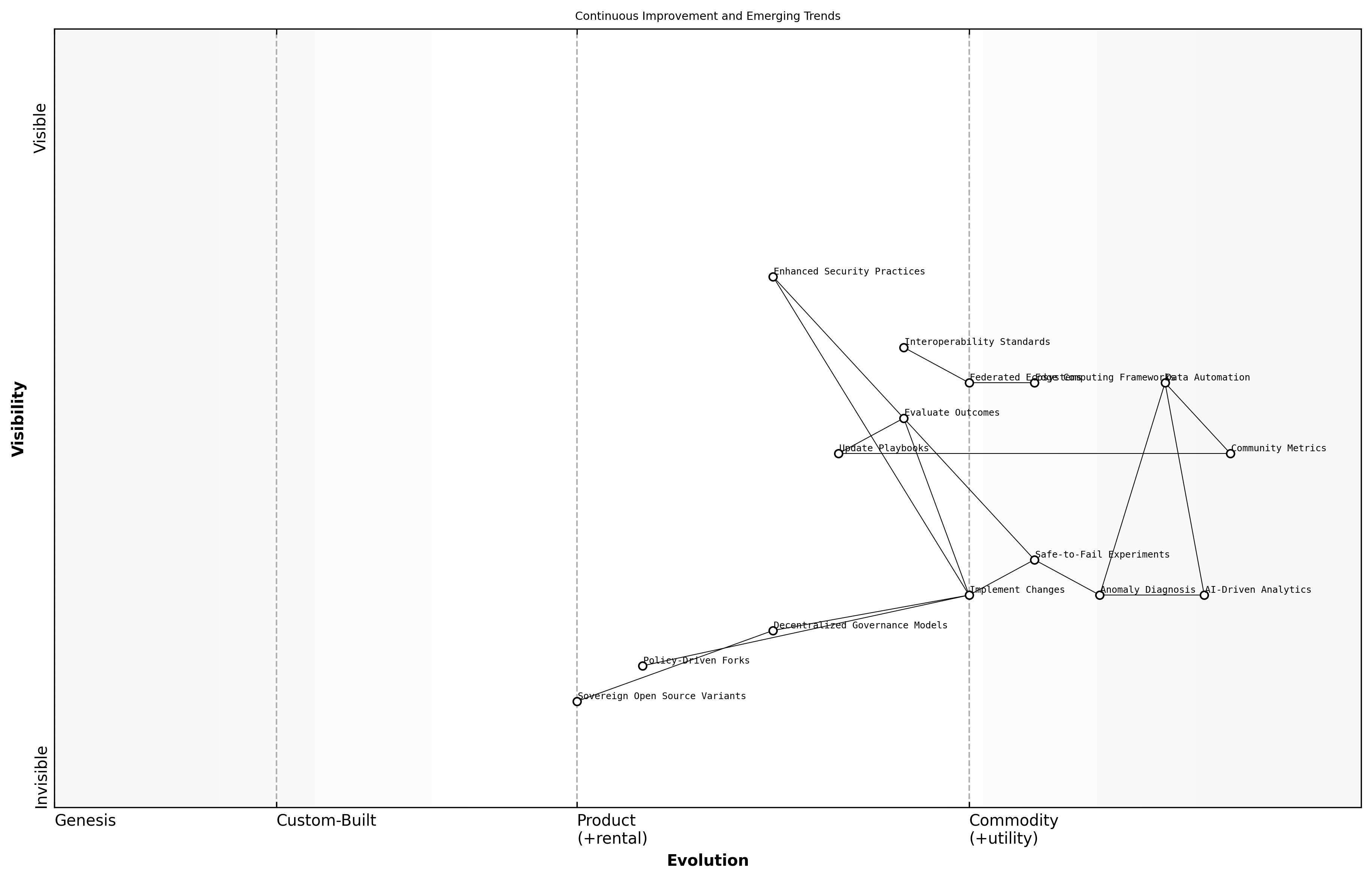
[Edit this Wardley Map](https://create.wardleymaps.ai/#clone:04f264ba30081310cf)
#### <a id="emerging-open-source-trends-ai-edge-standards"></a>Emerging open source trends (AI, edge, standards)
As communities mature through continuous improvement loops, attention must turn to nascent domains where open source will exert fresh competitive force. Artificial intelligence, edge computing and open standards are reshaping the landscape, requiring new experiments, governance adaptations and strategic plays.
- AI and machine learning frameworks accelerating model innovation and deployment
- Edge and federated computing delivering low‑latency, sovereign services
- Open standards and interoperability protocols reducing vendor lock‑in
- Decentralised governance models (DAOs) exploring new trust paradigms
- Community‑driven security and threat intelligence sharing
- Data sovereignty via regional, open source distributions
Open source AI platforms have moved from research prototypes to production foundation models. Communities now govern model weight licensing, fine‑tuning workflows and evaluation benchmarks. Boards should sponsor safe‑to‑fail AI experiments that align with ethical guidelines and public sector mandates.
- Open model hubs for sharing pre‑trained and fine‑tuned weights
- Responsible AI toolkits embedding fairness and explainability checks
- Collaborative benchmark suites for cross‑project evaluation
- Licence frameworks adapting copyleft to model artefacts
> Open source AI frameworks democratise innovation and build trust through transparency says a senior government strategist
Edge computing extends open source beyond centralised datacentres, enabling federated learning and microservices on constrained devices. Public sector bodies must pilot micro‑VM runtimes, offline‑first architectures and device management layers that satisfy sovereignty and security requirements.
- Container and micro‑VM runtimes optimized for edge hardware
- Federated learning libraries preserving data privacy
- Offline‑first sync frameworks for intermittent connectivity
- Edge‑native security modules with zero‑trust policies
> Deploying open source at the edge empowers resilient, sovereign services says a leading expert in the field
Open standards remain the glue that unites disparate projects and prevents fragmentation. By co‑authoring protocol specifications, test suites and certification programmes, communities ensure that emerging technologies interoperate and evolve as public goods.
- Common data schemas and API contracts for cross‑domain services
- Certification frameworks validating compliance with standards
- Open registries of interfaces, profiles and compliance results
- Foundation‑led working groups steering protocol evolution
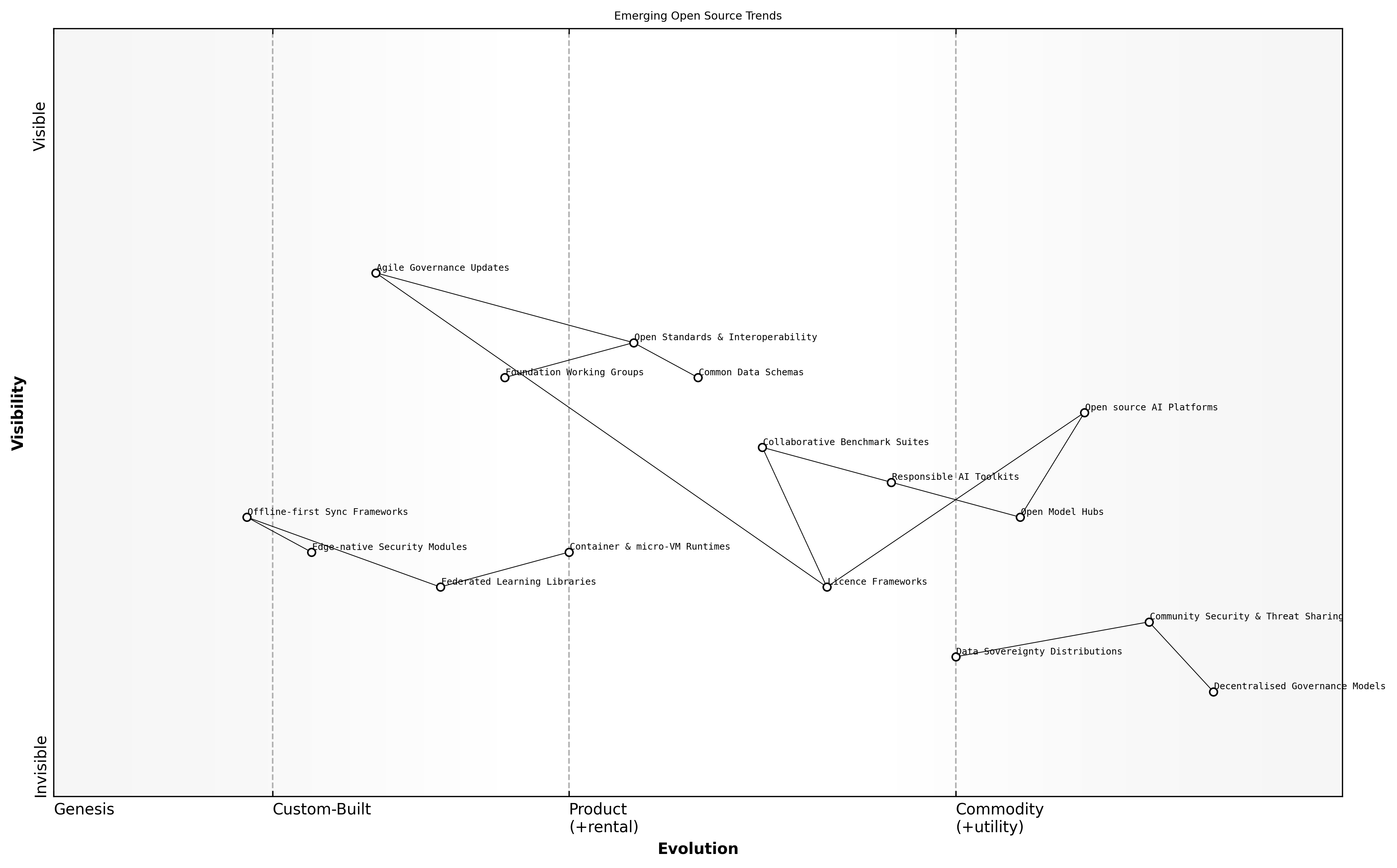
[Edit this Wardley Map](https://create.wardleymaps.ai/#clone:bb59e6cd7ddd2a559a)
Embedding these trends into continuous improvement loops demands horizon‑scanning, data‑driven experiments and agile governance updates. By layering AI, edge and standards considerations onto existing dashboards and playbooks, organisations sustain momentum and secure long‑term strategic advantage.
#### <a id="preparing-for-the-next-wave-of-disruption"></a>Preparing for the next wave of disruption
As open source initiatives mature, sustaining momentum requires a forward‑looking approach that builds on established continuous improvement loops. Boards must treat emerging domains as extensions of existing strategy, integrating new technology trends into governance frameworks, community health metrics and strategic plays.
- AI ecosystems and model governance: define ethical guardrails, licence frameworks for pretrained weights and metrics for model performance
- Edge and federated computing: pilot micro‑VM runtimes, offline‑first architectures and sovereign deployments in regional data centres
- Open standards and interoperability: co‑author protocol specifications, certification test suites and reference implementations
- Decentralised governance and DAOs: experiment with new decision rights models, token‑based voting and reputation systems
- Community‑driven security intelligence: share threat data, automate CVE detection and integrate real‑time alerts into dashboards
- Data sovereignty and localisation: map regulatory climate factors on Wardley canvases and prepare sovereign forks or distributions
To prepare for these disruptions, leadership teams should update strategic toolkits. For example, refresh Wardley maps to include new climate signals such as AI ethics mandates or edge‑network latency requirements. Extend community dashboards with AI health indicators and regional compliance panels. Embed safe‑to‑fail experiments for each frontier to validate assumptions rapidly.
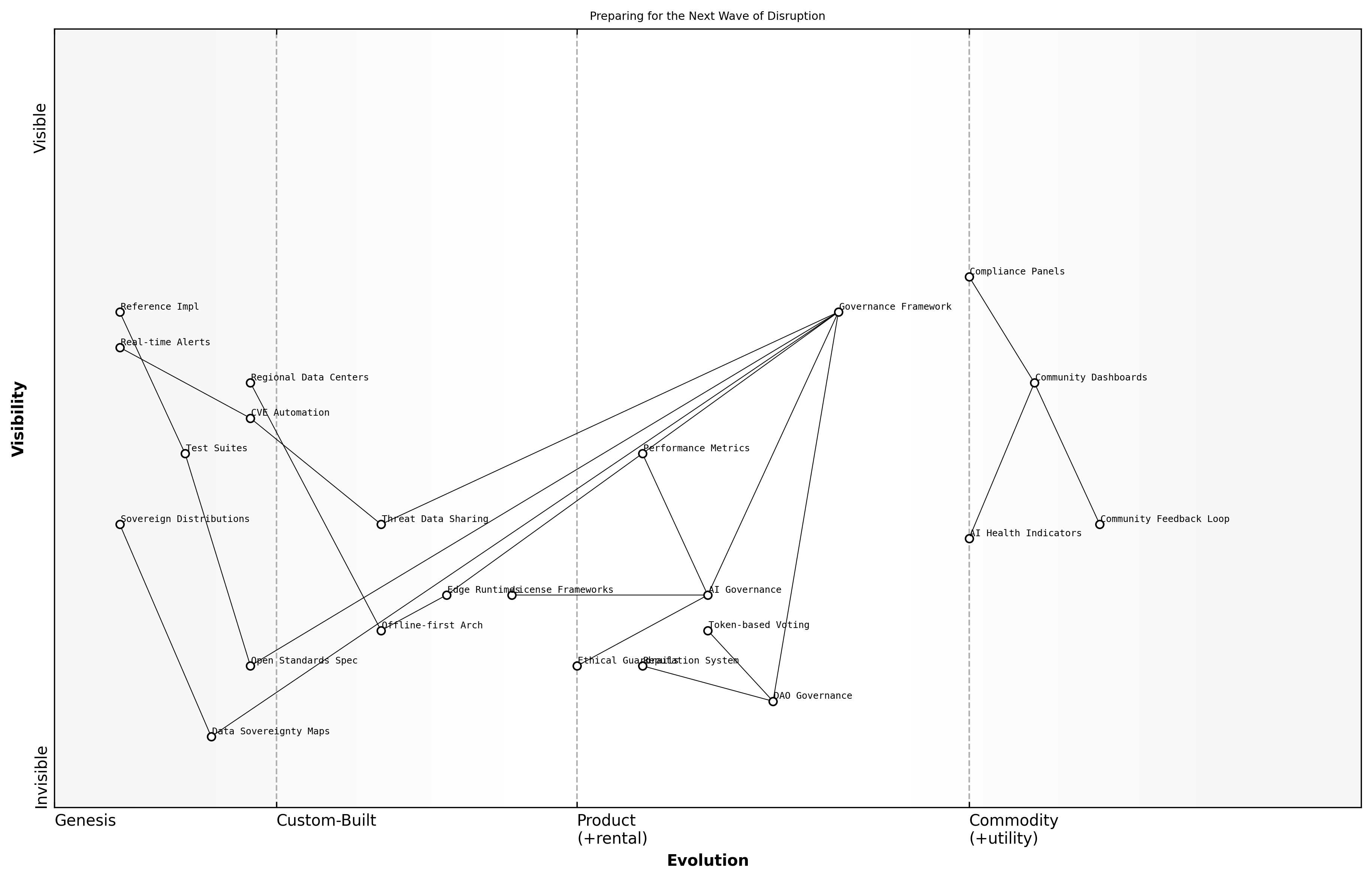
[Edit this Wardley Map](https://create.wardleymaps.ai/#clone:6cc0359965ccbad5ad)
> Proactive anticipation of emerging trends secures long term momentum says a leading expert in the field
---
Appendix: Further Reading on Wardley Mapping
The following books, primarily authored by Mark Craddock, offer comprehensive insights into various aspects of Wardley Mapping:
## <a id="core-wardley-mapping-series"></a>Core Wardley Mapping Series
1. **Wardley Mapping, The Knowledge: Part One, Topographical Intelligence in Business**
- Author: Simon Wardley
- Editor: Mark Craddock
- Part of the Wardley Mapping series (5 books)
- Available in Kindle Edition
- [Amazon Link](https://www.amazon.co.uk/stores/Mark-Craddock/author/B08FT5G32H)
This foundational text introduces readers to the Wardley Mapping approach:
- Covers key principles, core concepts, and techniques for creating situational maps
- Teaches how to anchor mapping in user needs and trace value chains
- Explores anticipating disruptions and determining strategic gameplay
- Introduces the foundational doctrine of strategic thinking
- Provides a framework for assessing strategic plays
- Includes concrete examples and scenarios for practical application
The book aims to equip readers with:
- A strategic compass for navigating rapidly shifting competitive landscapes
- Tools for systematic situational awareness
- Confidence in creating strategic plays and products
- An entrepreneurial mindset for continual learning and improvement
2. **Wardley Mapping Doctrine: Universal Principles and Best Practices that Guide Strategic Decision-Making**
- Author: Mark Craddock
- Part of the Wardley Mapping series (5 books)
- Available in Kindle Edition
- [Amazon Link](https://www.amazon.co.uk/stores/Mark-Craddock/author/B08FT5G32H)
This book explores how doctrine supports organizational learning and adaptation:
- Standardisation: Enhances efficiency through consistent application of best practices
- Shared Understanding: Fosters better communication and alignment within teams
- Guidance for Decision-Making: Offers clear guidelines for navigating complexity
- Adaptability: Encourages continuous evaluation and refinement of practices
Key features:
- In-depth analysis of doctrine's role in strategic thinking
- Case studies demonstrating successful application of doctrine
- Practical frameworks for implementing doctrine in various organizational contexts
- Exploration of the balance between stability and flexibility in strategic planning
Ideal for:
- Business leaders and executives
- Strategic planners and consultants
- Organizational development professionals
- Anyone interested in enhancing their strategic decision-making capabilities
3. **Wardley Mapping Gameplays: Transforming Insights into Strategic Actions**
- Author: Mark Craddock
- Part of the Wardley Mapping series (5 books)
- Available in Kindle Edition
- [Amazon Link](https://www.amazon.co.uk/stores/Mark-Craddock/author/B08FT5G32H)
This book delves into gameplays, a crucial component of Wardley Mapping:
- Gameplays are context-specific patterns of strategic action derived from Wardley Maps
- Types of gameplays include:
* User Perception plays (e.g., education, bundling)
* Accelerator plays (e.g., open approaches, exploiting network effects)
* De-accelerator plays (e.g., creating constraints, exploiting IPR)
* Market plays (e.g., differentiation, pricing policy)
* Defensive plays (e.g., raising barriers to entry, managing inertia)
* Attacking plays (e.g., directed investment, undermining barriers to entry)
* Ecosystem plays (e.g., alliances, sensing engines)
Gameplays enhance strategic decision-making by:
1. Providing contextual actions tailored to specific situations
2. Enabling anticipation of competitors' moves
3. Inspiring innovative approaches to challenges and opportunities
4. Assisting in risk management
5. Optimizing resource allocation based on strategic positioning
The book includes:
- Detailed explanations of each gameplay type
- Real-world examples of successful gameplay implementation
- Frameworks for selecting and combining gameplays
- Strategies for adapting gameplays to different industries and contexts
4. **Navigating Inertia: Understanding Resistance to Change in Organisations**
- Author: Mark Craddock
- Part of the Wardley Mapping series (5 books)
- Available in Kindle Edition
- [Amazon Link](https://www.amazon.co.uk/stores/Mark-Craddock/author/B08FT5G32H)
This comprehensive guide explores organizational inertia and strategies to overcome it:
Key Features:
- In-depth exploration of inertia in organizational contexts
- Historical perspective on inertia's role in business evolution
- Practical strategies for overcoming resistance to change
- Integration of Wardley Mapping as a diagnostic tool
The book is structured into six parts:
1. Understanding Inertia: Foundational concepts and historical context
2. Causes and Effects of Inertia: Internal and external factors contributing to inertia
3. Diagnosing Inertia: Tools and techniques, including Wardley Mapping
4. Strategies to Overcome Inertia: Interventions for cultural, behavioral, structural, and process improvements
5. Case Studies and Practical Applications: Real-world examples and implementation frameworks
6. The Future of Inertia Management: Emerging trends and building adaptive capabilities
This book is invaluable for:
- Organizational leaders and managers
- Change management professionals
- Business strategists and consultants
- Researchers in organizational behavior and management
5. **Wardley Mapping Climate: Decoding Business Evolution**
- Author: Mark Craddock
- Part of the Wardley Mapping series (5 books)
- Available in Kindle Edition
- [Amazon Link](https://www.amazon.co.uk/stores/Mark-Craddock/author/B08FT5G32H)
This comprehensive guide explores climatic patterns in business landscapes:
Key Features:
- In-depth exploration of 31 climatic patterns across six domains: Components, Financial, Speed, Inertia, Competitors, and Prediction
- Real-world examples from industry leaders and disruptions
- Practical exercises and worksheets for applying concepts
- Strategies for navigating uncertainty and driving innovation
- Comprehensive glossary and additional resources
The book enables readers to:
- Anticipate market changes with greater accuracy
- Develop more resilient and adaptive strategies
- Identify emerging opportunities before competitors
- Navigate complexities of evolving business ecosystems
It covers topics from basic Wardley Mapping to advanced concepts like the Red Queen Effect and Jevon's Paradox, offering a complete toolkit for strategic foresight.
Perfect for:
- Business strategists and consultants
- C-suite executives and business leaders
- Entrepreneurs and startup founders
- Product managers and innovation teams
- Anyone interested in cutting-edge strategic thinking
## <a id="practical-resources"></a>Practical Resources
6. **Wardley Mapping Cheat Sheets & Notebook**
- Author: Mark Craddock
- 100 pages of Wardley Mapping design templates and cheat sheets
- Available in paperback format
- [Amazon Link](https://www.amazon.co.uk/stores/Mark-Craddock/author/B08FT5G32H)
This practical resource includes:
- Ready-to-use Wardley Mapping templates
- Quick reference guides for key Wardley Mapping concepts
- Space for notes and brainstorming
- Visual aids for understanding mapping principles
Ideal for:
- Practitioners looking to quickly apply Wardley Mapping techniques
- Workshop facilitators and educators
- Anyone wanting to practice and refine their mapping skills
## <a id="specialized-applications"></a>Specialized Applications
7. **UN Global Platform Handbook on Information Technology Strategy: Wardley Mapping The Sustainable Development Goals (SDGs)**
- Author: Mark Craddock
- Explores the use of Wardley Mapping in the context of sustainable development
- Available for free with Kindle Unlimited or for purchase
- [Amazon Link](https://www.amazon.co.uk/stores/Mark-Craddock/author/B08FT5G32H)
This specialized guide:
- Applies Wardley Mapping to the UN's Sustainable Development Goals
- Provides strategies for technology-driven sustainable development
- Offers case studies of successful SDG implementations
- Includes practical frameworks for policy makers and development professionals
8. **AIconomics: The Business Value of Artificial Intelligence**
- Author: Mark Craddock
- Applies Wardley Mapping concepts to the field of artificial intelligence in business
- [Amazon Link](https://www.amazon.co.uk/stores/Mark-Craddock/author/B08FT5G32H)
This book explores:
- The impact of AI on business landscapes
- Strategies for integrating AI into business models
- Wardley Mapping techniques for AI implementation
- Future trends in AI and their potential business implications
Suitable for:
- Business leaders considering AI adoption
- AI strategists and consultants
- Technology managers and CIOs
- Researchers in AI and business strategy
These resources offer a range of perspectives and applications of Wardley Mapping, from foundational principles to specific use cases. Readers are encouraged to explore these works to enhance their understanding and application of Wardley Mapping techniques.
Note: Amazon links are subject to change. If a link doesn't work, try searching for the book title on Amazon directly.